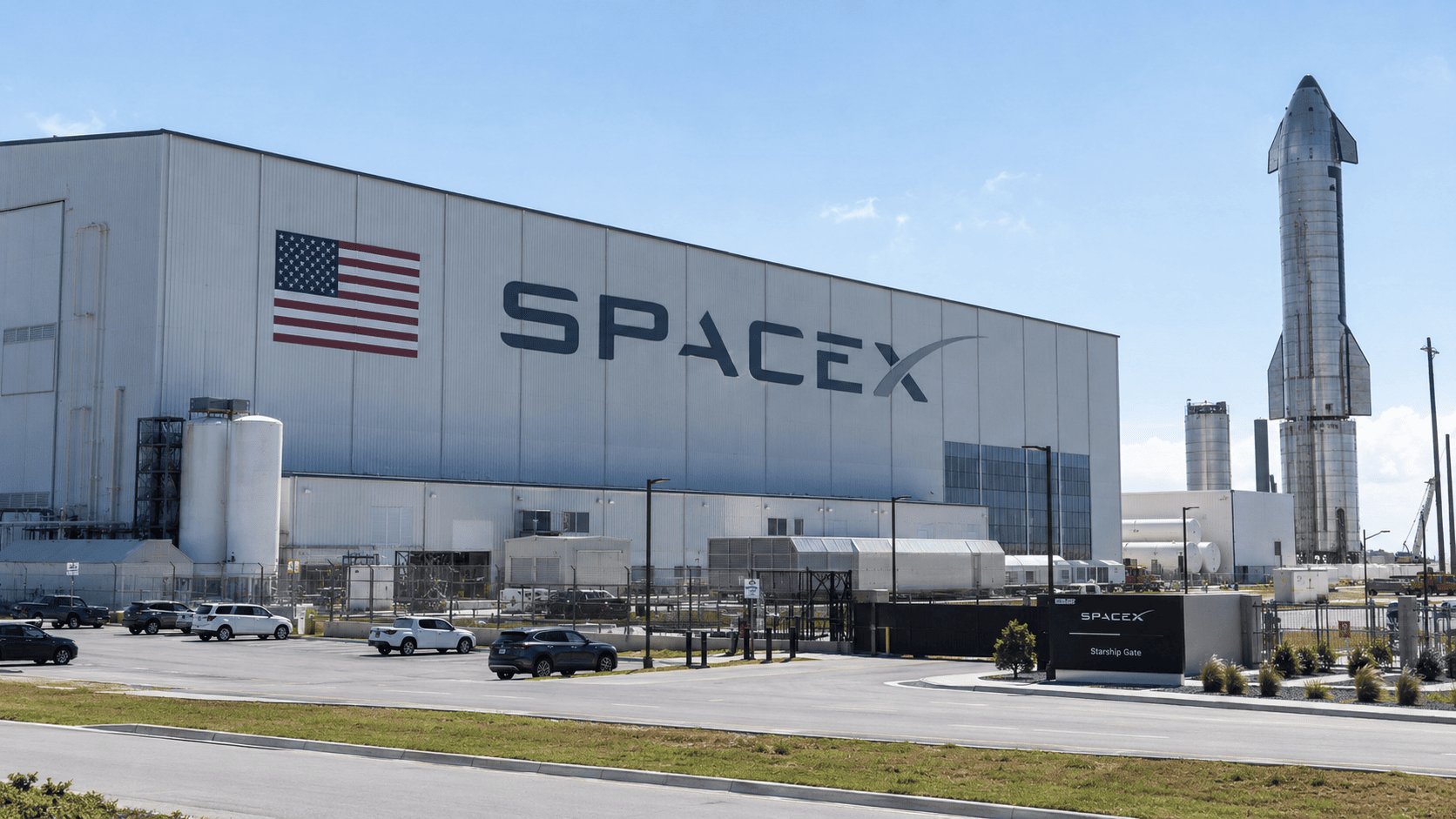
SpaceX shares have extended their post-midterm slide, falling to the lowest level since August as the broader artificial intelligence trade weakened and investors weighed the implications of a Democratic sweep in Congress. The stock, which trades under the ticker SPCX, has now dropped 30% from its October 6 high and 45% from its post-IPO peak.
The sell-off mirrors weakness across the tech sector, with names like Nvidia, AMD, and Arm Holdings also under pressure. The catalyst for the recent decline was the Democratic victory in the November 3 midterm elections, which raised concerns about increased scrutiny of Elon Musk's businesses and federal contracts. According to the Associated Press, Musk spent at least $445 million supporting Republican candidates during the election cycle.
Political headwinds have also cast a shadow over SpaceX's operations in Ukraine. On October 22, Senator Richard Blumenthal announced an inquiry into restrictions affecting Starlink and Starshield communications. Ukrainian officials said the disruptions hampered efforts to intercept Russian drones. Democratic lawmakers have requested records ahead of further investigations expected in January 2027. Conflicting accounts remain over who authorized the Starshield restrictions, and the Pentagon's inspector general declined a separate request to investigate, leaving responsibility unresolved.
Beyond geopolitical issues, investors are worried about Democratic policies on the data center industry, which have become toxic to many Americans. Several data center moratoriums were approved by voters in the midterms. These concerns have weighed on the broader market, with the Dow Jones dropping over 1,800 points, while the Nasdaq 100 and S&P 500 fell 4.5% and 5%, respectively. A potential merger between SpaceX and Tesla could also attract closer scrutiny from Democratic lawmakers, adding regulatory uncertainty.
Despite the ongoing retreat, the bull case for SpaceX remains intact. The company's revenue growth is intensifying, with third-quarter revenue jumping 161% year-over-year to $14.6 billion, and net profit reaching $4.4 billion. Growth is broad-based across space, connectivity, and Super Intelligence segments. AI revenue soared to $7.5 billion from $2.5 billion in the June quarter and $813 million in the same period last year.
Another catalyst is SpaceX's expansion of its Starlink business. The company recently acquired low-orbital spectrum for over $8 billion, positioning it to compete more directly with telecom giants like AT&T and Verizon. According to Kyro AI data, average estimates project annual revenue to jump to $48 billion this year, followed by $180 billion next year, making SpaceX one of the fastest-growing companies in the market.
From a technical perspective, the stock has broken below the 50-day moving average, the 61.8% Fibonacci retracement level, and the Supertrend indicator. The Relative Strength Index (RSI) and other oscillators continue to trend lower, suggesting further downside before a potential rebound. Key support sits at $100, while resistance levels are at $150 and $176, the latter being the October high.
In summary, while political and regulatory risks are real, the fundamental growth story and strategic expansions provide reasons to believe the sell-off may be temporary. Investors will be watching for any policy developments and the company's ability to execute on its AI and Starlink initiatives.
This article is for informational purposes only and does not constitute financial advice.