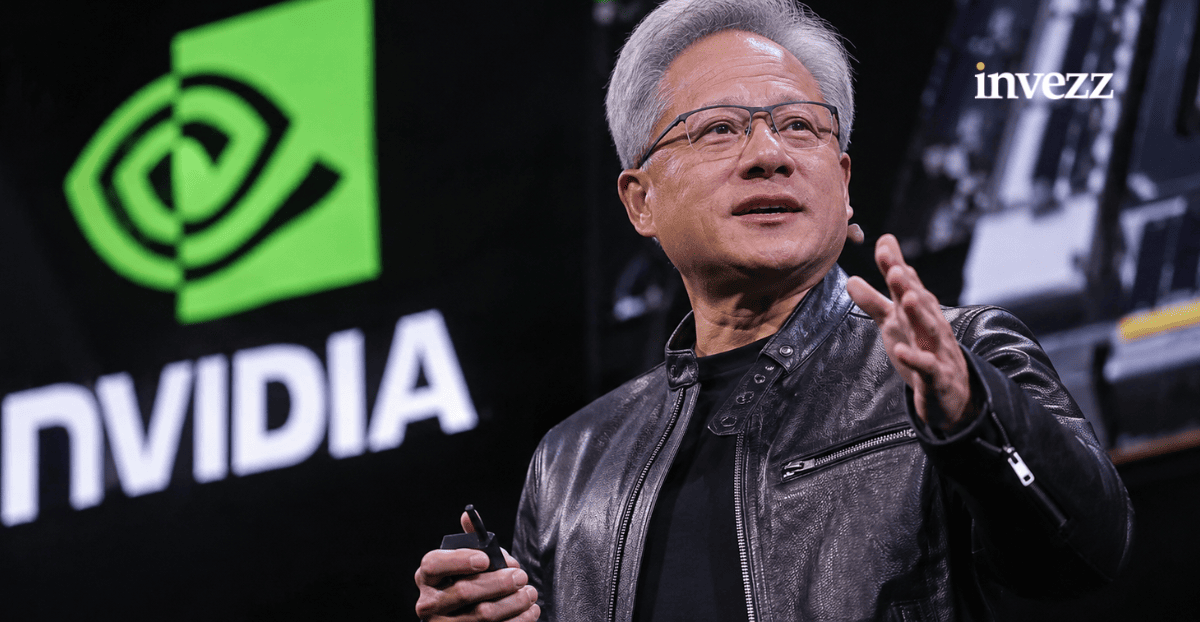
Nvidia's remarkable ascent to a $5 trillion market valuation has been driven largely by the vision and leadership of its founder and CEO, Jensen Huang. But a new risk is emerging: the possibility of a future without him at the helm. Recent reports of an investigation into Huang's conduct have sparked speculation about his tenure, prompting analysts and investors to consider the implications for the company's stock.
Investigation and Market Reaction
Nvidia shares rebounded more than 4% on Wednesday, buoyed by CoreWeave's earnings, which lifted sentiment across the AI trade. Retail and institutional investors have been buying the dip, even as shares remain down more than 10% over the last five sessions. The uncertainty surrounding Huang's future, including questions about whether he was targeted by a foreign intelligence operation and whether he divulged company or national secrets, has not deterred these buyers.

The company is conducting an investigation into its CEO, and analysts are already modeling scenarios for a potential leadership change. Baird noted on Wednesday that "the odds of a CEO transition are increasing into 2027," with a preference for an outsider being hired over an internal promotion. Dan Ives of Yorkville Ives estimated a 15% chance of Huang being removed, while Kalshi speculators put the odds of his departure by 2027 at just 17%, rising to 35% by 2029.
Huang's Unique Role
Huang is not an ordinary CEO. He founded Nvidia and has become synonymous with the AI boom, positioning the company as the unofficial exchequer of the industry. His leadership style, characterized by an unusually flat management structure with approximately 60 direct reports, has been studied as Nvidia leapfrogged tech giants to become the world's most valuable company.
This structure, however, presents a challenge for succession planning. Manuel Pinto, head of analysis at XTB Spain, told Invezz that "Nvidia can survive without Huang, but an abrupt departure would be particularly difficult given its organisational structure." He noted that Huang's 3.6% stake carries no special voting rights, and there is no publicly identified successor. Pinto added that while Nvidia has assets beyond its founder, including CUDA and its engineering teams, Huang brings together "technological vision, government negotiations and the ability to coordinate investment."
Historical Precedents
CEO transitions often carry downside risk, especially when the outgoing leader is credited with significant growth. When Steve Jobs resigned as Apple's CEO in 2011, the stock fell 3%, wiping $10 billion off its market value. However, Jobs's departure was anticipated, and his successor, Tim Cook, was highly respected. Cook delivered, with Apple's stock rising more than 1,900% during his tenure.
In contrast, Chipotle's stock fell as much as 10% when CEO Brian Niccol left in 2024 to join Starbucks, and it had declined more than 35% by last month. Niccol had overseen a 770% stock rise during his tenure, highlighting the potential impact of losing a transformative leader.
Can Nvidia Afford to Lose Huang?
The question of whether Nvidia can afford to lose Huang is central to investor concerns. His departure, whether voluntary or forced, could disrupt the company's strategic direction and operational efficiency. As Stacy Rasgon of Bernstein put it, "Huang is Nvidia."
Daniel Coatsworth, head of markets at AJ Bell, suggested that Huang might decide to step down if he believes the incident has tarnished the company's reputation, or the board might decide he has to go. The outcome of the investigation will be crucial in determining his future.
While Nvidia has a strong ecosystem and competitive advantages, the concentration of leadership functions in Huang makes an abrupt transition particularly challenging. Investors are now forced to imagine a company without him, and the stock's trajectory may hinge on how the board navigates this uncertainty.
This article is for informational purposes only and does not constitute financial advice.