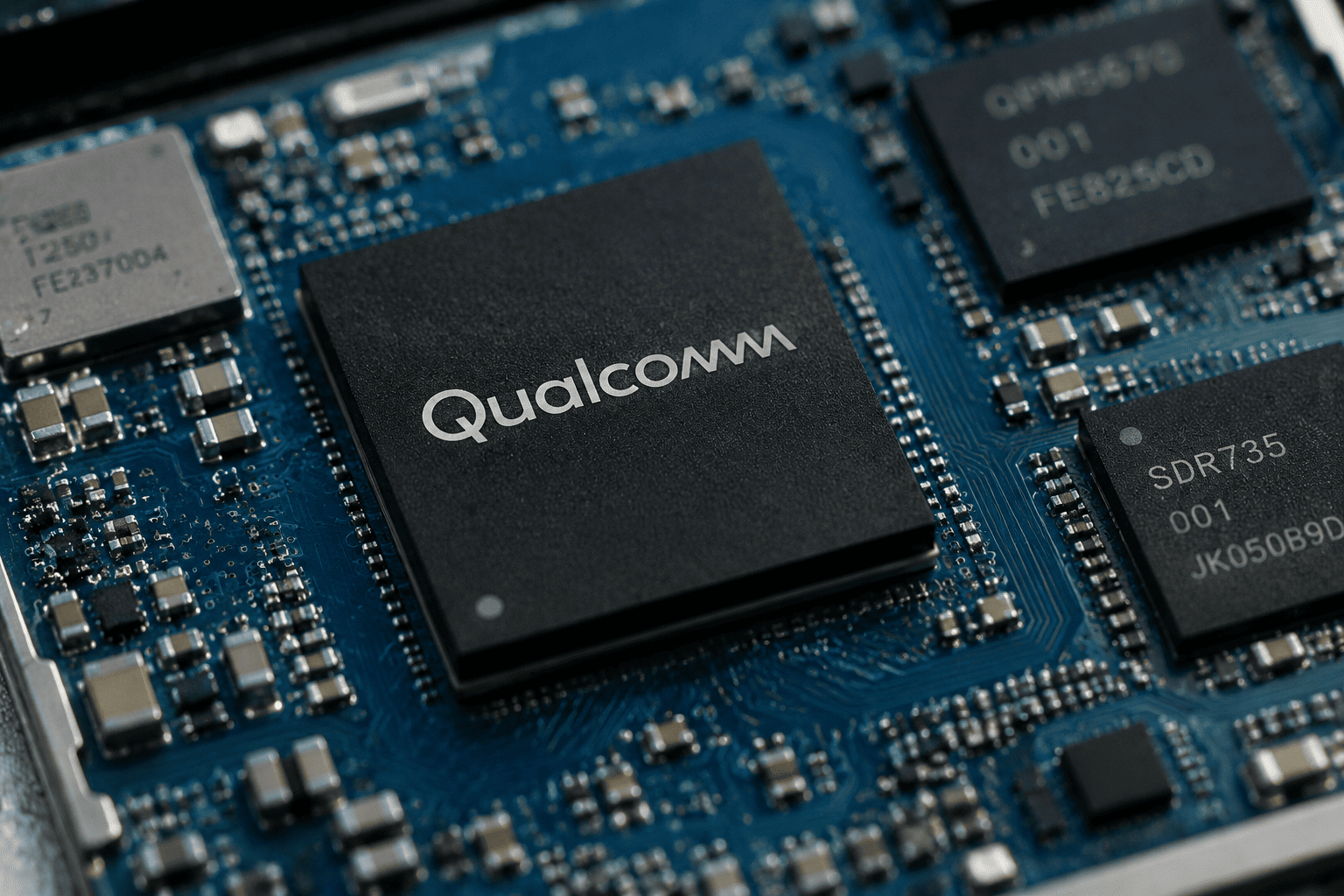
Qualcomm's stock has extended its slide, dropping to around $162 on Monday, a decline of more than 37% from its year-to-date peak. The sell-off comes as investors continue to exit semiconductor names amid a persistent memory shortage that has pressured the entire industry.
The company is set to report its fiscal fourth-quarter results on Wednesday, and the numbers are expected to reflect the ongoing headwinds. Analysts forecast revenue of $10.15 billion, a 9.9% drop from the prior year, with earnings per share falling from $3.00 to $2.16. For the full fiscal year, revenue is projected at $42.8 billion, down from $44.14 billion in the previous year.

Memory shortage and smartphone slowdown
The core issue is a DRAM shortage that has forced memory makers to prioritize data center demand, leaving smartphone manufacturers with limited supply. This has led to a slowdown across the industry, with only Apple and Samsung showing year-over-year growth in smartphone shipments. Xiaomi's second-quarter sales fell 26% to 31.2 million units, while OPPO, Vivo, and other brands saw declines of 17%, 19.6%, and 13%, respectively.
Qualcomm's CEO previously highlighted the impact, noting that the industry is facing unprecedented memory prices, higher manufacturing and input costs, and supply chain shortages driven by data center demand. These factors have weighed on Qualcomm's financial performance, with third-quarter revenue down 4% to $9.9 billion and pre-tax earnings plunging 24% to $2.96 billion.
QCT division under pressure
The weakness has been most pronounced in Qualcomm's CDMA Technologies (QCT) division, where revenue fell 5% to $8.5 billion. Handset revenue dropped 20% to $5.08 billion, though this was partially offset by strong growth in automotive (up 61%) and IoT (up 9%).
Looking ahead, Qualcomm is likely to emphasize its non-handset businesses, which it expects to generate $40 billion in revenue by 2029. This includes automotive, data center, and Internet of Things segments, which are seen as key growth drivers beyond the smartphone market.
Technical outlook: support broken
From a technical perspective, the stock has broken below the critical support level of $169, which was its lowest point on October 15. It has also fallen beneath the 61.8% Fibonacci retracement and the 50-day moving average, signaling bearish momentum. The Murrey Math Lines tool suggests the next downside target could be the Ultimate Support at $150.
However, a move back above $169 would invalidate the bearish scenario and could signal a potential rebound. Investors will be watching Wednesday's earnings closely to see if the company can provide any positive guidance that might stabilize the stock.
This article is for informational purposes only and does not constitute financial advice.