
Nvidia, AMD, and Intel shares saw tentative buying interest in premarket trading on Tuesday, following a bruising global semiconductor sell-off. Investors weighed bargain prices against lingering concerns about AI spending and PC demand.
In early trading, Nvidia gained 1.51%, AMD surged 2.73%, and Intel advanced 2.48%, signaling renewed interest after sharp declines last week.
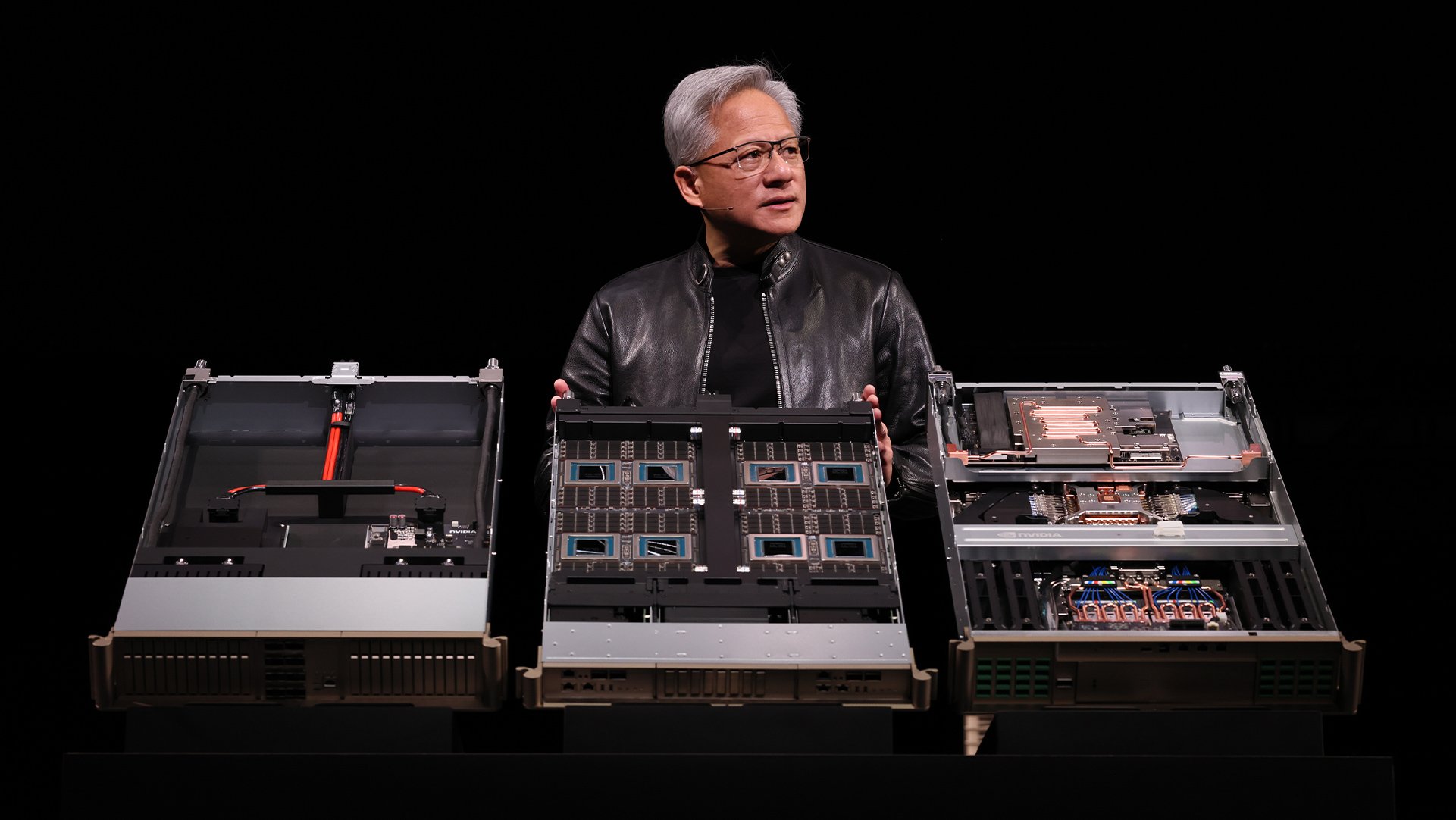
Nvidia's rebound tests confidence in AI spending
Nvidia's stock had fallen 4.22% on Friday and another 1.26% on Monday, closing at $202.06, as investors questioned whether cloud companies could sustain financing for massive data-center projects. Despite the sell-off, demand has not yet reflected those fears. Nvidia's latest reported quarterly revenue doubled to $96.2 billion, with data-center sales jumping 117% to $89 billion. Management previously forecast about $108 billion in revenue for its fiscal third quarter, with results due November 17.
The company remains exposed to the spending plans of major cloud buyers. Even without canceled orders, concerns about borrowing costs and future AI returns can undermine the price investors are willing to pay for Nvidia's earnings. Yardeni Research president Ed Yardeni told CNBC-TV18 on Monday that the retreat was "taking some air out of the AI bubble," according to Stocktwits. He argued that lower valuations could create opportunities because the technology's growth prospects remain intact.
AMD stock rises before a make-or-break earnings report
AMD shares dropped 7.52% on Monday to $466.84 before climbing in Tuesday's early trading. Its third-quarter results follow Tuesday's close. Wall Street expects approximately $13.1 billion in revenue, up nearly 42% from a year earlier, and adjusted earnings of $1.95 a share. Investors will scrutinize its data-center business, including server processors and AI accelerators, alongside the outlook for personal computers.
Morgan Stanley analyst Joseph Moore raised his AMD price target to $510 from $465 while retaining a Hold recommendation, according to TipRanks. He expects server growth to help offset PC-market weakness but sees risks from supply constraints and competition with Nvidia. BMO Capital's Harsh Kumar takes a more bullish view, keeping a Buy recommendation and $550 target on expectations of stronger sustained demand from cloud providers.
The contrast is important. AMD could benefit if customers diversify their AI-chip purchases, but its margins and delivery capability still need to justify ambitious forecasts. Strong results and guidance could support the rebound; another disappointment would revive doubts about broader chip demand.
Intel stock tries to recover from its steepest slide in decades
Intel endured harsher selling. Shares plunged approximately 28.6% on Friday and another 8.8% on Monday, ending at $59.97, after its fourth-quarter forecasts missed expectations. Third-quarter revenue rose 21% to $16.5 billion, but fourth-quarter guidance of $15 billion to $16 billion missed analysts' $17.1 billion estimate. Its adjusted earnings forecast of 25 cents a share also missed estimates near 43 cents.
Management warned that weak PC demand could persist into the first half of 2027. Expensive memory is lifting PC prices as supply constraints complicate recovery. Barclays analyst Thomas O'Malley cut his price target to $75 from $100 on Monday, maintaining an Equalweight rating, according to analyst-rating records. The reduction illustrates how much confidence has deteriorated despite the stock's decline.
Unlike its rivals, Intel must improve execution as well as demand. Investors need evidence of better forecasts and margins before treating a modest recovery as a turnaround.
This article is for informational purposes only and does not constitute financial advice.