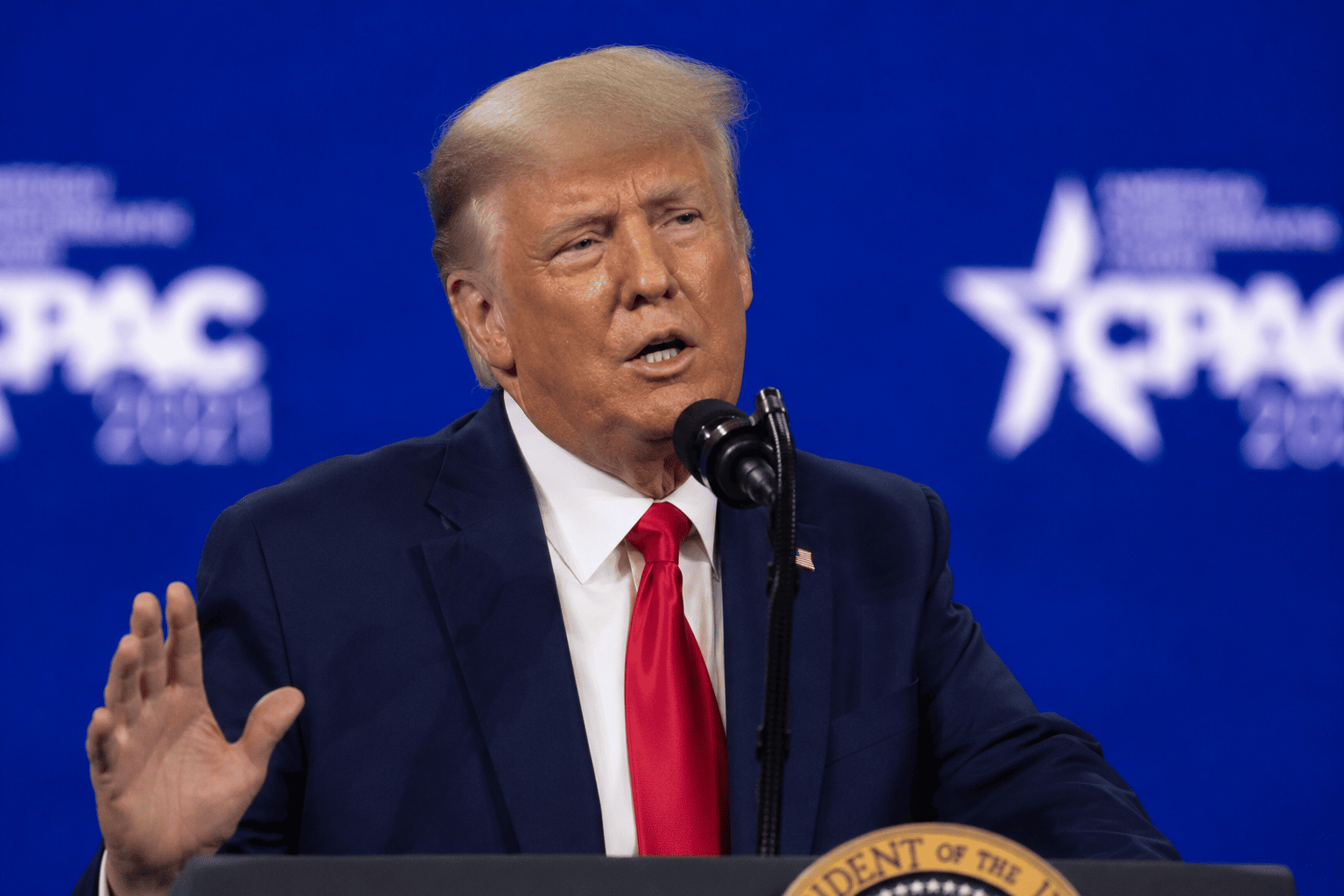
President Donald Trump intensified his campaign against the Federal Reserve on Friday, urging policymakers to lower interest rates after a stronger-than-expected August jobs report fueled expectations of a September rate hike. In a social media post, Trump called on Fed Chair Kevin Warsh and other officials to cut borrowing costs, warning, "LOWER THE RATE OR I'LL STOP TRADING WITH COUNTRIES WITH WHICH WE HAVE A DEFICIT." He argued that high rates disadvantage the U.S. and suggested the policy rate should be as low as 1% or even 0.5%, well below the current level near 4%.
The remarks mark a renewed pressure campaign against the central bank, which had eased after Warsh replaced Jerome Powell as chair. Trump also defended his threat to restrict trade with nations like Switzerland, Mexico, and the European Union, though such measures would likely face legal hurdles.

August jobs report strengthens case for rate hike
The U.S. economy added 162,000 nonfarm jobs in August, according to the Bureau of Labor Statistics, far exceeding the 53,000 gain economists had forecast. The unemployment rate held steady at 4.1%, matching expectations. This was the strongest monthly employment increase since March, offering a more upbeat picture after a sluggish summer. July's figure was also revised sharply higher, from a loss of 23,000 to a gain of 21,000.
Wage growth, however, remained modest. Average hourly earnings rose 0.3% in August and were up 3.1% year-over-year. The robust jobs data boosted market expectations for a September rate hike, with traders pricing in roughly a 60% probability immediately after the release, and short-term interest-rate futures implying about a 65% chance later in the session.
Gold prices fall as rate hike bets rise
Gold prices declined sharply following the employment report, as stronger labor data raised the likelihood of higher U.S. interest rates. Spot gold fell 0.79% to $4,437.61 an ounce, after briefly dropping more than 2% to an intraday low of $4,364.99. U.S. gold futures for December delivery settled 1.35% lower at $4,478.70.
Higher interest rates reduce the appeal of non-yielding bullion, and the dollar strengthened after the jobs report, making gold more expensive for overseas buyers. Independent analyst Tai Wong noted that gold stumbled as the strong jobs data made a September rate hike more probable unless upcoming inflation data proves weak. Investors now turn to next week's consumer and producer price reports for further clues on the Fed's path.
Oil prices head for weekly gains amid Iran tensions
Oil prices reversed early losses on Friday and remained on track for solid weekly gains, as renewed U.S.-Iran military exchanges kept a risk premium in crude markets. Brent crude futures rose 0.79% to $96.27 a barrel, while West Texas Intermediate gained 0.20% to $91.48. For the week, Brent was up 7.6% and WTI had gained 9.58%.
Norbert Rucker, head of economics at Julius Baer, told Reuters that oil appears to be in a phase where recurring hostilities repeatedly revive a risk premium, though there is no indication the latest escalation has materially affected Middle Eastern exports. The rally is largely sentiment-driven, he said. Citi raised its third-quarter Brent forecast to $86 a barrel from $80, while ANZ lifted its short-term Brent outlook to $95 and warned of further upside if the conflict intensifies.
For investors tracking the broader market, the jobs data and Fed signals are key. Meanwhile, bitcoin's move above $72,000 and ethereum's slide toward $2,400 reflect how macro and geopolitical forces are rippling through digital assets. In equities, SK Hynix's rebound and Samsung's record payout plans highlight the ongoing AI memory boom's impact on chipmakers.
This article is for informational purposes only and does not constitute financial advice.