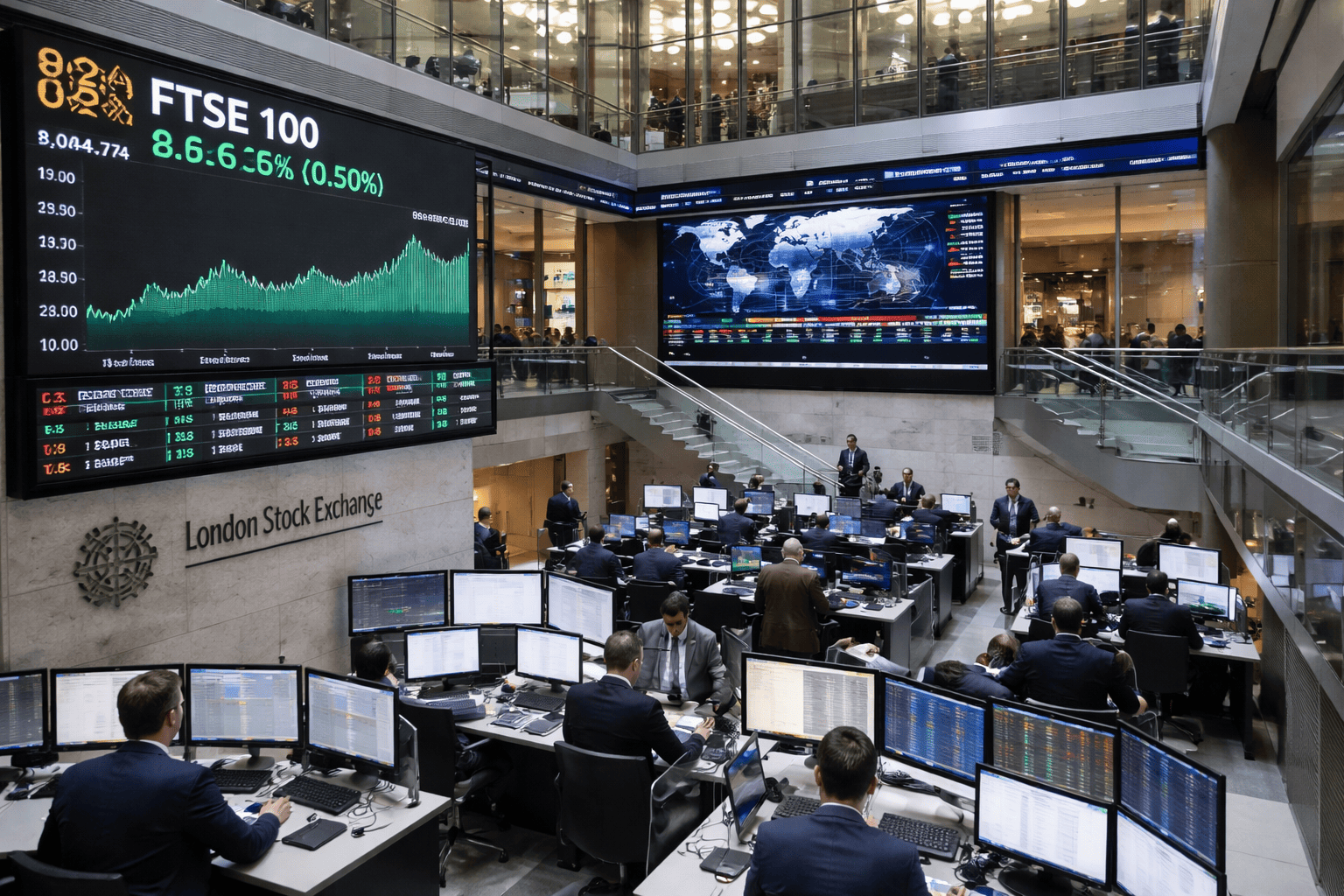
London's FTSE 100 edged lower on Friday, with investors holding back ahead of the US jobs report. The benchmark slipped about 0.1% in early trading, mirroring a cautious tone across European markets. Germany's DAX gained 0.1%, France's CAC 40 fell 0.2%, and the pan-European STOXX 600 eased 0.1% to 648.67.
The muted move came despite a rally on Wall Street on Thursday, where Treasury yields eased. The divergence highlights the unique pressures facing UK blue chips: a firmer pound, elevated oil prices, and uncertainty over global interest rates.
Payrolls keep the FTSE pinned near flat
The immediate focus for London investors is August's US employment report, which could shape expectations for the Federal Reserve's September meeting. Consensus forecasts point to a 55,000 increase in nonfarm payrolls after a 23,000 decline in July, with unemployment expected to hold at 4.1%.
Fed Governor Christopher Waller's dovish comments on Thursday helped pull bond yields lower and reduced fears of an imminent rate hike. However, ING analysts noted that a payroll gain below 25,000, alongside a benign core inflation reading next week, may be needed to materially delay another rate rise.
Sterling firmed against the dollar, trading around $1.3542 in early dealings. That can create a mild headwind for the FTSE 100 because many of its largest companies earn heavily overseas and translate those earnings back into pounds.
Oil keeps inflation risk in the background
Energy prices remain another important factor for the London market. Brent crude traded close to $96 a barrel on Friday and was heading for its strongest weekly advance since mid-July as renewed US-Iran tensions kept supply risks elevated.
Higher crude can support the FTSE's heavyweight energy names, but the broader inflation implications are less helpful for equities. The oil surge has revived concerns that central banks may have less room to ease policy. Economically sensitive sectors were under pressure in Europe, with chemicals and banks both falling close to 1% in early trading.
That mix helps explain why the FTSE has struggled to follow the stronger tone seen in parts of Asia and on Wall Street. Investors are getting some support from energy, but also face higher inflation risk, firmer sterling, and uncertainty around global interest rates.
Volkswagen rally highlights a split European market
The strongest company move in Europe came from Volkswagen, which jumped about 7% after its supervisory board backed a sweeping restructuring plan. The German carmaker plans around 50,000 additional job cuts as part of a broader effort to lower costs, reduce complexity, and improve returns. The rally lifted the European autos index by about 1.1%.
RBC Capital Markets analyst Tom Narayan said in a note reported by finanzen.net that unanimous backing from Volkswagen's supervisory board and unions was encouraging and a positive surprise. Narayan kept his Outperform rating and €120 price target, while warning that management still has substantial execution work ahead.
For investors, the FTSE's flatness reflects a delicate balance: energy gains offset by currency and rate concerns. As Wall Street's AI rally continues to drive gains, London's index remains tethered to macro data and oil dynamics. The upcoming payrolls report could provide the next catalyst, but until then, the FTSE 100 appears stuck in a holding pattern.
This article is for informational purposes only and does not constitute financial advice.