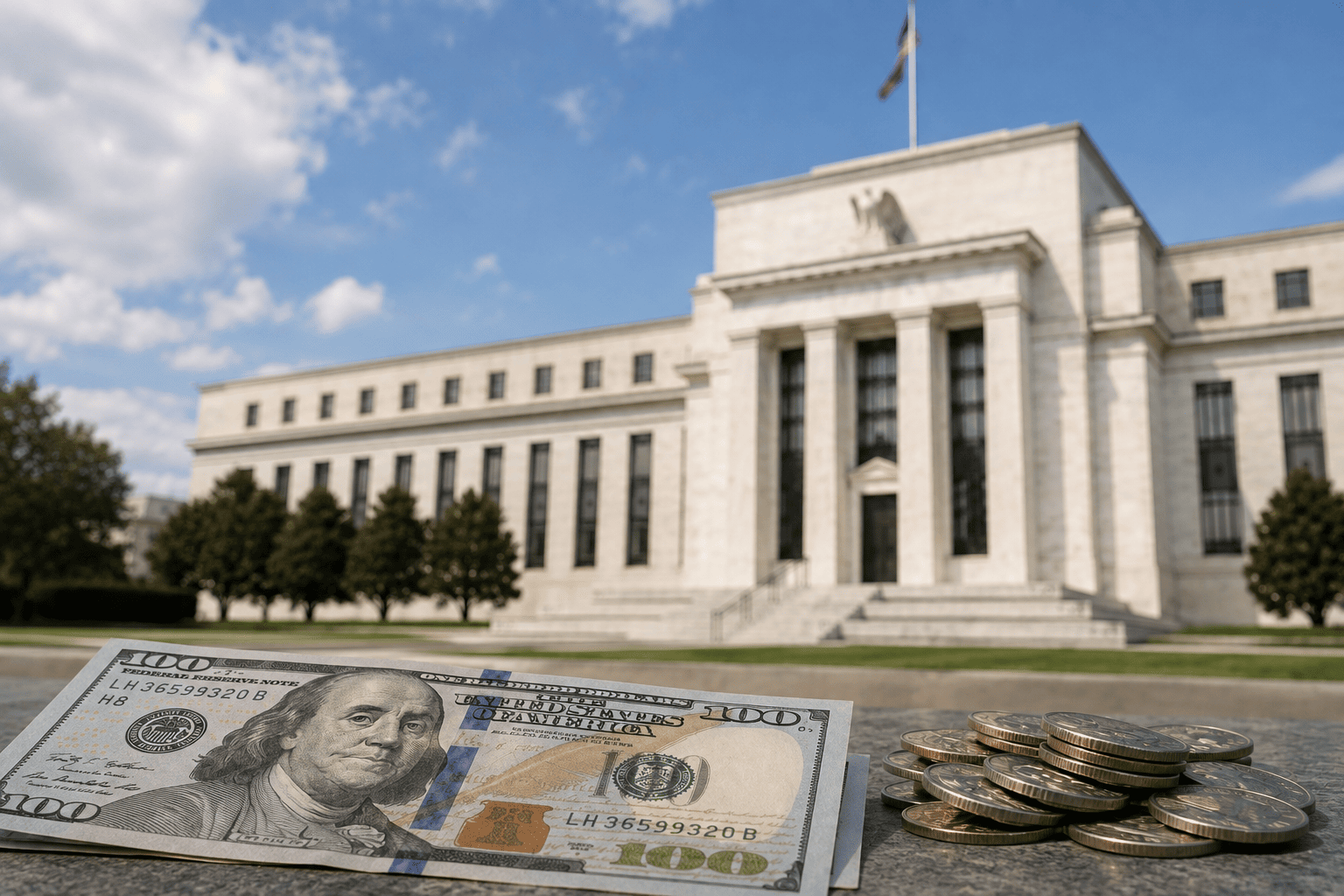
The recent rally in gold and Bitcoin, alongside a softer dollar, has been widely attributed to the so-called debasement trade. However, Alexander Lis, chief investment officer at SDV, cautions that investors may be conflating two distinct phenomena: a Treasury operation that merely alters the composition of government debt and genuine monetary easing by the Federal Reserve.
Speaking on the latest episode of Zero Sum, Lis explained why the Treasury's debt buybacks are not quantitative easing (QE), yet they can still influence financial markets. He also highlighted what investors should monitor as the Fed and Treasury navigate rates, inflation, and the dollar.

The Treasury Buyback Is Not QE
The debasement narrative has gained traction among investors who believe governments have an incentive to reduce the real burden of their debt by letting the currency depreciate. "The debasement narrative is so popular nowadays because there is a notion that it is beneficial for the US government to debase the huge debt that they have," Lis said.
However, he rejected the idea that the Treasury's latest buyback should automatically be treated as QE. The key distinction lies in how the operation is funded. The Treasury can finance buybacks by issuing shorter-term bills while purchasing longer-term securities, effectively changing the maturity profile of its debt rather than creating new money. This makes it fundamentally different from a Federal Reserve asset-purchase program.
Market Consequences Beyond Money Printing
Even though a Treasury buyback is not QE, it can still have market effects. Lis argued that shifting away from longer-duration securities can reduce volatility in the fixed-income market. Since government bonds are widely used as collateral, lower volatility could increase the amount of usable collateral, facilitating capital movement through the financial system. This can create a broader risk-on effect without requiring the central bank to print money. "Risk assets would go up, dollar would go down, inflation [is] already on higher levels," he noted.
Bitcoin and Gold: Positioning vs. Fundamentals
The recent rallies in Bitcoin and gold may not necessarily signal a new era of monetary debasement. Lis pointed out that both assets had been trading from relatively depressed levels, with weak investor positioning. "So probably there were a lot of shorts," he said. An unexpected move can force those positions to unwind, amplifying a rally that might initially have little to do with long-term fundamentals.
Lis views crypto as a higher-beta expression of the debasement trade. "Crypto just has higher beta to debasement than gold does," he said. If the debasement thesis strengthens, Bitcoin could outperform gold, but the reverse is also true: if the narrative fades, crypto could suffer substantially more.
What to Watch Next
Lis does not expect the start of Treasury buybacks to be the next major market-moving event, as the announcement has already been priced in. Instead, he is watching the next Treasury Quarterly Refunding Announcement and, more immediately, the Federal Reserve's September meeting. The August inflation report could be particularly important. "If we have a super hot print, we are definitely going to get a hike, in my opinion," he said.
His base case, however, is more moderate. With July inflation data relatively soft, Lis expects August readings to be broadly neutral, and he does not expect the Fed to raise rates. That puts monetary policy back at the centre of the debasement debate.
The Dollar and the Japan Comparison
Lis argues that policymakers cannot simultaneously control short-term rates, long-term yields, and the dollar without trade-offs. Attempts to suppress long-term yields could therefore produce consequences elsewhere in the system. He does not believe the United States is destined to follow Japan's path of successfully suppressing long-term yields for an extended period. "I do not buy the idea of the US as the next Japan," he said.
For investors, this leaves a more complicated picture than the simple "money printing" narrative suggests. Gold and Bitcoin may benefit from expectations of currency weakness, but a sustained debasement trade would also have implications for equities, bonds, inflation, and the dollar. Lis's own positioning reflects that nuance: he is bullish on relatively defensive, "boring" stocks such as Netflix, bearish on gold because he does not currently buy the debasement thesis, and views the long-duration Treasury ETF TLT as his wildcard.
The broader message is that investors should look past the headline and focus on the structure underneath it. A Treasury buyback may not be QE, but changes in duration, volatility, collateral, and expectations for Federal Reserve policy can still reshape the risk landscape. For more on how these dynamics play out, see our analysis on gold's recent drop below $4,000 and XRP's technical outlook.
This article is for informational purposes only and does not constitute financial advice.