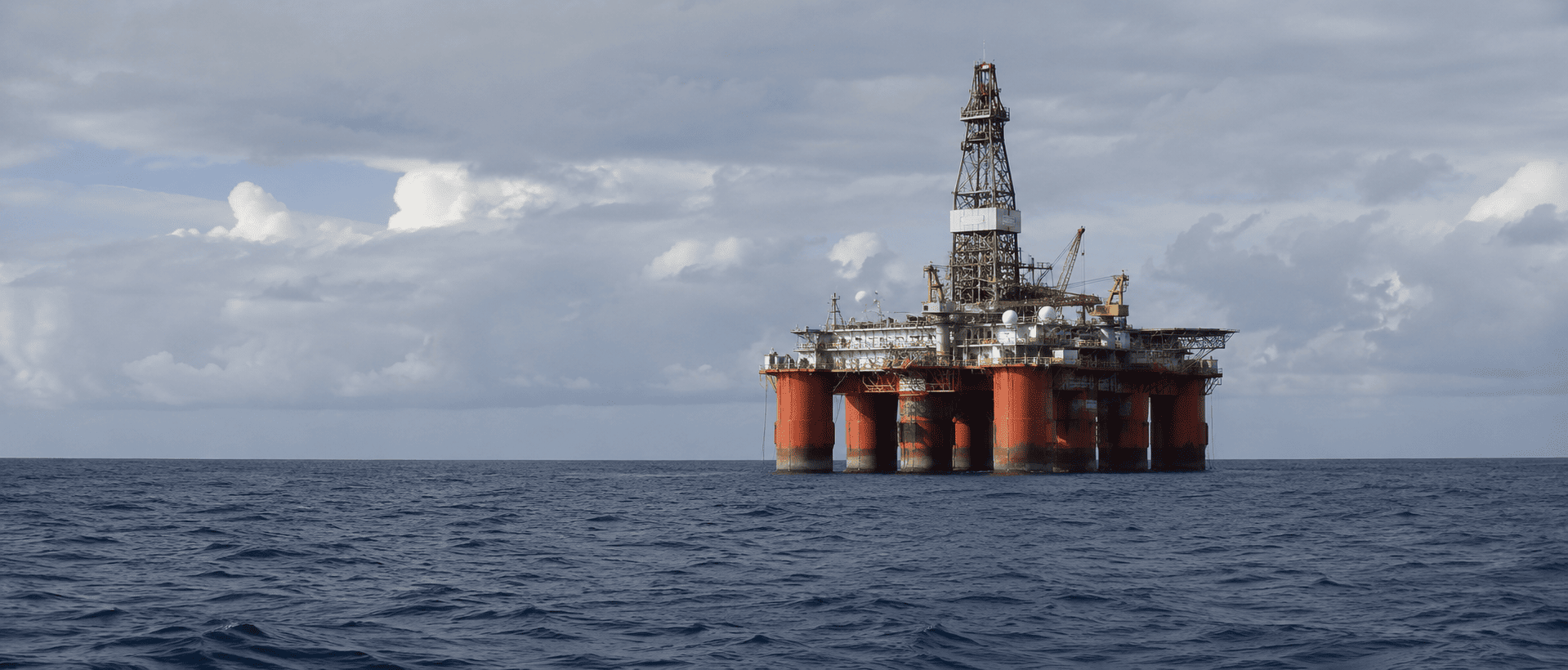
Oil prices extended their advance on Monday, with Brent crude trading near $97 a barrel and West Texas Intermediate holding above $92, as fresh US-Iran clashes intensified concerns over supply disruptions through the Strait of Hormuz.
The latest escalation followed US strikes on three Iranian oil tankers over the weekend, after Iran launched ballistic missiles toward two US Navy warships. Tehran subsequently announced a new restricted zone outside the strait, adding another layer of uncertainty around the critical energy corridor.

Hormuz traffic becomes the key physical-market test
The price reaction is being driven less by geopolitical headlines alone and more by evidence that shipping through Hormuz remains constrained. Kpler data showed an average of about 10 commodity vessels a day crossed the strait over the past 10 days, the lowest level since May. Just two vessels transited on Saturday and six on Sunday.
That matters because Hormuz normally handles roughly a fifth of global oil supply. Even without a complete closure, slower traffic, higher insurance costs, and disrupted loading schedules can tighten the physical market and keep a geopolitical premium embedded in Brent and WTI.
ANZ Research analysts said that the latest attacks have further reduced the likelihood of Middle East oil flows returning to normal quickly. Their assessment points toward a prolonged US-Iran confrontation rather than an imminent resolution.
US Energy Secretary Chris Wright indicated on Sunday that Washington expects to maintain its military presence in the region. The Washington Post reported that Wright sees the US Navy as crucial to protecting commercial traffic as tensions around the waterway persist.
Brent's risk premium is proving difficult to unwind
Brent has become the clearer gauge of the Middle East supply premium because of its greater exposure to global seaborne crude flows. Commerzbank's commodity team, led by Barbara Lambrecht, said in commentary carried by TMGM that the outlook remains unusually difficult to assess because estimates of how much crude is moving through Hormuz differ widely.
The analysts expect upcoming reports from the EIA, IEA, and OPEC, alongside Chinese trade figures, to provide a clearer picture of both actual supply disruption and global demand. They also see scope for oil prices to ease if evidence shows the strait is becoming more passable.
WTI is being pulled higher by the same geopolitical premium, although its domestic US supply base makes it somewhat less directly exposed to Gulf shipping than Brent. For related market moves, see how stocks shrugged off oil and Iran worries in a recent session.
OPEC+ pause keeps focus on disrupted supply
OPEC+ added another element to the supply picture on Sunday by leaving its October production policy unchanged. Saudi Arabia, Russia, Iraq, Kuwait, Kazakhstan, Algeria, and Oman agreed to maintain their September required production levels through October. The group will review market conditions again on October 4.
That means traders cannot count on a fresh near-term production increase to offset disruptions around Iran and Hormuz. For oil prices, shipping data now matter as much as military developments. A sustained improvement in Hormuz traffic could strip some risk premium from Brent and WTI.
Further attacks or another drop in vessel flows would instead keep Brent close to the $100 threshold and WTI firmly above $90. The situation remains fluid, and investors are closely watching for any signs of de-escalation or further tightening.
This article is for informational purposes only and does not constitute financial advice.