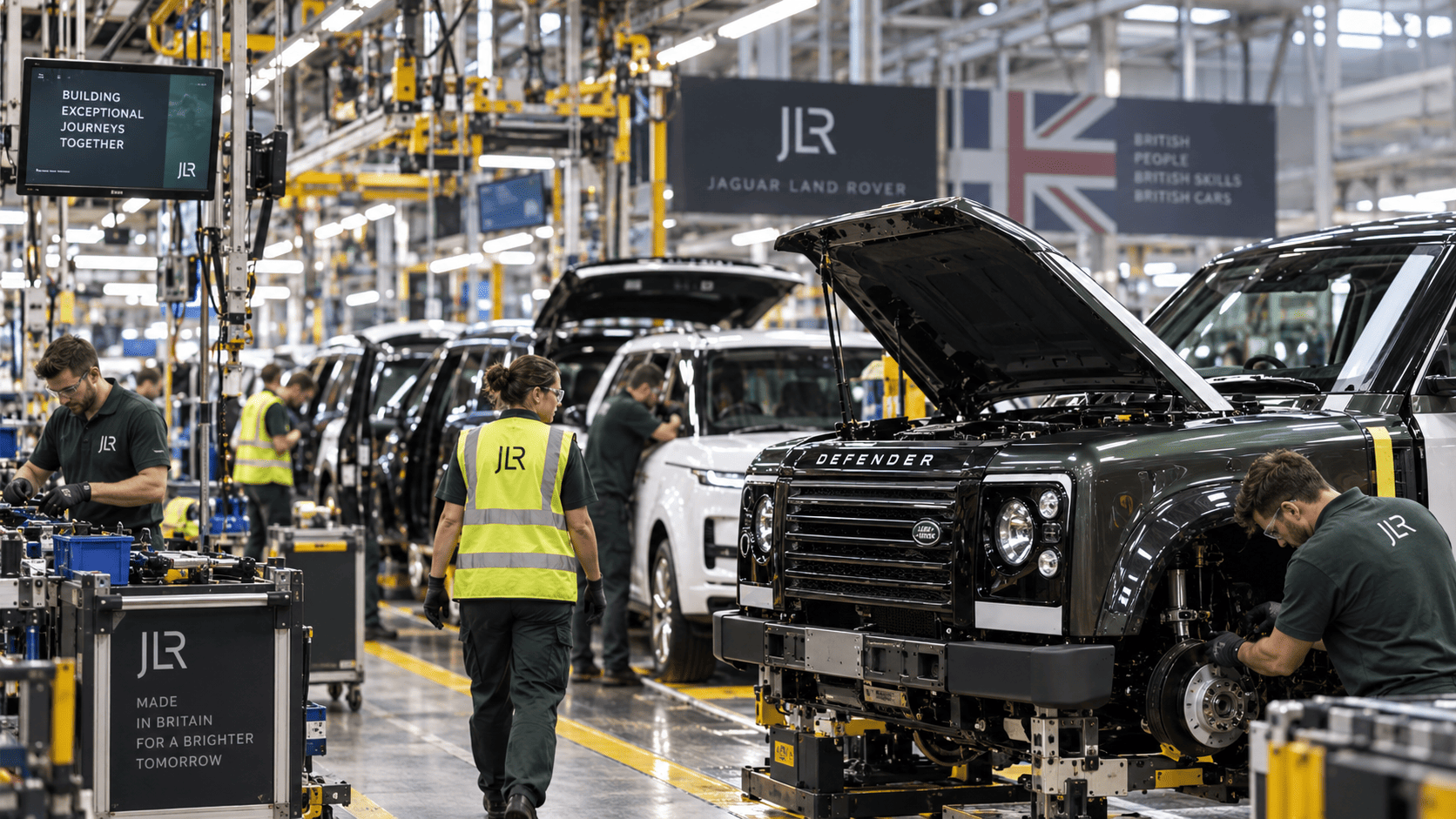
Jaguar Land Rover (JLR), Britain's largest carmaker, has confirmed a voluntary redundancy programme that could eliminate up to 4,000 salaried and management positions over the next two years. The move is part of a broader cost-saving initiative aimed at generating £1.7 billion in efficiencies and reducing the company's break-even production threshold from roughly 380,000 vehicles to around 300,000.
Why the shift?
The restructuring reflects a strategic pivot away from chasing volume. JLR's fiscal first-quarter results show the pressure: revenue fell 9.6% year-on-year to £6.0 billion, while wholesale volumes dropped 9.2%. Adjusted EBIT margin slipped to 2.8% from 4.0%, and profit before tax and exceptional items plunged 68.9% to £109 million. Free cash flow turned negative at £998 million.

Some of the weakness stems from temporary disruptions, including a supplier fire and geopolitical instability. But JLR is also contending with softer luxury demand and a challenging market environment. Brokerage Motilal Oswal noted that JLR faces "multiple headwinds on the demand and cost fronts," adding that the cost-reduction programme would likely offset only part of those pressures.
China and tariffs reshape the calculus
The decision to lower the break-even point signals that management no longer expects a return to previous sales peaks. China, once a profit engine for Range Rover, has become increasingly competitive as domestic brands improve their premium offerings and undercut on price. JLR's first-quarter retail sales in China fell 23.9% year-on-year.
US tariffs add another layer of difficulty, even after the effective tariff on UK-built vehicles was reduced from 27.5% to 10%. Automotive economist David Bailey told Auto Express that JLR's leadership is likely to place "a big emphasis on margin recovery" alongside tighter financial discipline.
The company's product mix already reflects this focus. Range Rover, Range Rover Sport, and Defender accounted for 80.8% of first-quarter wholesales, up from 77.2% a year earlier. These are among JLR's most profitable models, underscoring a strategy that prioritises margin over volume.
Shrinking buys time, but product challenges remain
Cost cuts can improve resilience, but they cannot create demand. Jaguar has wound down its previous model range ahead of an electric relaunch, while JLR is preparing new electric Range Rover models. That transition comes as premium EV demand remains uncertain and Chinese manufacturers accelerate their development cycles.
Auto Express noted that JLR has not launched an all-new model since the Range Rover Sport in 2022, leaving product freshness as a key challenge. The company's voluntary redundancy programme applies to salaried and management staff, not production workers, and JLR has not confirmed that exactly 4,000 roles will be eliminated.
The UK government has ruled out a direct bailout, though Business Secretary Jonathan Reynolds is expected to meet with JLR and union leaders to discuss the reported cuts. For investors, the key takeaway is that JLR is redesigning its cost structure so profitability no longer depends on selling close to 400,000 vehicles. Lowering the break-even point to 300,000 provides more cushion if China remains difficult, tariffs persist, and luxury demand stays subdued.
For broader context, the auto industry is navigating similar pressures, as seen in rising US debt costs that could affect consumer spending, and oil price volatility that impacts production costs. Meanwhile, tech giants are investing heavily in AI, which may eventually reshape manufacturing efficiency.
This article is for informational purposes only and does not constitute financial advice.