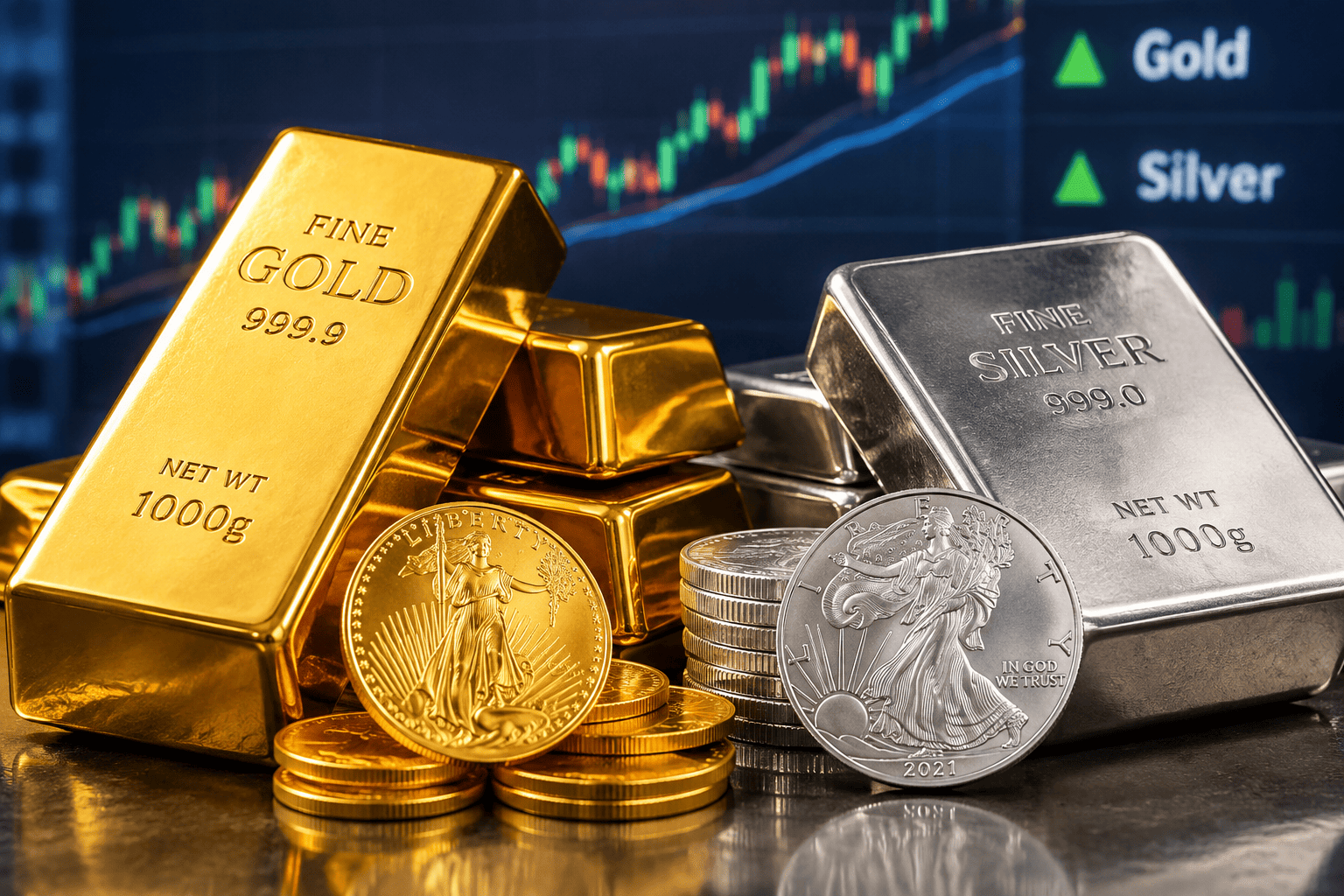
Gold has fallen below $4,000 per troy ounce for the first time in seven months, extending a sharp retreat that has erased nearly 30% from the record high near $5,600 reached earlier this year. The sell-off, which has also dragged silver down more than 50% from its peak, reflects a decisive shift in Federal Reserve policy under new leadership that is reshaping the outlook for precious metals.
Davis Park Management, a Singapore-based capital management firm, interprets the move as a case study in how quickly market narratives can unravel when the underlying story loses its anchor. The firm frames the correction as an opportunity for institutional investors to re-examine the role of gold in their portfolios, rather than react to price momentum.

Hawkish Fed Signals Trigger Dollar Strength
The reversal traces directly to a revised set of projections from the Federal Reserve, now chaired by Kevin Warsh. His first forecasts show nine of 18 policymakers expecting at least one more rate increase before year-end. Futures markets have responded swiftly, assigning a 68% probability to a rate hike at the next scheduled meeting, up from 29% a week earlier. The dollar index has climbed above 100 for the first time in more than a year, putting direct pressure on gold, which pays no yield.
The inverse relationship between bullion and the dollar, which has historically ranged between minus 0.5 and minus 0.8, leaves little doubt about the direction of pressure as the currency strengthens and the opportunity cost of holding a non-yielding asset rises.
Debasement Trade Unravels
For two years, gold's rally rested on a single powerful narrative: that persistent fiscal deficits and debt monetization would erode the purchasing power of paper money, leaving bullion as the reserve of last resort. The current unwind, according to Michael Sheldon, Director of Private Equity at Davis Park Management, demonstrates that "the debasement trade was always a story about credibility, and a central bank that restores its own credibility removes the premise the trade was built upon."
Gold fell 13% in a single session following the clearest signal of the new chair's approach, its sharpest such move in more than four decades. The severity of the decline owed more to the change in regime than to any individual data release.
Silver Hit Harder by Liquidity and Industrial Sensitivity
Silver has fallen further than gold, sliding more than 50% from its high to around $62.9 per ounce, its weakest in seven months. One session registered a 31.4% collapse in futures. The greater severity reflects thinner liquidity and heavier sensitivity to industrial demand, both of which amplify price moves when large holders reposition quickly.
Institutional Positioning and the Capital-Role Framework
Davis Park Management interprets the correction through what it terms a capital-role framework, separating bullion held for reserve and access from bullion held in pursuit of return. Sheldon argues that "the disciplined response to a regime change of this kind is to revisit the role a holding was given at the outset, rather than to chase the market lower." This distinction matters most where the metal was assigned a defensive function rather than a speculative one.
Wall Street houses are divided on what follows. Goldman Sachs has trimmed its end-of-year target to roughly $5,330.2 per ounce on the expectation that policy stays on hold, while more constructive forecasters still see scope toward $6,526.8 over the same horizon. Both targets sit well above the current spot price.
Official-Sector Buying Provides a Floor
Underpinning the market is continued official-sector buying, projected at about 800 tonnes over the course of the year, equivalent to roughly 26% of annual mine supply. This level of demand provides a structural floor without insulating the price from the immediate pressure of tighter policy.
Periods of forced selling test allocation discipline more directly than calm ones. The pattern through the worst of the move, with the heaviest trading clustered around the sharpest falls, points to liquidation rather than considered repositioning. The more measured answer for portfolios that assigned gold a defined reserve role, Sheldon suggests, "lies in adjusting the rhythm of review rather than the size of the position, and in testing whether the original rationale still holds before acting on price alone."
For context on broader market dynamics, see Gold Reclaims $4,120 as Strong Jobless Claims Data Counter Oil-Driven Inflation Fears and Gold Dips 0.7% as Oil-Driven Inflation Fears Bolster Fed Rate Hike Bets.
This article is for informational purposes only and does not constitute financial advice.