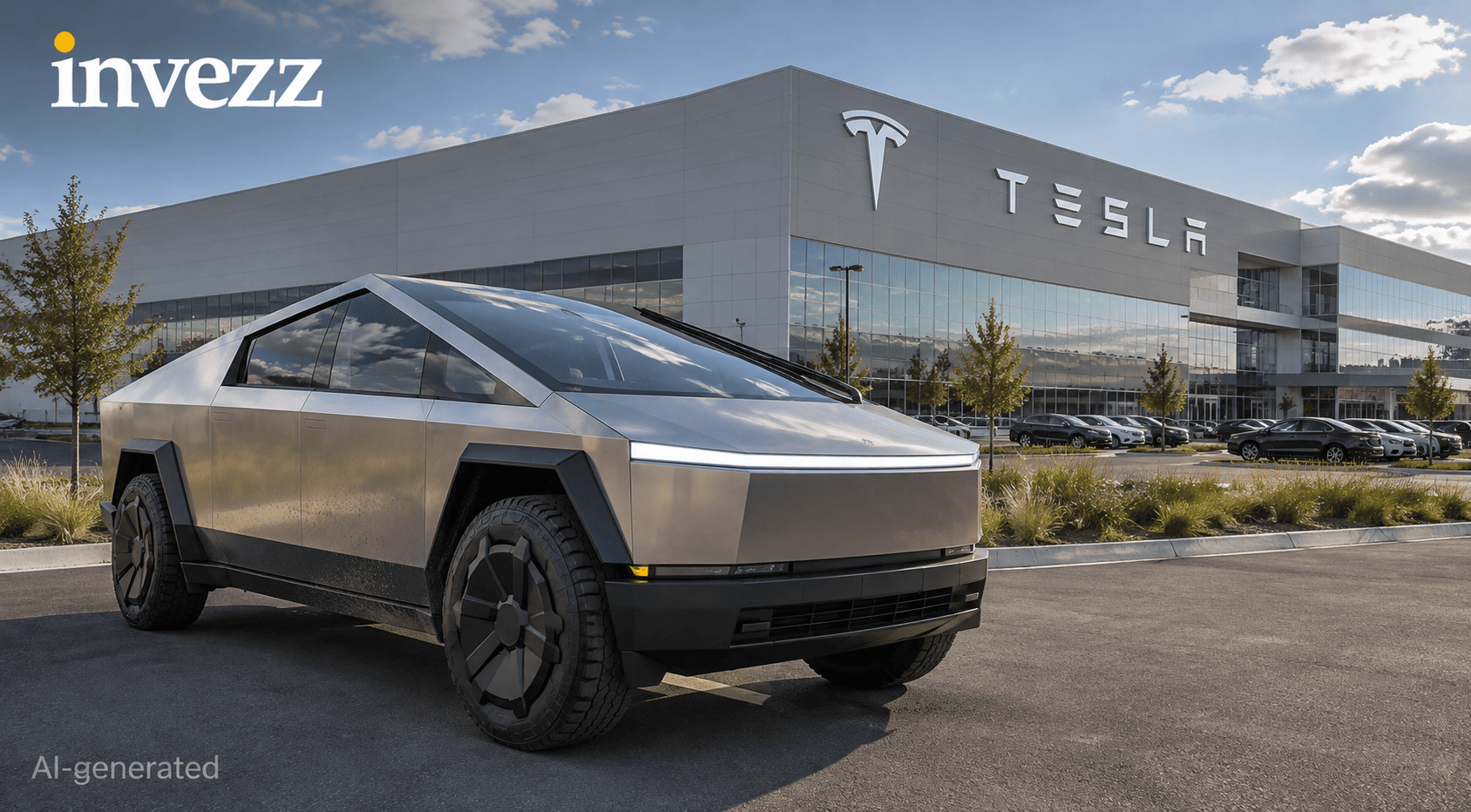
Tesla is preparing to phase out Cybertruck production at its Gigafactory Texas facility around mid-2027, according to CEO Elon Musk, who announced the move on social media platform X. The decision is intended to free up manufacturing capacity for the company's upcoming Cybercab robotaxi, marking another significant pivot toward autonomous transportation.
The announcement, made on Friday, raises questions about demand for the stainless-steel pickup and whether Tesla can generate higher returns from robotaxis than from conventional vehicle sales. Musk did not specify whether Cybertruck production would be relocated to another plant or discontinued entirely.
Tesla's stock closed at $343.69 on Thursday, down 10.77% amid a broader technology sell-off, before the announcement. The manufacturing shift adds another layer of uncertainty for investors who are betting on the company's autonomous-driving ambitions.
Gigafactory Texas Reallocation
Musk stated that production of the Cybertruck would be wound down at the Texas plant to increase Cybercab output. Tesla has not yet identified an alternative site for Cybertruck assembly or provided a revised production target. This distinction matters because the decision concerns a single factory, not a confirmed global withdrawal of a model that launched in late 2023.
In its third-quarter shareholder update, Tesla listed installed annual capacity exceeding 125,000 vehicles each for Cybertruck and Cybercab in Texas. Installed capacity reflects what production lines are designed to support, not actual build or sales figures.
The company began operating Cybercabs within its Austin robotaxi fleet in September. These two-seat vehicles lack conventional steering wheels and pedals, reflecting Musk's ambition to build a transport service around autonomous driving. Reusing factory space could accelerate that expansion without requiring an entirely new plant. Texas also produces the Model Y, Tesla's mass-market SUV.
However, higher manufacturing capacity will only create value if Tesla can deploy the vehicles reliably and attract paying customers.
Cybertruck Demand Concerns
The Cybertruck's unconventional design drew intense interest when deliveries began, but the pickup has faced recalls, quality complaints, and repeated price changes amid growing electric-pickup competition. Tesla's latest sales figures make the commercial picture harder to ignore.
Third-quarter deliveries in its Other Models category fell 48% to 8,295 from 15,933 a year earlier. Production in the category declined 40% to 7,004, even as Tesla delivered 486,532 vehicles overall. These figures do not establish Cybertruck sales, as Tesla groups the pickup with other vehicles and does not disclose its deliveries separately. Nevertheless, the decline raises questions about how efficiently existing manufacturing lines are being used.
Morningstar analyst Seth Goldstein wrote in September that Tesla's Cybercab launch event lacked guidance on the "timeline for Cybercab production" and manufacturing costs. His assessment predates Musk's latest announcement but highlights the information investors still need.
A shift toward Cybercab might improve factory utilization. It could equally replace one uncertain demand outlook with another if robotaxi deployment proves slower than expected.
Cybercab Profitability Gamble
Tesla's latest production decision comes as Wall Street debates how quickly spending on autonomy can become profitable. The company cut its 2026 capital expenditure forecast to roughly $20 billion from more than $25 billion in October.
Josh Gilbert, lead analyst at eToro, told Reuters on October 22 that reduced spending raised doubts for a company "priced on Cybercab and Optimus," Tesla's humanoid robot project. Dan Ives of Yorkville Ives offered the bullish counterpoint, maintaining an Outperform rating and $500 price target, calling Tesla "one of the clearest ways to own physical AI."
Tesla aims to begin delivering Cybercabs to external customers this year, but expansion faces federal safety scrutiny because the vehicles lack traditional driving controls. Regulatory approval, software performance, operating costs, and pricing per ride remain important obstacles.
This article is for informational purposes only and does not constitute financial advice.