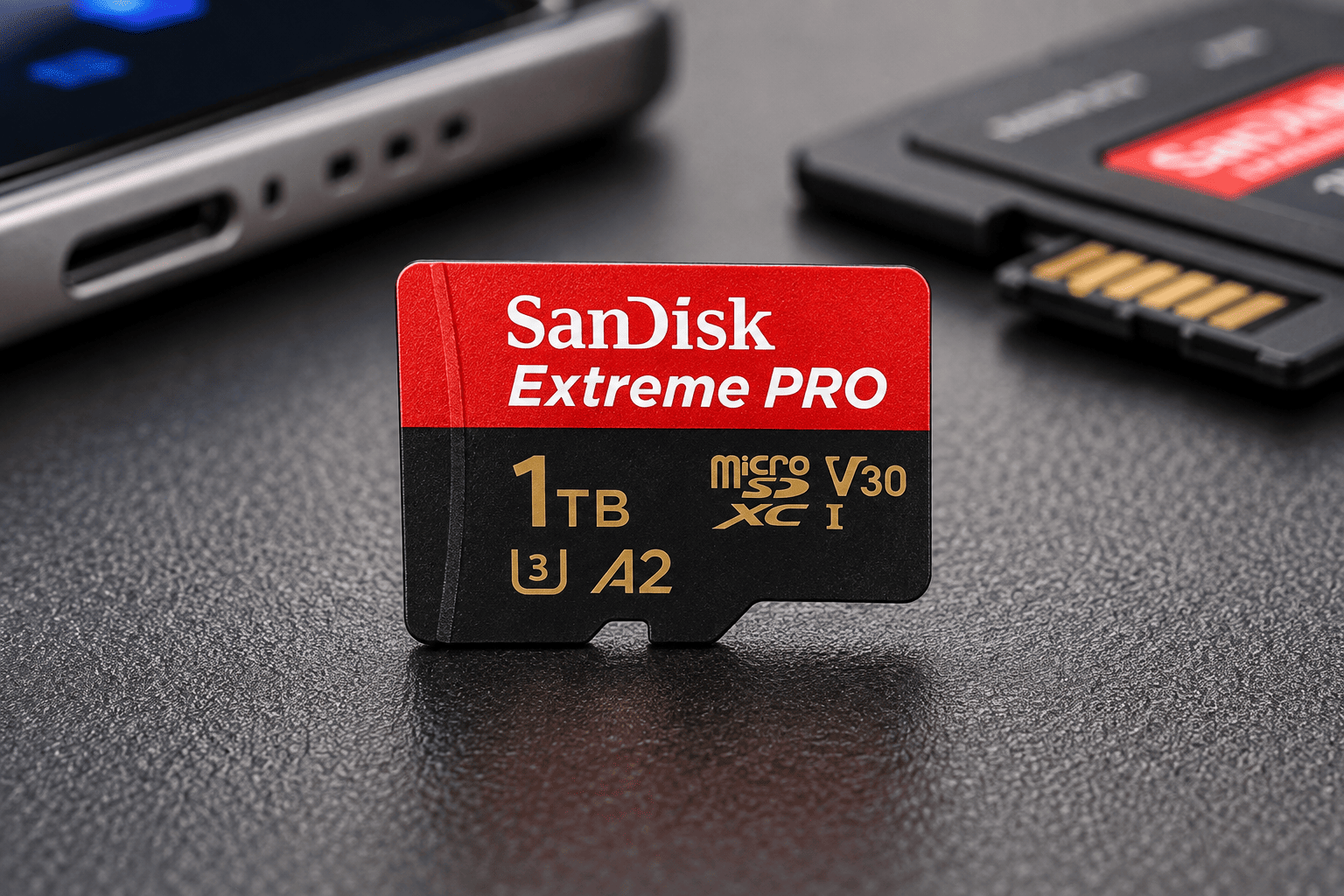
SanDisk (NASDAQ: SNDK) has seen its shares surge roughly 500% year-to-date, and many investors believe the rally still has room to run. The optimism stems from a strategic shift away from the notoriously cyclical NAND memory market toward a more predictable, contract-based business model, coupled with a strong manufacturing partnership and a potential breakthrough in AI-related memory technology.
Long-term agreements reshape revenue visibility
SanDisk is increasingly relying on multi-year agreements with customers, under which it commits to delivering specified volumes of products while customers commit to purchasing them. These contracts often include fixed and variable pricing components, with financial guarantees protecting SanDisk if customers fail to meet obligations. According to the company's fiscal 2026 10-K, these new business models (NBMs) are expected to become the predominant way it operates, improving revenue predictability, production planning, and supply assurance.
The company has already signed agreements with eight data-center customers, including three U.S. hyperscalers, with a minimum total contract value of $93.9 billion. These deals are projected to cover 50% of SanDisk's bit shipments in fiscal 2027 and 67% in fiscal 2028. CFO Luis Visoso noted that pricing floors and ceilings in the contracts support gross margins around 80%, giving investors greater clarity on both future volumes and profitability.
Kioxia joint venture boosts capital efficiency
SanDisk also benefits from its long-standing manufacturing partnership with Kioxia Holdings. The companies have extended their joint venture at Kioxia's Yokkaichi plant in Japan through December 2034. This 25-year-old collaboration allows them to jointly develop technologies and manufacture flash-based memory wafers, with their combined footprint representing 33% of global wafer production. The partnership enhances capital efficiency through shared R&D and tool reuse, helping SanDisk manage the heavy capital requirements of expanding memory production.
High-bandwidth flash: a potential AI catalyst
Looking ahead, SanDisk is positioning itself in the AI memory space with high-bandwidth flash (HBF), a standard it co-developed with SK hynix. HBF addresses memory-capacity constraints of high-bandwidth memory (HBM) and can provide 8 to 16 times higher memory capacity at a given bandwidth, targeting high-context AI inference workloads. SanDisk has completed the design of its first HBF chip, with a launch planned for 2027 and mass production in 2028. The technology has already gained support from major cloud and AI companies, including Alphabet, Meta Platforms, and Tenstorrent, though Nvidia adoption remains pending.
Importantly, HBF's potential contribution is not included in SanDisk's current fiscal 2028-2030 projections, which target a mid-to-high-teens revenue compound annual growth rate. This suggests that successful HBF commercialization could provide additional upside beyond current estimates.
Valuation and market sentiment
Despite the massive rally, SanDisk trades at a higher forward EV/EBITDA multiple than its memory peers—6.3 times versus a peer average of 4.1 times. However, analysts remain bullish. Lynx Research has set a price target of $2,450 for SanDisk and $1,325 for Micron, arguing that the extreme volatility seen in May and June has eased, with institutional buying becoming more deliberate.
Investors are also watching broader memory market dynamics, as DRAM ETFs have surged recently, and AI chip rallies have lifted Asian markets. SanDisk's strategy of locking in long-term demand while maintaining flexibility through its Kioxia partnership and HBF development appears to be resonating with investors seeking exposure to AI-driven memory demand without the full cyclical risk.
Overall, SanDisk's long-term contracts, manufacturing partnership, and potential HBF opportunity provide several factors that investors are watching as the company seeks to balance memory-market cyclicality with rising AI-related demand. While risks remain, the company's proactive approach to revenue visibility and capital efficiency could support further upside.
This article is for informational purposes only and does not constitute financial advice.