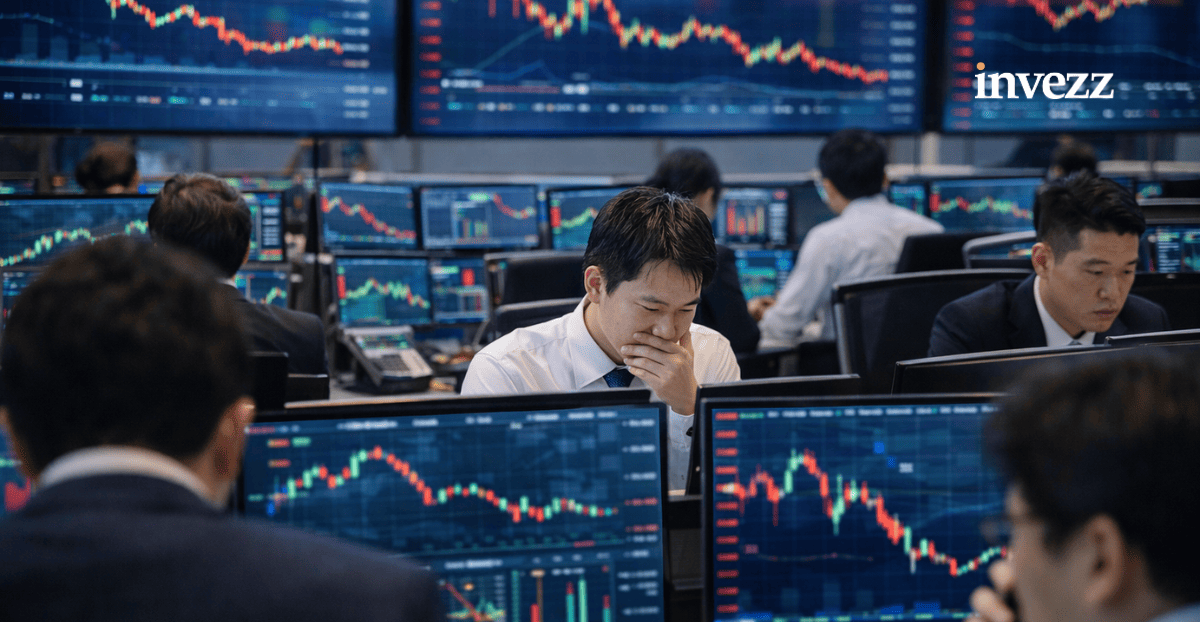
Japan's benchmark Nikkei 225 reclaimed the 60,000 level on Tuesday, buoyed by a sharp rebound in semiconductor shares, though underlying anxieties about regulatory risks and stretched valuations persist.
The index advanced 2.89% to 60,475.78 at the morning close, a gain of 1,700 points from Monday's finish of 58,775.50. This follows Friday's 5.96% plunge that dragged the index to 57,434.77, marking a decline of more than 20% from its June record and placing it in bear-market territory.

SoftBank and chipmakers lead the recovery
The immediate catalyst came from Wall Street, where Monday's technology rebound restored some confidence after a punishing week. The Nasdaq Composite climbed 2.74%, the S&P 500 added 2.35%, and the Philadelphia Semiconductor Index surged 6.85%.
In Tokyo, SoftBank Group jumped approximately 11.9% in early trading, while memory chip maker Kioxia advanced 6.9%. Equipment suppliers Tokyo Electron and Advantest rose 5.8% and 5.3%, respectively, reflecting renewed demand for companies tied to the global semiconductor supply chain.
Signs of possible progress in US-Iran diplomacy eased concerns about energy costs and inflation, which have weighed on interest-rate expectations. Hideyuki Ishiguro of Nomura Asset Management told Bloomberg that investors are taking a more measured view of potential AI regulation, and greater clarity on US policy could encourage further buying.
Why AI investment fears still matter
The recent sell-off followed Democratic victories in the US midterm elections, which raised worries that stricter oversight could delay construction of energy-intensive AI data centers. Such delays are significant for Japanese companies whose fortunes depend on continued investment in computing capacity.
SoftBank has extensive AI exposure, while Advantest and Tokyo Electron supply equipment used throughout semiconductor production. Investors are now questioning whether they overreacted. A postponed data center could delay equipment orders without eliminating them, which would be less damaging than a widespread cancellation of projects.
But timing still matters. Delayed spending can push revenues into later periods, increase financing costs, and undermine valuations based on rapid earnings growth. “Wariness about US policy moves such as AI regulation runs deep,” Takuma Ikemoto of Tokai Tokyo Intelligence Laboratory told Reuters on Monday, cautioning that gains could struggle after the first wave of buying.
Nikkei 225 stock market rally
Reclaiming 60,000 is an important psychological milestone, but the Nikkei remains below its June peak. Recoveries after severe falls can reflect short-covering and bargain hunting rather than a lasting change in fundamentals.
Takashi Hiroki, chief strategist at Monex Securities, wrote on Monday that institutional portfolio adjustments often prolong market recoveries. Selling can return as prices rise because investors use rebounds to reduce exposure. His weekly forecast range of 55,000 to 60,000 has already been exceeded intraday, highlighting how quickly sentiment has shifted.
The next tests include Tuesday's US consumer inflation figures, Friday's producer prices, and SoftBank's scheduled results. Strong inflation could revive expectations of higher Federal Reserve rates, while disappointing earnings could renew questions about AI investment.
This article is for informational purposes only and does not constitute financial advice.