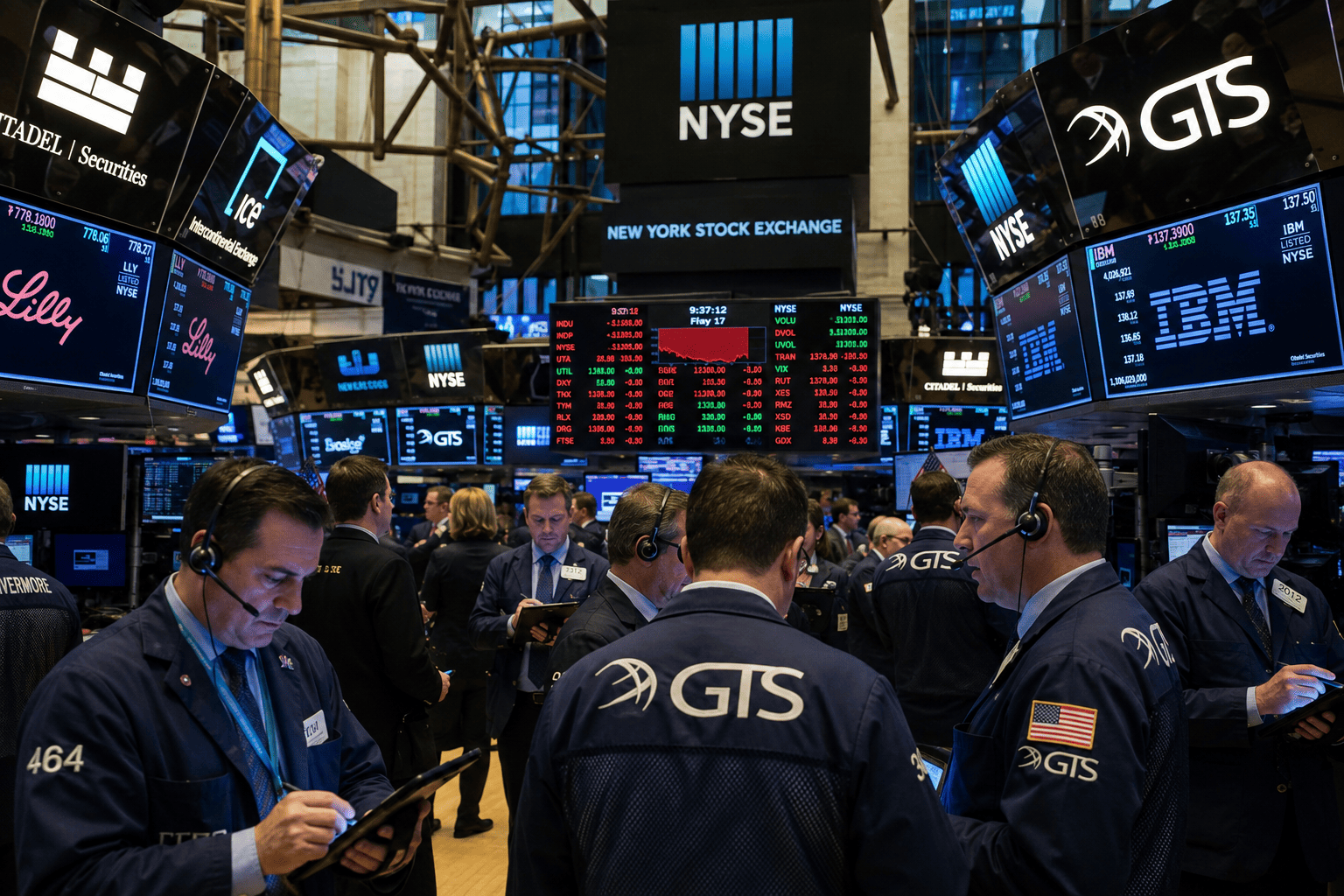
The Nasdaq 100 Index has extended its recent decline, sliding to its lowest point since late July and officially entering a technical correction. The index has now fallen more than 10% from its October peak, as persistent worries about the artificial intelligence sector continue to pressure technology shares. Market participants are now weighing whether the sell-off will deepen in the near term or whether a post-midterm election rebound could provide relief.
AI bubble fears intensify
The pullback has been broad-based, with many of the index's constituents heavily exposed to the AI trade. Intel has been among the hardest hit, losing roughly 51% of its value over the past month. Other notable decliners include CoreWeave, Nebius, Teradyne, SanDisk, Marvell Technology, Arm Holdings, and Lumentum, each down more than 35% in the same period.

Intel's sharp drop followed its latest earnings report, which revealed a slowdown in parts of its business. The company has shed billions in market value in recent months. CoreWeave and Nebius have also tumbled as investors grow wary of the AI infrastructure boom. Research firm Gartner has warned that some neocloud providers may need to record significant impairments, while Tesla CEO Elon Musk has cautioned that many such companies could fail due to financing difficulties.
Marvell Technology and Lumentum saw their stocks plunge after announcing a mega merger aimed at creating a major player in the data center sector. Lumentum fell because the deal is structured as an all-share transaction, while Marvell investors questioned the valuation. Other AI-related names, including Astera Labs, Applied Materials, Seagate, and Advanced Micro Devices (AMD), have also declined amid the broader AI bubble concerns.
Midterm elections and regulatory overhang
The Nasdaq 100's slide also comes as investors focus on the upcoming US midterm elections. Polls suggest Democrats are favored to win control of the House of Representatives and the Senate. Democratic lawmakers have made data center regulation a key campaign issue, with many calling for stricter oversight.
Historically, markets often experience volatility ahead of elections and tend to stabilize once the outcome is known. For instance, defense contractors such as Lockheed Martin and RTX rallied after the previous election cycle but later gave back gains. A similar pattern could play out for tech stocks, with a potential rebound after the midterms.
In addition to political factors, the index will be influenced by upcoming earnings reports from major tech companies, including AMD, Arista Networks, Shopify, Arm, and Qualcomm. These results could provide fresh catalysts for the sector.
Technical outlook points lower
From a technical perspective, the Nasdaq 100 has broken below several key support levels. The index has fallen from a high of 31,361 in October to its current level around 27,989. It has dropped below the 38.2% Fibonacci retracement at 28,123 and the value area low of the Fixed Range Volume Profile. The 50-day exponential moving average has also been breached, while the Relative Strength Index is approaching oversold territory near 30.
Given these signals, the path of least resistance appears to be downward. The next target is the 50% Fibonacci retracement at 27,133. A break below that level could open the door to further losses, with the 61.8% retracement at 26,137 as a potential downside objective.
This article is for informational purposes only and does not constitute financial advice.