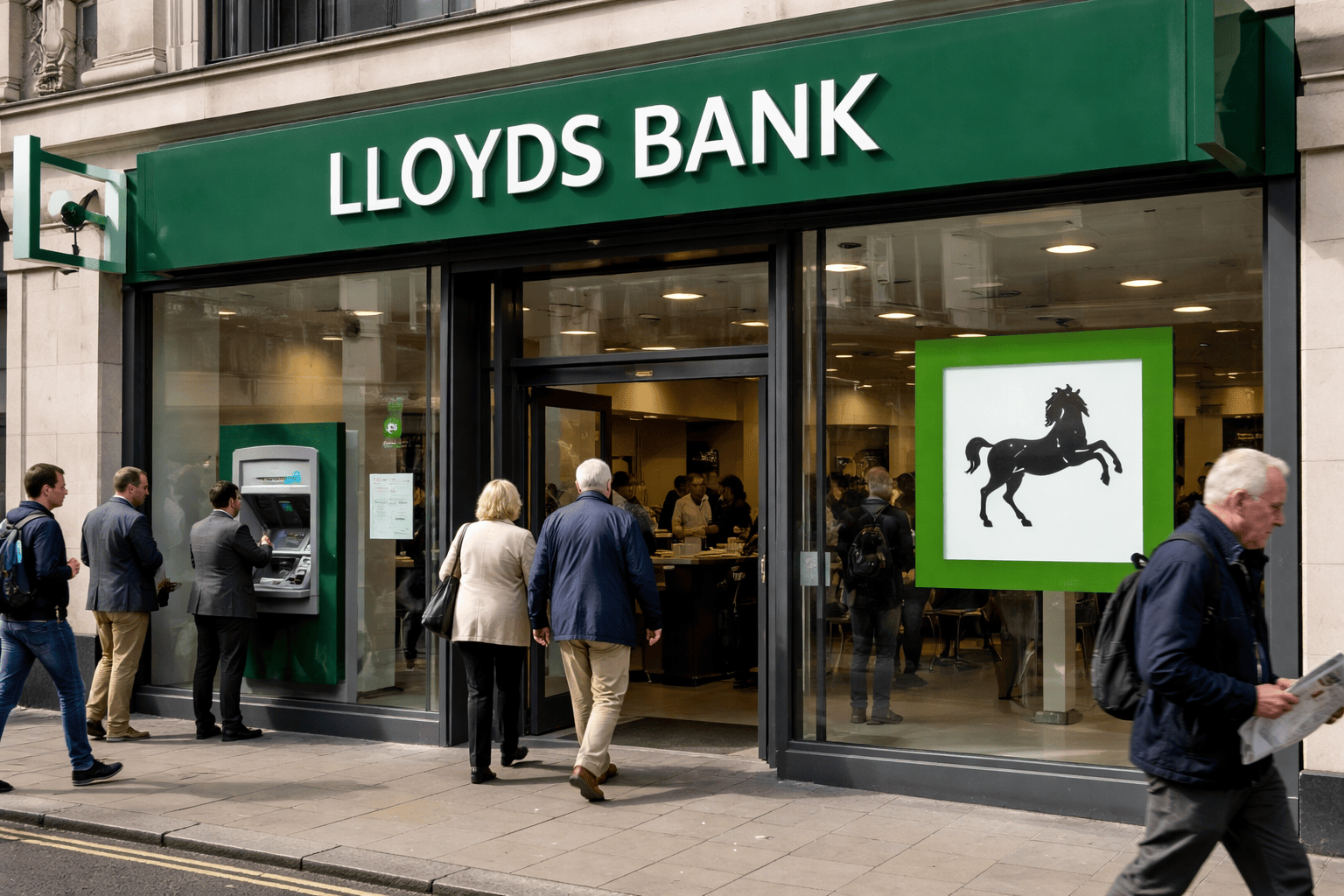
Lloyds Banking Group shares climbed to 113.75p on Thursday, reaching levels not seen since 2008, after the lender reported a sharp rise in first-half earnings. The stock has rallied nearly 30% from its 2026 low, mirroring a broader trend among European and American banks benefiting from higher interest rates and resilient economic conditions.
Strong H1 results driven by net interest income
Statutory profit before tax jumped to £4.3 billion in the first half of 2026, up from £3.5 billion in the same period last year. Underlying net interest income rose 9% year-over-year to £7.3 billion, with the net interest margin expanding to 3.19%. Other income, including ATM fees and brokerage commissions, increased 11% to £3.3 billion.

The only notable negative was an 18% surge in operating lease depreciation, which reached £841 million. However, the bank's cost discipline offset that pressure: operating costs remained flat at £4.9 billion, helped by restrained hiring and increased technology adoption. Lloyds recently completed the acquisition of Schroders Personal Wealth, now rebranded as Lloyds Wealth.
Shareholder returns boosted
Lloyds raised its interim ordinary dividend to 1.58 pence per share, representing a total payout of £918 million — up 30% year-over-year. The stock now offers a dividend yield of 3.2%, above the FTSE 100 average of 3%. CEO Charlie Nun said the bank delivered "sustained strength in financial performance" with growing income, improving operating leverage, and strong credit performance.
The bank's performance echoes that of other major financial institutions. For context, Rolls-Royce also posted strong H1 results recently, lifting its full-year guidance. Meanwhile, SoFi stock dropped 9% despite an earnings beat, highlighting the varied market reactions across the sector.
BoE rate decision in focus
The next major catalyst for Lloyds shares is the Bank of England's interest rate decision. Economists widely expect the central bank to hold rates steady at its upcoming meeting. However, escalating geopolitical tensions — including the US-Iran conflict — have increased the probability of a rate hike later this year. According to Polymarket, odds of a BoE rate hike in 2026 have jumped to 42%.
Higher rates generally benefit Lloyds by widening net interest margins, though they also risk slowing the broader economy. The bank's exposure to the UK housing market and consumer lending makes it particularly sensitive to changes in monetary policy.
Technical outlook: bullish flag pattern
From a technical perspective, Lloyds shares have been trading in a tight range between support at 109.10p and resistance at 115.45p. The stock has formed an ascending channel and is currently near its upper boundary. It remains above both the 50-day and 100-day exponential moving averages.
A bullish flag pattern — characterized by a sharp vertical move followed by a horizontal consolidation — suggests the uptrend may resume. If the stock breaks above resistance, the next target is around 120p. Conversely, a drop below 109p could signal a deeper pullback.
Investors should also keep an eye on broader market dynamics. For instance, IAG stock dropped 14% on jet fuel concerns, illustrating how commodity price shocks can ripple through different sectors. Similarly, BMW's margin slump to 2.3% underscores the challenges facing industrial companies amid rising input costs.
This article is for informational purposes only and does not constitute financial advice.