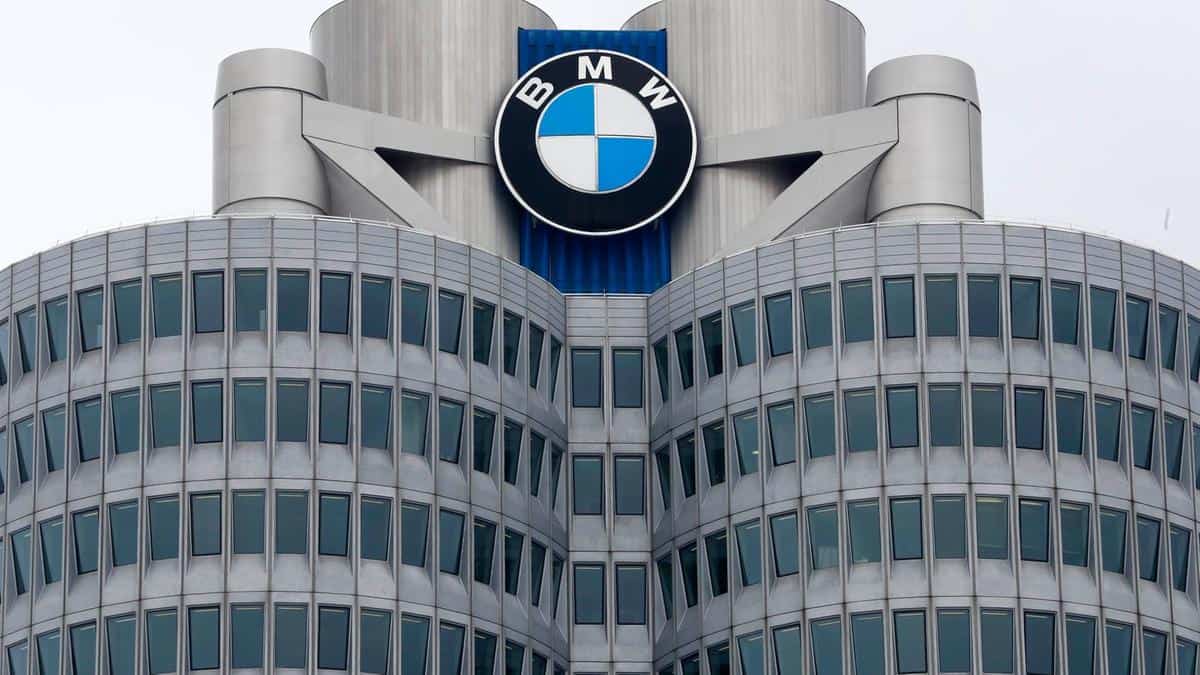
BMW shares drew investor attention Thursday after the premium automaker reported second-quarter results that narrowly beat analyst expectations but laid bare the mounting pressures from China, tariffs, and weakening cash generation. The stock closed Wednesday at €60.30, roughly 38% below its 52-week high, leaving the market to debate whether the latest figures mark a trough or signal deeper structural challenges.
Earnings beat masks underlying margin damage
Second-quarter pre-tax profit fell 35.1% to €1.70 billion, slightly above the €1.6 billion consensus. However, the headline beat offered limited comfort as the core automotive business deteriorated sharply. Automotive operating profit plunged 60.7% to €629 million, and segment free cash flow sank 73.4% to €513 million. Group revenue declined 7.9% to €31.26 billion.

The automotive operating margin narrowed to 2.3% from 5.4% a year earlier, also just ahead of expectations. Tariffs alone shaved about 1.25 percentage points off the margin, while higher depreciation tied to BMW Brilliance Automotive assets cut another 1.2 points. Management also cited currency and commodity headwinds alongside intensifying competition.
For investors, the central question is whether the 2.3% margin is near a floor. BMW retained its full-year automotive margin forecast of 1% to 3%, implying that a rapid second-half recovery is not baked into guidance. The company continues to expect a significant decline in group pre-tax earnings for the full year.
China weakness remains the biggest drag
BMW's second-quarter deliveries in China tumbled 30.2% to 117,815 vehicles as local electric-vehicle makers expanded and price competition intensified. Global group deliveries fell 4.9%, even as volumes rose 7.6% in Europe and 11.9% in the U.S. The regional divergence explains why investors remain cautious: growth in Western markets is not yet large enough to offset the erosion in what was once a highly profitable Chinese franchise.
That weakness also raises the risk of further discounting, which could keep margins under pressure even if volumes stabilize. There are some bright spots on the product front. Battery-electric deliveries in Europe jumped 37.9% during the quarter, and the company said its new iX3 is on track to reach 100,000 orders. Those figures support the strategic case for the Neue Klasse range, but investors will want evidence that demand translates into stronger pricing and cash flow. For context on broader market dynamics, see our analysis of gold's recent rebound amid shifting rate expectations.
Job cuts raise execution stakes
BMW has agreed to a voluntary redundancy program focused on administrative and development roles, with production jobs excluded. The workforce is expected to shrink by about 8,000 from roughly 150,000 employees by the end of 2027. Management said the company must become leaner as global competition, regional regulation, and geopolitical conflict reshape the industry.
The cost-cutting plan follows June's profit warning, which sent BMW shares down 8.3% in a single session. The program could support the stock if it lowers the fixed-cost base without slowing the Neue Klasse rollout. Yet investors are unlikely to reward savings alone while China sales are falling and automotive cash flow remains weak. BMW still expects more than €2.5 billion of automotive free cash flow this year and has confirmed its reduced guidance.
The share-price case therefore rests on execution: stabilizing China, protecting margins in Europe and the U.S., and proving that restructuring can convert a promising electric-vehicle pipeline into sustainable returns. As seen with Microsoft's strong cloud growth, execution on strategic priorities can drive investor confidence even in challenging markets.
This article is for informational purposes only and does not constitute financial advice.