Gold Rally Pauses Amid Shifting Market Forces
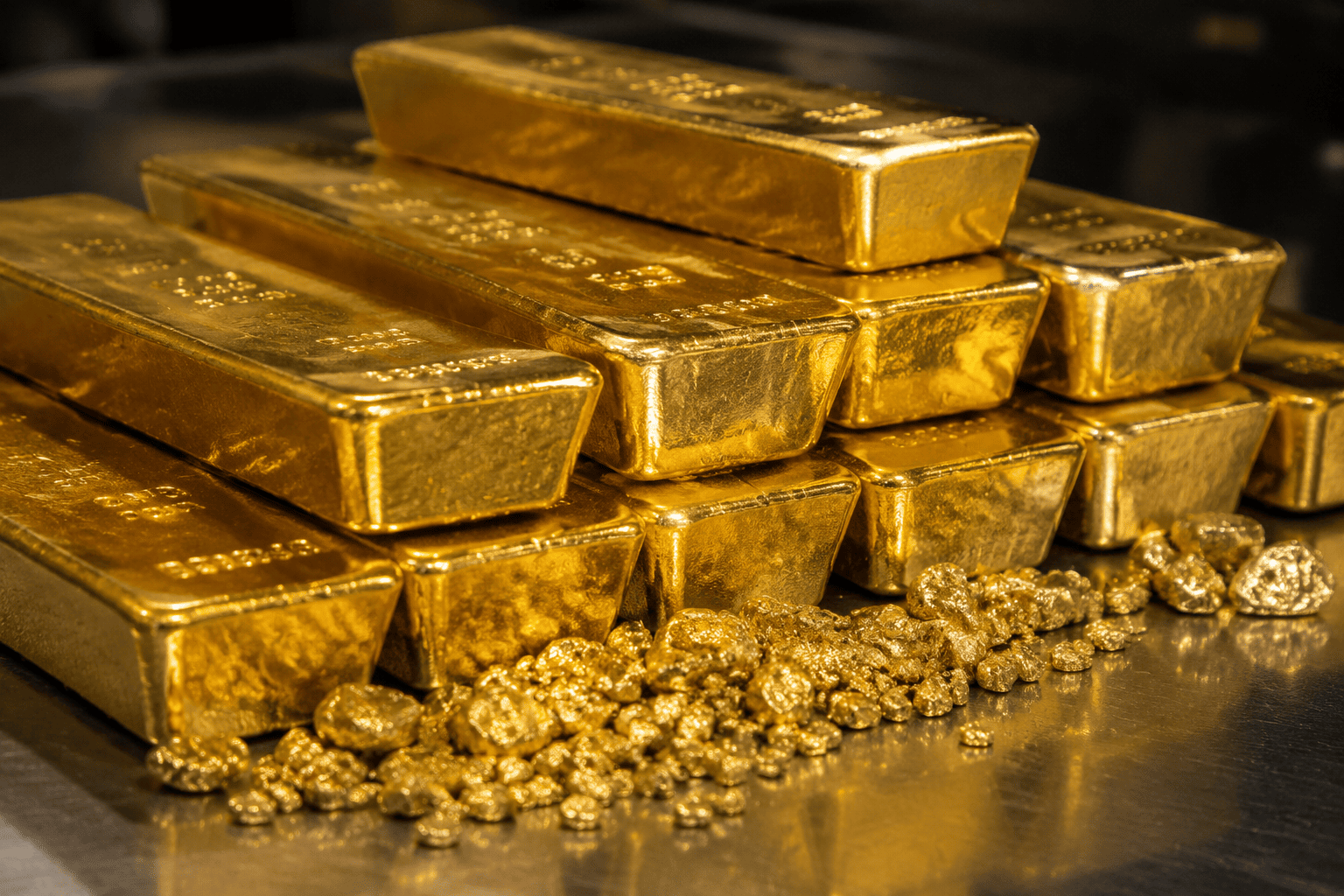
The recent rally in gold prices lost momentum on Wednesday, with the precious metal retreating from its highest level in a month. Spot gold traded 0.3% lower near $4,828 per ounce after briefly touching approximately $4,879 earlier in the session, a peak not seen since mid-March. This pullback follows a period of sustained gains, with bullion still positioned for a third consecutive weekly advance.
Dollar Strength and Risk Rotation Apply Pressure
The primary headwind for gold emerged from a rebound in the US dollar, which climbed from its weakest point in over a month. A stronger dollar typically makes dollar-denominated commodities like gold more expensive for international buyers, dampening demand. Concurrently, market sentiment improved on reports suggesting potential diplomatic engagement between the United States and Iran, encouraging capital to rotate out of traditional safe havens and into risk-sensitive assets like equities.

This shift in sentiment tempered the geopolitical risk premium that had been supporting gold prices in recent weeks. The easing of immediate tensions was reflected in lower oil prices and rising global stock indices, further reducing the urgency for defensive positioning in bullion.
Competing Forces Define the Near-Term Outlook
Analysts note that gold is currently caught between competing macroeconomic and geopolitical currents. On one side, a resilient dollar and hopes for reduced Middle East friction are applying downward pressure. On the other, persistent uncertainty regarding the Federal Reserve's interest rate path, coupled with the fragile nature of diplomatic developments, continues to provide underlying support, preventing a more severe sell-off.
The interest rate environment remains a critical factor. While market expectations for a Federal Reserve rate cut later this year have increased slightly compared to last week, these forecasts remain highly sensitive to incoming inflation data and central bank commentary. Gold generally benefits from expectations of looser monetary policy, but this effect can be offset if rising bond yields accompany a stronger dollar.
Precious Metals Show Divergent Performance
Within the precious metals complex, performance was mixed. Silver notably outperformed gold, rising 0.8% to trade near $80.15 per ounce. This divergence suggests investors are not exiting the sector entirely but are becoming more selective as the purely risk-off driven momentum subsides. The behavior indicates a market that is assessing each metal's fundamentals alongside broader macro trends.
For context on related market movements, readers may explore how oil prices have reacted to diplomatic developments and review the ongoing dynamics in the battle between dollar weakness and geopolitical optimism.
Market Watching Key Pillars for Direction
The immediate trajectory for gold appears contingent on two main pillars: the path of the US dollar and the stability of diplomatic channels concerning Iran. Should the dollar extend its recovery and Middle East tensions continue to ease, bullion could face further near-term pressure. Conversely, any resurgence in geopolitical risk or a stumble in the dollar's strength could quickly reignite demand for the metal as a haven.
Traders and investors are advised to monitor upcoming US economic data for clues on Federal Reserve policy, alongside developments in currency markets and geopolitical headlines. The market's sensitivity to these factors underscores gold's current role as a barometer for both macroeconomic policy uncertainty and global risk sentiment.
This article is for informational purposes only and does not constitute financial advice.