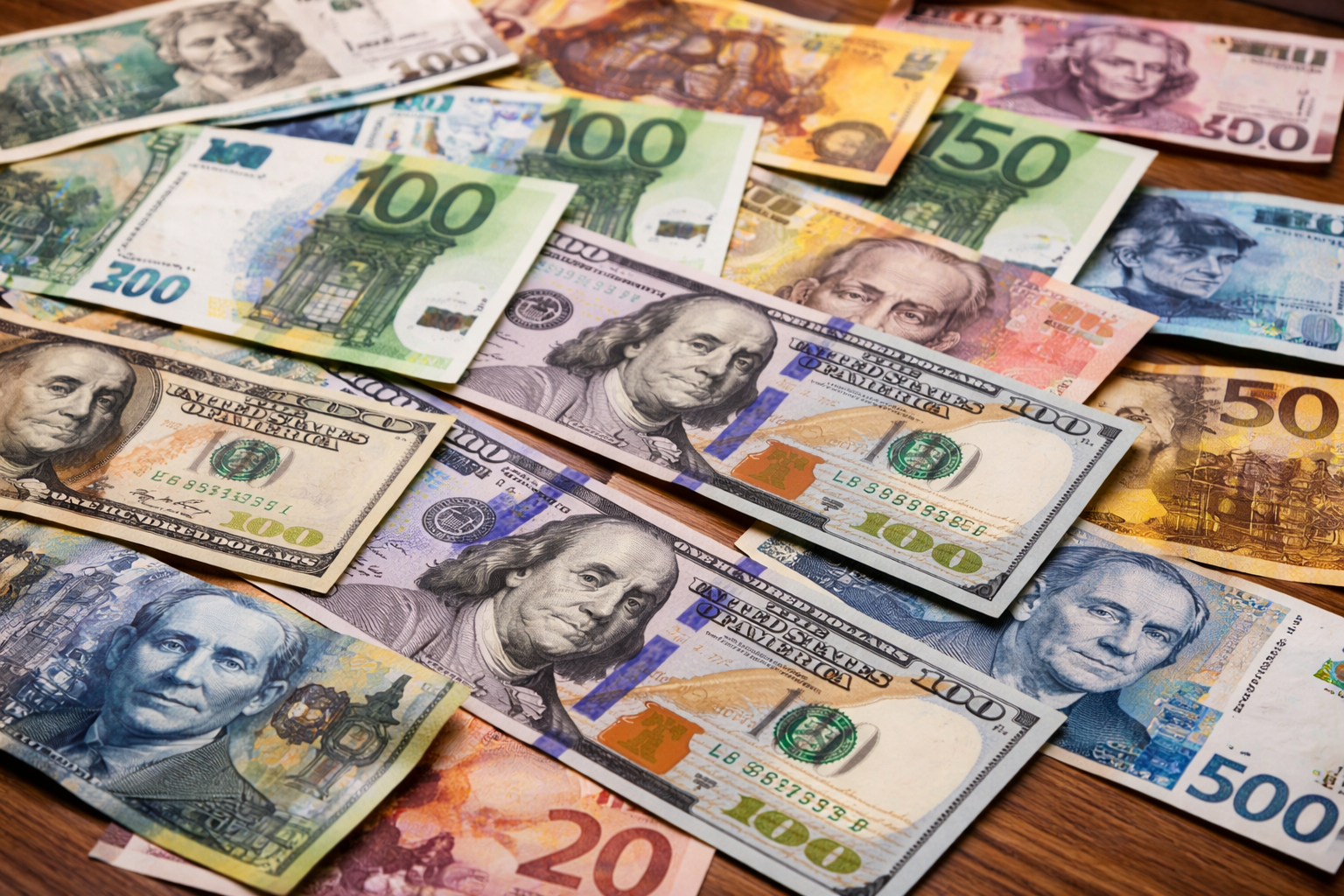
Traditional Currency Hierarchy Faces New Pressures
The established order of global currencies, long dominated by the US dollar with the euro and yen as primary alternatives, is undergoing a significant reassessment. Market participants are increasingly factoring energy security, geopolitical stability, and access to physical commodities into their valuation models, altering the relative standing of various national currencies.
Commodity-Linked Currencies Gain Strategic Status
This year's movements in foreign exchange markets highlight a notable trend. The Norwegian krone and the Australian dollar have emerged as standout performers among G10 currencies, appreciating significantly against the US dollar. This strength is not merely a short-term reaction to higher commodity prices but reflects a deeper, structural shift in investor priorities. In an environment marked by supply chain disruptions and regional conflicts, currencies backed by economies with substantial resource exports and robust fiscal positions are being re-rated.

Norway's Krone: From Niche Trade to Core Holding
Norway presents a compelling case study. The krone's appeal extends beyond its direct linkage to oil prices. Investors are attracted to the nation's substantial sovereign wealth fund, strong public finances, and a central bank capable of maintaining a hawkish monetary policy stance. This combination provides the currency with cyclical potential underpinned by institutional credibility. Consequently, some asset managers are increasingly viewing the krone as a strategic developed-market position rather than a speculative commodity play, considering it against traditional European currencies like the euro and sterling.
Australia's Multifaceted Appeal
The Australian dollar's ascent is driven by a broader set of factors. Australia offers exposure not only to energy markets but also to critical metals and mining sectors tied to Asian demand. Its deep capital markets and stable political framework allow investors to gain leveraged exposure to global commodity cycles while maintaining confidence in the underlying institutional strength. This positions the Aussie dollar as more than a simple proxy for global risk appetite; it is increasingly seen as a vehicle for expressing views on regional economic resilience and resource scarcity.
Underlying Drivers of the Currency Reset
The recalibration stems from fundamental questions now guiding capital flows. Beyond traditional metrics like interest rate differentials, investors are scrutinizing which economies are net energy exporters, possess strategic resource reserves, and demonstrate geopolitical insulation. This line of inquiry naturally advantages nations like Norway, Australia, and Canada, whose currencies are perceived to be backed by tangible assets and strategic economic positioning.
This does not signal an immediate end to US dollar dominance, which retains its role as the world's primary reserve currency and a haven during market stress. However, the secondary ranking beneath it is becoming more fluid and contested. The market is beginning to price in a world where access to real resources carries greater weight in determining a currency's long-term value and stability.
Potential Headwinds and Market Risks
The trend is not without potential reversals. A sustained decline in oil prices, a meaningful easing of geopolitical tensions, or a severe downturn in global growth that crushes commodity demand could diminish the urgency behind these currency trades. In a sharp risk-off scenario, the US dollar could rapidly reassert its traditional haven strength. For related analysis on factors affecting the dollar's standing, see Dollar Index Drops 10% Since 2025, Testing Currency's Trust Premium.
Nevertheless, the broader implication is that a more permanent reassessment may be underway. Markets are beginning to internalize a framework where energy security and geopolitical alignment are critical, durable components of currency valuation. This shift has direct implications for global capital allocation, as seen in strategic moves by major institutions detailed in SoftBank Secures $3.5 Billion in Dual-Currency Bond Offering to Refinance Debt. Furthermore, policy decisions that tighten resource supplies, such as those covered in US Ends Sanctions Waivers for Iranian and Russian Oil, Tightening Global Supply, directly reinforce this new investment calculus.
This article is for informational purposes only and does not constitute financial advice.