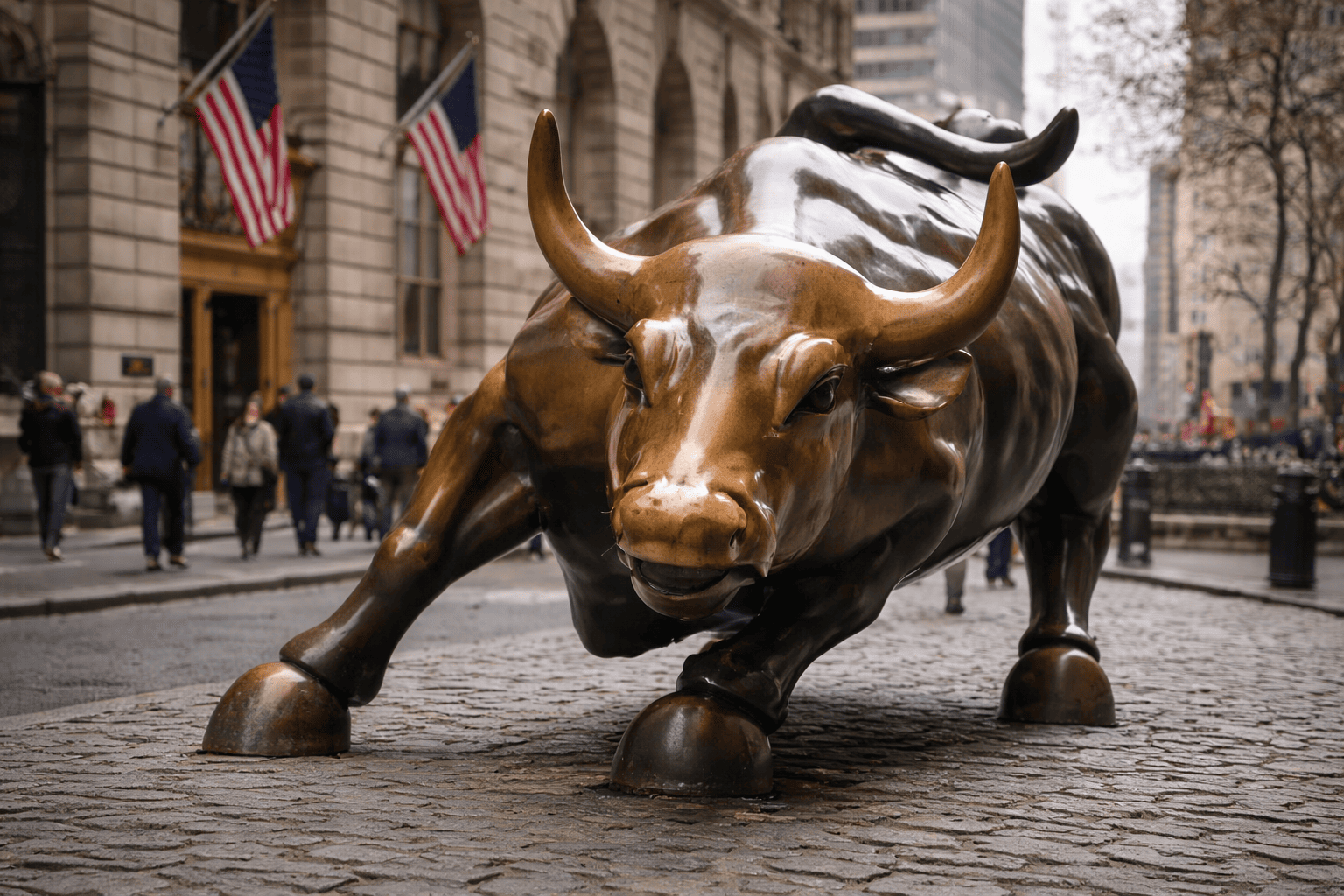
Wall Street closed sharply higher on Wednesday as the Democratic Party's victory in both chambers of Congress removed a layer of political uncertainty that had been weighing on investor sentiment. The Dow Jones Industrial Average climbed 3.03%, or 1,569.40 points, to finish at 53,356.12, its best daily performance since April 9, 2025, and its first close above 53,000 since September 8.
The broader market also advanced, with the S&P 500 rising 1.58% to 7,688.62 and the Nasdaq Composite adding 1.44% to 25,736.51. The election outcome is expected to produce a divided government, which could limit the administration's ability to push through its policy agenda on taxes, tariffs, energy, and technology regulation.

Oil prices slide as geopolitical tensions ease
Equities extended their gains as crude oil futures tumbled more than 8%, with both U.S. and Brent benchmarks falling sharply. The drop followed comments from Vice President JD Vance linking the Republican Party's election losses to the Iran war, raising expectations that political pressure to end the conflict could intensify. Lower oil prices helped ease concerns about inflation and energy costs, supporting sentiment across the market. The U.S. dollar weakened against major currencies, while longer-dated Treasury yields moved lower.
AI stocks diverge on regulatory worries
Technology and AI-related shares delivered mixed results as investors weighed the potential impact of Democratic control on the industry's infrastructure expansion. Large cash-rich tech companies such as Amazon, Meta Platforms, and Alphabet advanced, as a slower pace of AI infrastructure investment could reduce their capital expenditure requirements. However, data centre operators and some infrastructure suppliers came under pressure amid fears of tighter regulation and project delays. The election of Democrat Gina Hinojosa as Texas governor, who has pledged an immediate moratorium on data centres in the state, added to these concerns. Shares of IREN and Hut 8 fell sharply, while Applied Digital and Core Scientific also declined. The Philadelphia Semiconductor Index dropped to a six-month low, and AMD shares slipped despite the chipmaker forecasting faster-than-expected growth in 2027, supported by stronger data centre sales.
Investors look beyond tech
The election results also lifted stocks outside the technology sector. Walmart rose 4%, and Bank of America gained 3%, as investors turned to consumer and financial names. Consumer discretionary stocks led sector gains, while energy shares declined. Solar and clean-energy stocks advanced on expectations that a Democratic-controlled Congress could help preserve federal support for clean-energy development. Defence stocks, including Northrop Grumman, RTX, and Lockheed Martin, fell as investors considered the possibility that President Donald Trump's proposed $1.5 trillion defence budget could face greater resistance in Congress.
Overall, the market's reaction suggests that investors are welcoming the clarity provided by the election results, even as they adjust to the implications of a divided government.
This article is for informational purposes only and does not constitute financial advice.