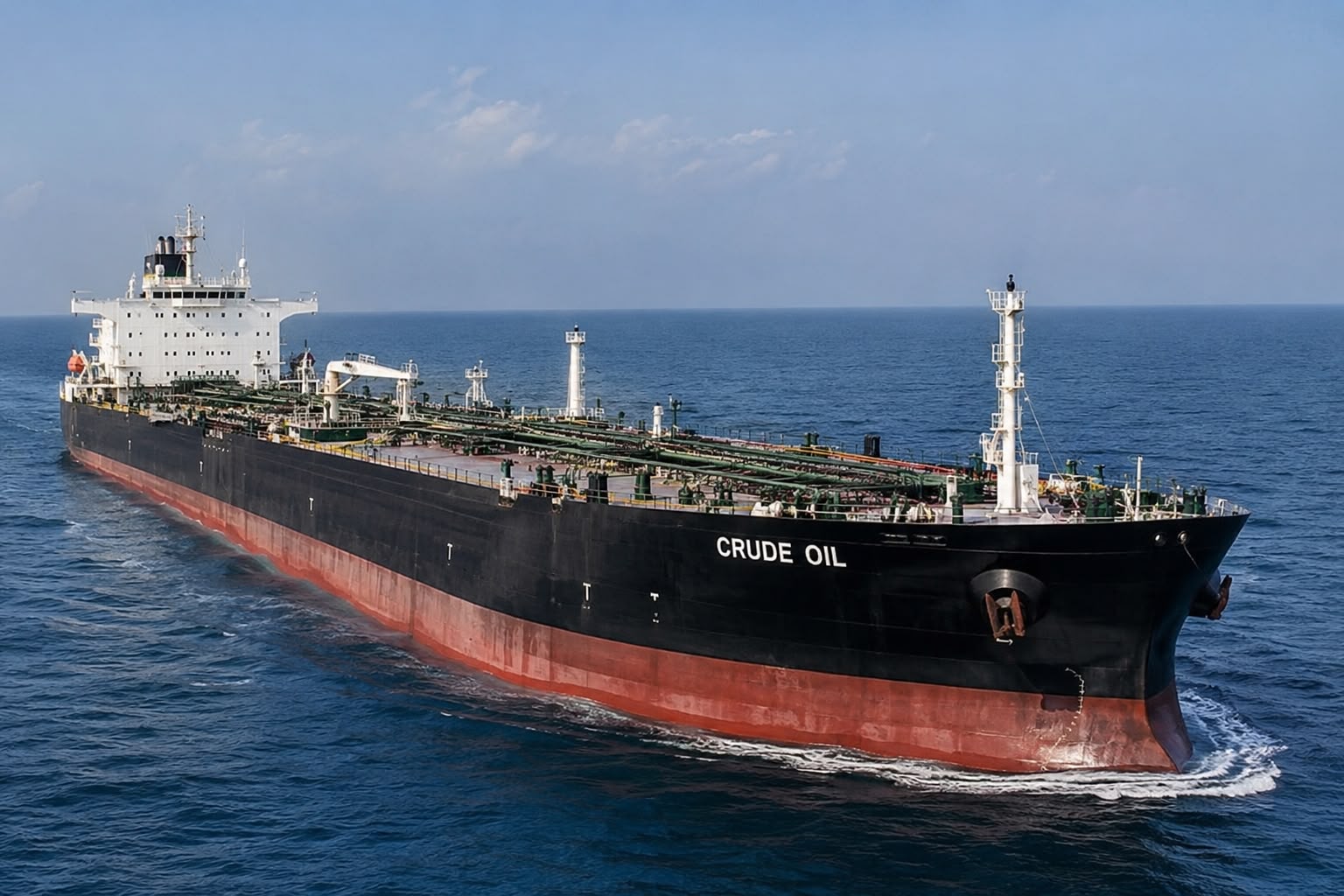
Brent crude, the global oil benchmark, surged to $100 a barrel on Wednesday, its highest level since July, after US forces struck Iranian oil tankers in the Gulf of Oman and near Kharg Island. The military action, confirmed by US Central Command, targeted five vessels and followed an attempted Iranian ballistic missile attack on a US Navy warship. Iran retaliated by firing missiles toward Jordan and warning it could strike shipping near Kuwaiti and Bahraini ports.
At the time of writing, Brent was up about 2.8% at $100.71, while West Texas Intermediate (WTI) climbed more than 2.5% to roughly $95.66. Both benchmarks have now advanced over 60% year-to-date, reflecting persistent geopolitical risk in the Middle East.

Supply fears intensify
The latest escalation compounds existing worries. On Tuesday, Iran-backed Houthi rebels attacked Saudi energy infrastructure, forcing some facilities to halt operations. Saudi-led forces reported civilian injuries and vowed a response. Traders are increasingly concerned that the conflict could spread beyond Iran, potentially disrupting oil flows through the Strait of Hormuz, a critical chokepoint for global crude shipments.
These supply-side pressures have already translated into higher fuel costs for consumers. US diesel prices hit a record $5.90 a gallon on Tuesday, according to AAA, adding to inflationary concerns.
Market reaction
Equity markets felt the heat. The S&P 500 fell 0.8% on Tuesday and is now nearly 2% below its mid-August record high. US stock futures dropped in premarket trading, with Dow futures down 0.57%, S&P 500 futures off 0.31%, and Nasdaq futures lower by 0.39%.
Rising oil prices have revived inflation worries, pushing the 10-year US Treasury yield briefly above 4.8% on Tuesday, its highest since November 2023. The 2-year yield also climbed to its highest level since January 2025. Overseas, France's 30-year bond yield reached its highest since April 2008, and Germany's 10-year bund yield touched levels not seen since early 2011.
Gold edged higher after three straight losing sessions, supported by a softer dollar even as energy-driven inflation concerns persist. The metal has held near $4,400 an ounce since rebounding from July lows around $4,000.
Oil's volatile year
This is not the first time Brent has hit triple digits in 2026. It first crossed $100 in March, its highest since Russia's invasion of Ukraine in 2022, then fell to $72 in June after the US and Iran reached a deal to reopen the Strait of Hormuz. Prices climbed back above $100 in July before easing, and have now returned to that mark.
Analysts are watching how quickly tanker traffic out of the Middle East can shift. Dennis Kissler of BOK Financial noted in a research note that traders are focused on the speed of rerouting. Demand is also a factor: China, the world's largest oil importer, has recently reduced imports, which has helped cap prices. A pickup in Chinese buying could push prices even higher.
This week's US inflation data is likely to be the next major catalyst for both oil prices and interest rate expectations. For more on how oil's surge is affecting markets, see Dow futures slide on oil spike and Shell's record high amid supply fears.
This article is for informational purposes only and does not constitute financial advice.