
Brent crude oil prices breached the $90 per barrel threshold on Monday, driven by escalating military confrontations between the United States and Iran that have severely constrained tanker movements through the Strait of Hormuz. The international benchmark climbed 3.05% to $90.79, its highest level since June 11, following a 15.9% gain last week. U.S. West Texas Intermediate crude also advanced, rising 2.65% to $84.68 per barrel.
The rally comes after nine consecutive nights of U.S. airstrikes against Iranian positions, with Kuwait and Bahrain reporting retaliatory attacks. The Strait of Hormuz, which handles roughly one-fifth of global oil trade, has become the focal point of market anxiety. While traders are not pricing in a complete closure, the number of vessels transiting the waterway has dropped sharply. According to LSEG data, only four vessels crossed on Sunday, down from eight on Saturday. At least three product tankers and one very large crude carrier have entered since Friday to load oil, indicating traffic has not halted but remains severely constrained.
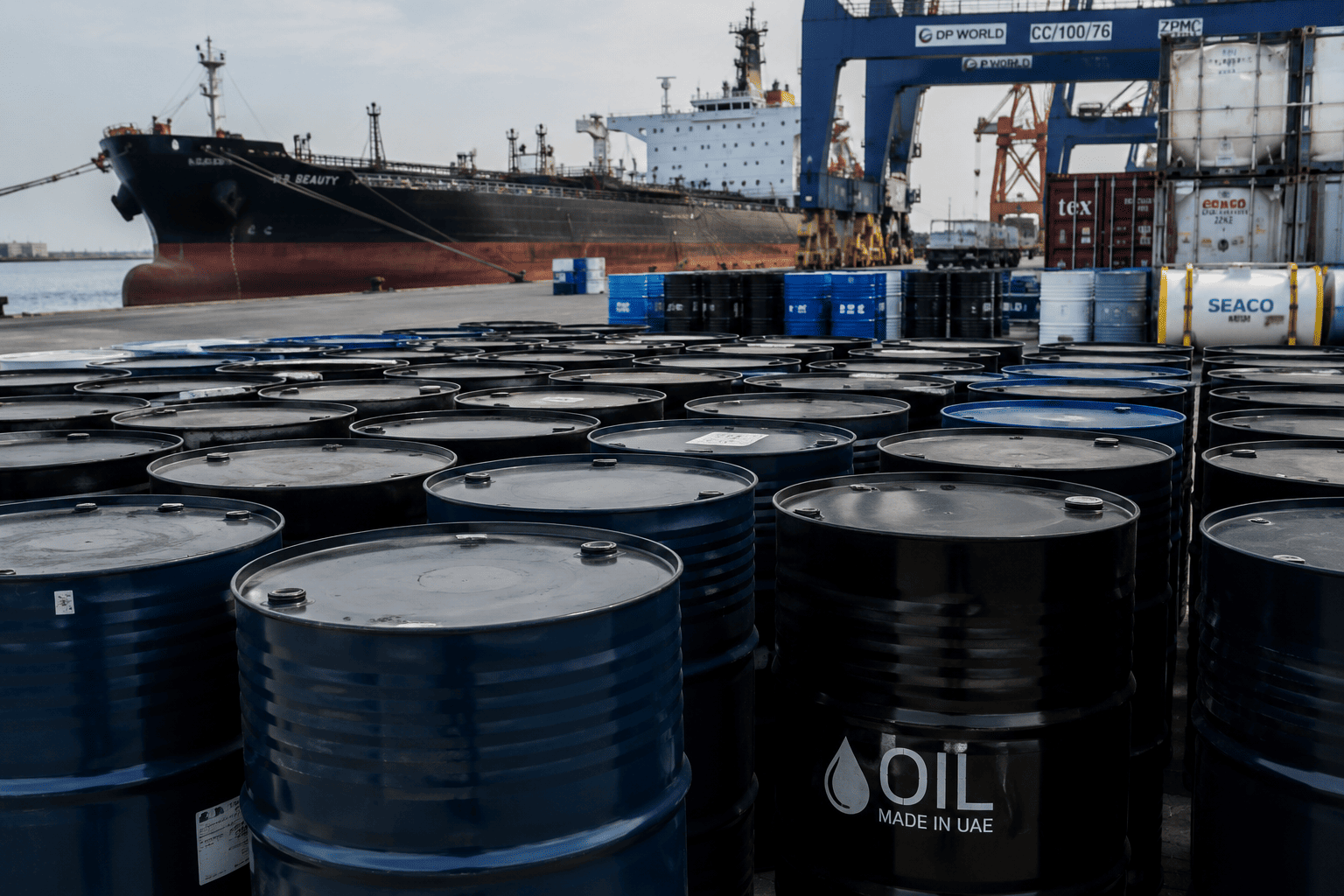
Washington has announced a naval blockade on Iranian ports, while Tehran claims it is targeting vessels violating its navigation rules. Early Monday, a vessel was reported on fire near Oman, though the cause has not been verified. These developments have injected significant uncertainty into global supply chains.
Inventories at Five-Year Lows Amplify Price Risks
The current price surge may prove more durable than previous geopolitical rallies because global oil inventories offer far less cushion. Barclays analyst Amarpreet Singh warned in a note that “oil markets are still too complacent” about the impact on stockpiles, which the bank estimates are at their tightest in five years. Inventories act as the market’s shock absorber; when storage is ample, refiners can replace delayed cargoes with onshore barrels. But with stockpiles low, a persistent decline in exports forces buyers to compete for prompt supplies, pushing prices higher.
Quantum Strategy strategist David Roche expects declining Gulf exports to leave inventories tight by September, including in the United States. “Stay long Brent with a target of $95 to $105 a barrel,” Roche said in a Monday note. The $105 level is not a consensus forecast but a plausible scenario supported by Barclays’ projection of an average Brent price of $96 for 2026 and a third-quarter supply deficit, as production recovery lags behind improving shipping flows.
Tanker Flows Will Determine the Next Move
A sustained rise toward $105 would require continued restrictions on Hormuz traffic, falling Gulf exports, and limited diplomatic progress. Damage to tankers, terminals, pipelines, or other infrastructure could accelerate the move if refiners begin competing for scarce near-term cargoes. Conversely, oil prices can reverse sharply if geopolitical tensions ease, as history has shown.
For investors monitoring the broader market, the oil rally has contributed to renewed fears of Federal Reserve rate hikes, as seen in Gold Slips Below $4,040 as Oil Rally Revives Fed Rate Hike Fears. Meanwhile, the energy sector’s strength contrasts with weakness in other areas, such as the Dow Plunges 394 Points as Chip Rout Deepens; Weekly Losses Mount on AI Spending Fears.
In the near term, tanker flows through the Strait of Hormuz will be the key variable. If constraints persist, Brent could test the $95–$105 range. If tensions de-escalate, a sharp correction is possible. Investors should remain alert to developments in the region and inventory data.
This article is for informational purposes only and does not constitute financial advice.