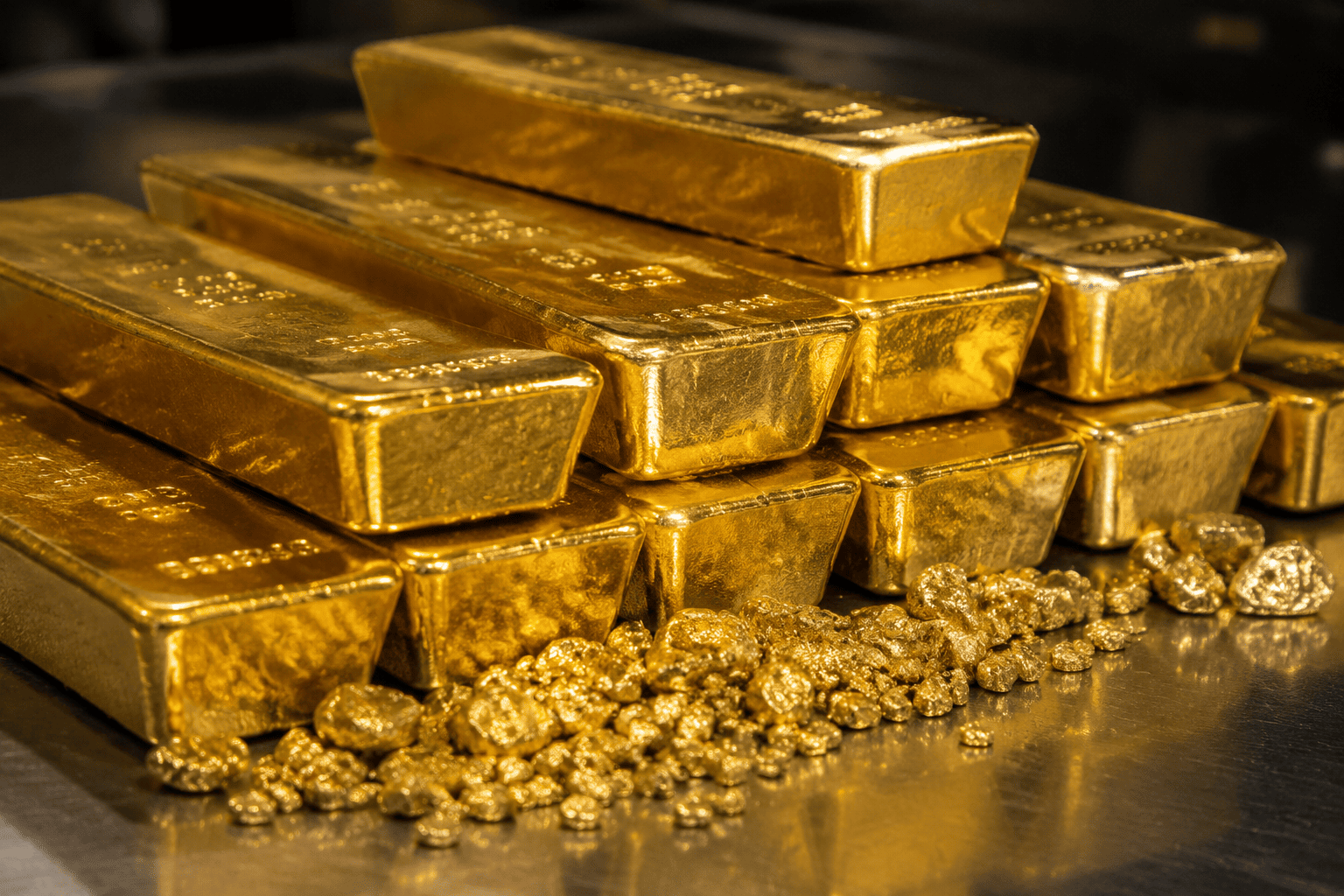
Gold retreated on Thursday, sliding toward $4,035 an ounce in Asian trading, as a sustained rally in crude oil prices forced investors to refocus on inflation risks and the possibility of another Federal Reserve rate increase. The precious metal briefly stabilized above $4,050 earlier in the session, but the rebound faded as Brent crude held above $85 a barrel, extending its four-day advance.
Oil Shock Overwhelms Haven Demand
The escalation of US-Iran hostilities has driven oil prices higher, with Brent crude rising for four consecutive sessions as traders price in the risk of further disruptions around the Strait of Hormuz. The US expanded its attacks on Iranian coastal defenses, missile facilities, and other targets, while American forces disabled a tanker they said was attempting to breach a renewed naval blockade. Iran retaliated with missile and drone strikes aimed at Bahrain, Jordan, and Kuwait, and the Islamic Revolutionary Guard Corps has threatened broader restrictions on regional oil and gas exports.

Jigar Trivedi, a senior analyst at IndusInd Securities, noted that gold's decline reflects the market's focus on the inflationary consequences of the conflict rather than its immediate haven appeal. In this environment, a prolonged rise in crude prices matters more for bullion than the latest soft inflation reports.
Softer Inflation Offers Limited Relief
June consumer prices fell 0.4% from May, while producer prices declined 0.3%, their largest drop in 14 months. Both releases indicated that inflation was moderating before the latest surge in energy costs. However, the data captured a period when fuel prices were falling, offering little guidance on the impact of the renewed US-Iran conflict. As US producer prices dropped 0.3% in June, the distinction between pre-conflict and post-conflict inflation dynamics is becoming increasingly important.
Fed Governor Lisa Cook stated she is prepared to act if disinflation fails to emerge soon, while Chair Kevin Warsh maintained a firm commitment to returning inflation to the 2% target without signaling the timing of the next policy move. Traders have reduced expectations for an immediate rate increase but have not ruled out another rise before year-end.
Gold's $4,000 Floor Returns to Focus
Gold's pullback has returned attention to the $4,000 level, which has repeatedly attracted buyers during recent bouts of selling. A sustained break below that threshold could expose the metal to the $3,950 area, while a recovery above $4,100 would be needed to restore stronger upward momentum. The wider precious-metals complex also weakened, with silver dropping toward $57 an ounce, as detailed in our analysis of silver's support levels.
For now, gold is caught between two competing trades. Geopolitical uncertainty is keeping haven demand alive, but the oil-driven inflation threat is giving the Fed the stronger influence over prices. As oil prices climb amid renewed Strait of Hormuz tensions, the energy shock is lifting inflation expectations and the opportunity cost of holding a non-yielding asset.
Investors will be watching for any signs of de-escalation in the Middle East or a shift in Fed rhetoric that could alter the current trajectory. Until then, gold's ability to hold the $4,000 support level will be a key test of market sentiment.
This article is for informational purposes only and does not constitute financial advice.