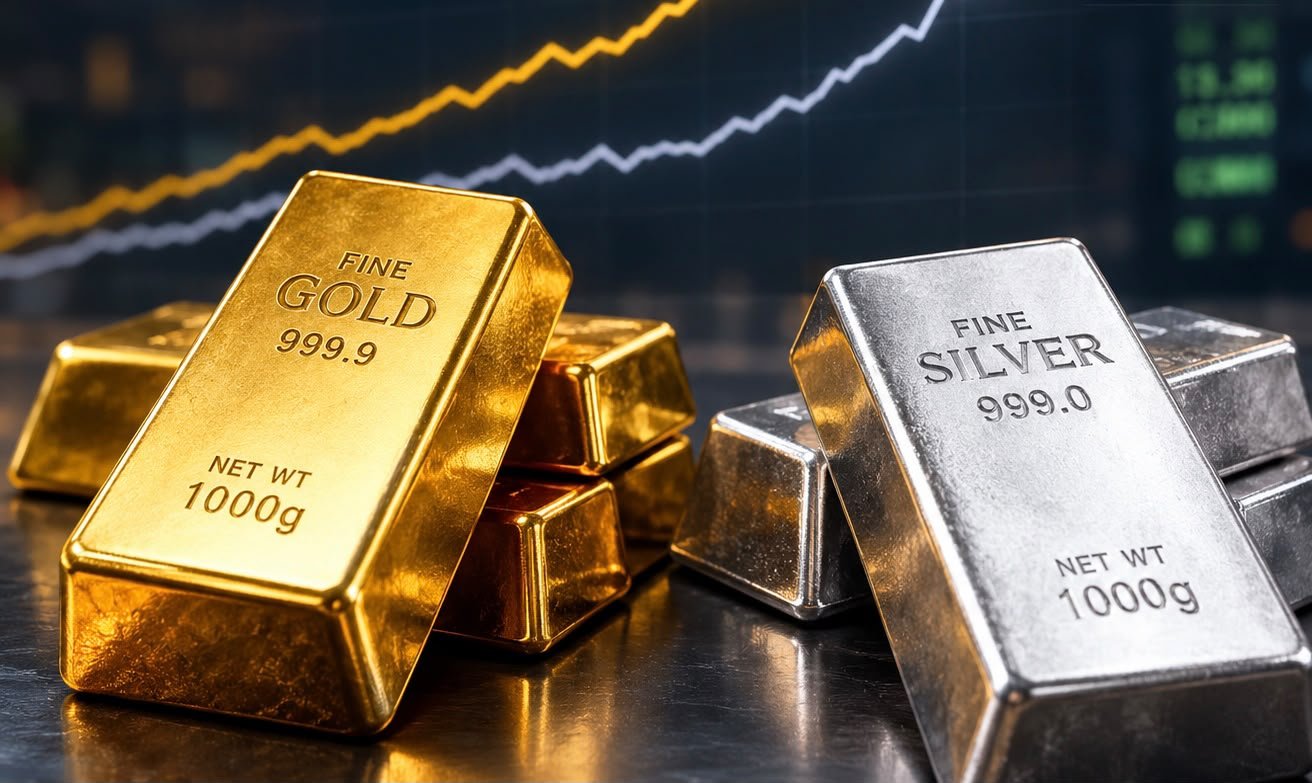
Gold prices remained steady near $4,477 an ounce on Friday, holding onto most of Thursday's sharp rebound as traders positioned ahead of the US nonfarm payrolls report, which could significantly influence the Federal Reserve's policy stance for its September meeting.
Spot bullion traded at $4,477.10 an ounce in early Asian hours, little changed on the day, while December gold futures slipped 0.4% to $4,522.60. The metal had jumped about 2% on Thursday after Fed Governor Christopher Waller signaled a willingness to keep rates unchanged if inflation data continued to show improvement.

Payrolls in Focus for Fed Outlook
Friday's jobs report is the immediate catalyst for gold, as markets have become highly sensitive to any shift in rate expectations. According to CME data, fed funds futures now imply roughly a 50% chance of a September rate increase, down from about 63% before Waller's remarks.
Economists forecast nonfarm payrolls to rise by around 56,000 in August, with the unemployment rate expected to hold at 4.1%. Waller noted that while inflation remains above the Fed's 2% target, recent data suggests the disinflation process may be resuming. He indicated that continued progress would favor keeping policy unchanged, but a hotter inflation reading could still justify tighter policy.
Ole Hansen, head of commodity strategy at Saxo Bank, told FXStreet that gold remains highly sensitive to changes in expectations for the September Fed meeting because policymakers are offering little firm forward guidance. A weaker-than-expected payrolls report could support gold by reducing the likelihood of another rate increase, while a stronger report could revive dollar and Treasury-yield pressure on the non-yielding metal.
Central Bank Demand Provides Support
The broader demand picture remains one of gold's main buffers against a deeper pullback. The World Gold Council reported that central banks bought a net 289 tonnes in the second quarter, up 62% from a year earlier and the strongest second-quarter total on record. Poland led reported purchases, while China also increased its holdings.
This demand has become increasingly important as investors debate whether gold can hold elevated levels after a volatile year. The World Gold Council expects central banks to remain significant buyers through the second half, although annual purchases may fall short of 2025 levels.
HSBC analysts, in comments reported by FXStreet, said the Fed may be reluctant to tighten again if higher energy costs do not spill over into core inflation. That scenario would remove one of the biggest near-term headwinds for bullion.
Geopolitical Risks Remain in the Background
Safe-haven demand also remains in the background as the US-Iran conflict keeps oil prices elevated and leaves investors wary of renewed inflation pressure. Gold's rebound on Thursday came alongside lower Treasury yields and a softer dollar, reinforcing the metal's sensitivity to both monetary policy and geopolitical risk.
Front-month gold settled at $4,491.70 on Thursday. Other precious metals were softer on Friday, with spot silver falling 0.3% to $66.78 an ounce but still on track for a weekly gain. Platinum declined 0.8% to $1,811.28, while palladium slipped 0.4% to $1,415.75.
For investors tracking the broader market, recent moves in equities and commodities have been intertwined with Fed expectations. The Dow's recent surge reflected falling rate-hike odds, while tanker rates spiked on Middle East tensions, highlighting the geopolitical premium in markets.
As the market digests the jobs data, gold's trajectory will likely hinge on whether the Fed signals a pause or a hike. With central bank buying and geopolitical risks providing a floor, a dovish surprise could push prices toward the $4,500 mark and beyond.
This article is for informational purposes only and does not constitute financial advice.