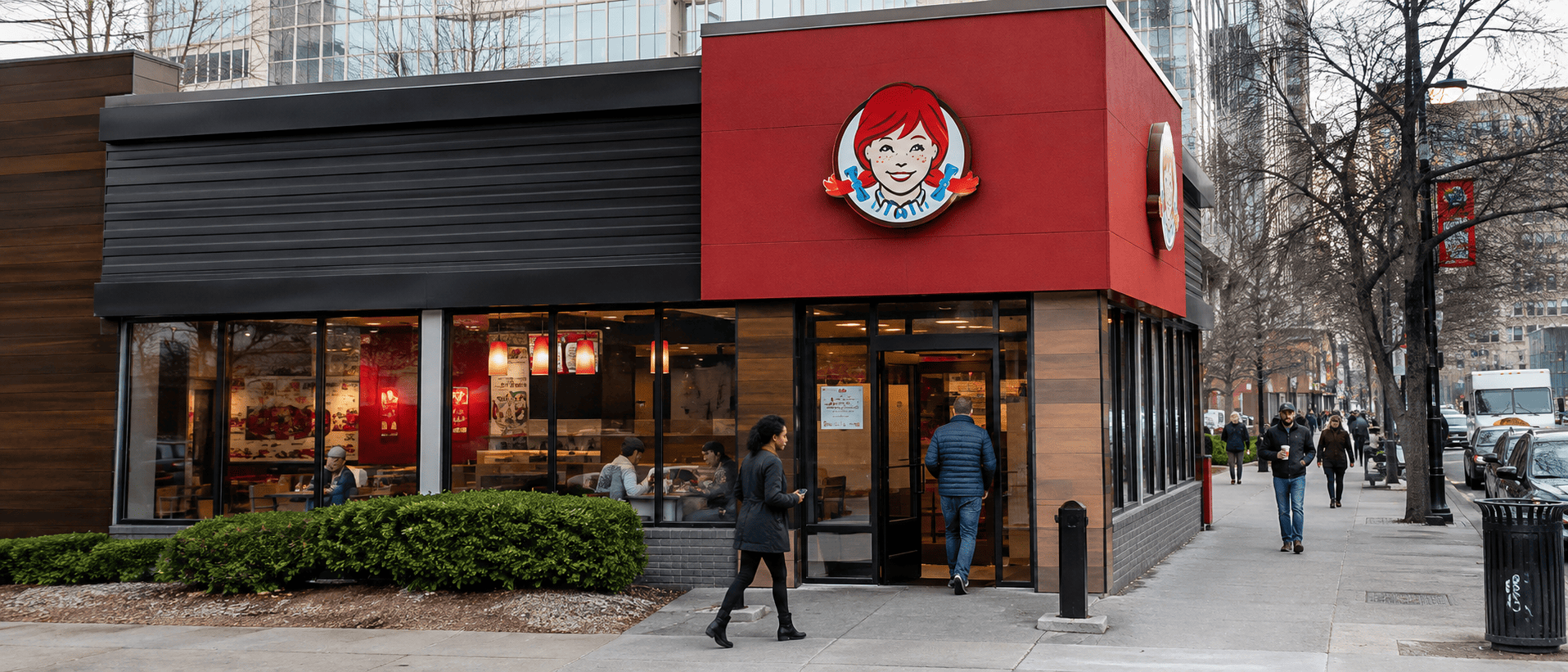
Wendy's (NASDAQ: WEN) has reignited investor debate after its board turned down a $1.4 billion take-private proposal from a consortium led by Nelson Peltz's Trian Fund Management. The offer, which valued shares at $7.35 each in cash, was dismissed as substantially undervaluing the company and not reflecting the potential of its ongoing turnaround strategy. Simultaneously, the board adopted a shareholder rights plan, commonly known as a poison pill, to ward off any hostile takeover attempts.
Board's Confidence vs. Market Reality
Rejecting a takeover bid often signals confidence in the company's future, but it also carries the risk of over-optimism that hasn't yet been validated by financial results. The key question for investors isn't whether Wendy's can improve—most restaurant chains can—but whether it can generate more shareholder value than the immediate $7.35 per share cash offer. That's a much higher bar to clear.
The timing of the rejection is notable. Wendy's disclosed the decision alongside quarterly results showing same-store sales declined for a seventh consecutive quarter. While earnings and revenue beat Wall Street expectations, the persistent drop in comparable sales indicates that underlying demand challenges remain unresolved. When a business consistently loses sales momentum, investors often value certainty over promise. A cash acquisition delivers certainty; a turnaround strategy offers only possibility.
Peltz's Insider Perspective
Markets often assume that takeover bids arise because an acquirer sees undervaluation. Yet some of the best acquisitions happen when buyers recognize value that public investors have stopped believing in. That possibility shouldn't be dismissed here. The bidding group wasn't composed of outsiders unfamiliar with the business. It included Nelson Peltz, a longtime Wendy's insider, major shareholder, and former chairman, along with Flynn Group, one of Wendy's largest franchisees. These parties have direct visibility into restaurant economics, franchise performance, and long-term opportunities. Their willingness to commit billions suggests they believe Wendy's future could be worth substantially more than the market currently implies.
Ironically, that's also management's argument for rejecting the offer. The difference is that private owners are often willing to endure years of operational restructuring away from Wall Street's scrutiny, while public shareholders typically have far less patience. As a result, the very turnaround that management believes justifies independence might actually be easier to execute under private ownership than as a publicly traded company.
Poison Pill: Protection or Problem?
The most controversial aspect of Wendy's response isn't the rejection itself but the adoption of a poison pill. Such measures are designed to prevent investors from quietly accumulating control of a company. They can be legitimate defensive tools when boards believe an opportunistic bidder is attempting to acquire assets at an unfair price. Yet they also create a perception problem: they may protect management's strategic vision while reducing pressure to prove it quickly.
Investors should ask a simple question: If the offer truly undervalues Wendy's, why not allow competing bids to emerge naturally? The risk is that today's rejection becomes a high-water mark. Should sales trends remain weak or the turnaround fail to gain traction, shareholders may look back on a fully financed cash offer with greater appreciation than they do today.
To be clear, Wendy's may ultimately be right. The company could execute its strategy, restore traffic growth, and unlock meaningful value over time. But after seven straight quarters of declining comparable sales, management has chosen the hardest path available: proving it. Until that proof arrives, rejecting an immediate premium may look less like confidence and more like a wager.
This article is for informational purposes only and does not constitute financial advice.