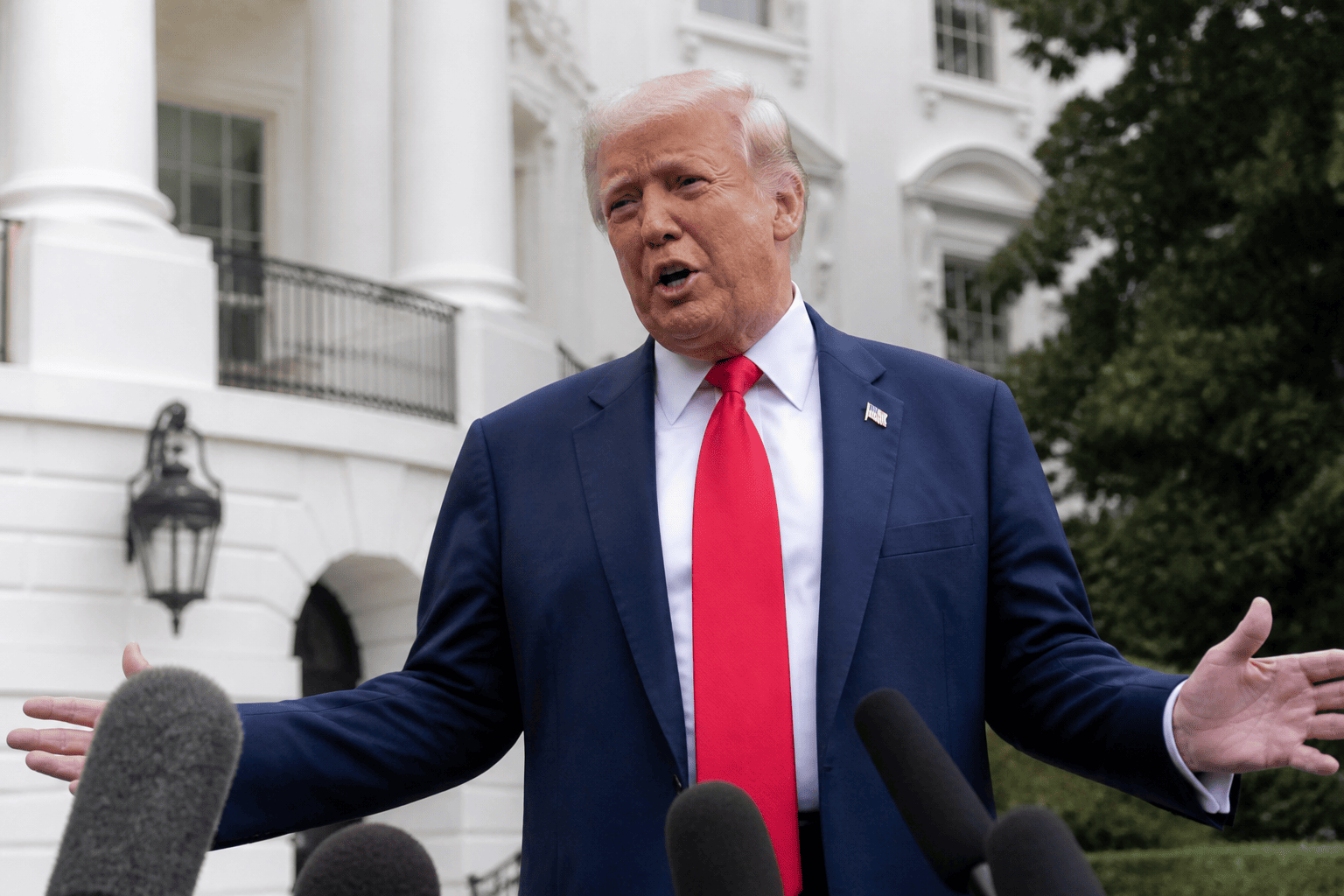
President Donald Trump on Wednesday sharply criticized the Federal Reserve's decision to raise interest rates for the first time since 2023, calling the move a policy error even as he expressed continued confidence in Fed Chair Kevin Warsh. The central bank unanimously lifted its benchmark federal funds rate by 25 basis points to a target range of 3.75%-4%, a step that Trump said runs counter to his economic agenda.
Speaking to reporters, Trump said he believes U.S. rates should be at 1% or lower and described the broader Federal Reserve board as "hostile" and "political." However, he maintained that he is "relying on Kevin" and noted that he had spoken with Warsh before the decision. Trump also revealed that he told Warsh, "You might as well vote with the board because it's just not going to matter," a remark that underscores the tension between the White House and the central bank.

Warsh, who was appointed by Trump earlier this year, joined the 12-0 vote to raise rates. In his post-meeting press conference, he defended the move, stating that inflation remains too high and that recent data have not convinced him that underlying price pressures are easing. His hawkish tone was echoed in the Fed's updated projections, which showed 16 of 18 officials expect at least one more quarter-point increase before year-end. Notably, Warsh did not submit his own rate projection, leaving his personal outlook unclear.
Wall Street interpreted the Fed's language as more hawkish than the size of the hike itself. Warsh described the increase as "removing a degree of accommodation," suggesting that policymakers do not yet view monetary policy as restrictive. Michael Gapen, chief U.S. economist at Morgan Stanley, told The Wall Street Journal that if officials do not think policy is restrictive while oil prices remain elevated, "you've got some work to do." Morgan Stanley subsequently revised its outlook to expect additional tightening. Krishna Guha of Evercore ISI, in comments carried by Bloomberg, called Warsh's press conference "coherent, confident and consistently hawkish," a view that helped shift market focus to the possibility of a new tightening phase.
The gap between Trump's preferred rate path and the Fed's current stance is now unusually wide. Trump wants rates around 1% or lower, while the Fed has just lifted its target range to 3.75%-4%, and most policymakers see another hike this year. Brian Rehling of Wells Fargo Investment Institute told Business Insider that the dot plot suggests rates could "move higher and remain elevated for longer than investors previously expected."
This divergence is not merely a one-day event. The Fed's decision comes amid persistent inflation and a resilient labor market, and the central bank's commitment to price stability appears to be at odds with the White House's push for cheaper credit. Trump has repeatedly called for lower rates to stimulate economic growth, but Warsh has stressed the Fed's independence and its mandate to control inflation.
Investors are now weighing the implications of a potentially prolonged tightening cycle. The gold market had been closely watching Warsh's tone ahead of the decision, and the hawkish outcome could keep bullion under pressure. Meanwhile, Treasury buybacks and quantitative easing remain topics of debate as the Fed navigates its balance sheet strategy.
Trump's criticism of the Fed is not new, but his explicit backing of Warsh while attacking the rest of the board adds a layer of complexity. The president has previously floated the idea of replacing Fed officials, and his comments on Wednesday could fuel speculation about future appointments. However, Warsh's unanimous support among board members suggests that the central bank is united in its approach, at least for now.
Looking ahead, the key question is whether inflation will continue to run hot. If price pressures persist, the Fed may be forced to raise rates further, deepening the conflict with the White House. Conversely, if inflation cools, the central bank could pause, giving Trump some breathing room. For now, the September rate decision will be a critical test for Warsh and the Fed's credibility.
This article is for informational purposes only and does not constitute financial advice.

