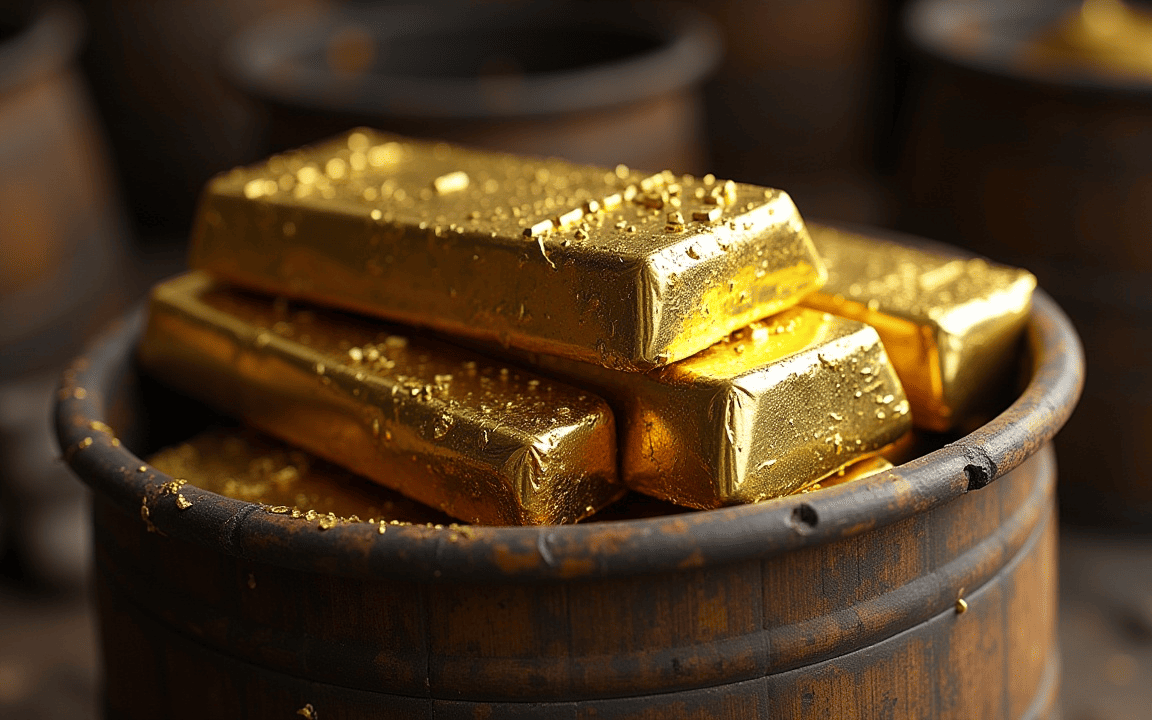
Gold prices climbed back above $4,300 an ounce on Wednesday, finding some relief from softer oil prices as investors turned their attention to the Federal Reserve's policy decision and the tone of Chair Kevin Warsh's press conference. The rebound comes after bullion touched its lowest level in over a month earlier this week, with the market now weighing whether this recovery can gain traction.
Spot gold rose 0.8% to $4,328.39, while December futures traded at $4,369.50. The advance occurred even as the U.S. dollar held near a two-week high and Treasury yields remained close to levels that typically pressure non-yielding assets. The 10-year Treasury yield eased to around 4.99% in Asian trading after briefly surpassing 5% on Tuesday, its highest since 2007.

Fed decision: More than just the rate hike
Markets have priced in a 92% probability of a quarter-point rate increase, making the decision itself largely a foregone conclusion. The real focus is on whether Warsh signals further tightening beyond September and how the central bank addresses growing concerns about its independence and fiscal policy credibility.
Higher yields raise the opportunity cost of holding gold, while a stronger dollar makes bullion more expensive for overseas buyers. StoneX senior market strategist Daniel Pavilonis noted that expensive energy remains a threat, as it could feed inflation and force rates higher. He suggested bullion could face another leg down if bond yields resume their climb.
Oil retreat eases one pressure point
Oil prices provided some relief after the American Petroleum Institute reported an unexpected 7.1 million-barrel increase in U.S. crude inventories. Brent fell about 0.9% to $107.82 a barrel, and WTI slipped to $104.86, reversing part of Tuesday's surge. However, supply risks persist, with Saudi Arabia suspending crude loadings at Yanbu after damage to its East-West pipeline.
Lower oil reduces fears of another inflation shock and takes some pressure off Treasury yields, but ongoing Middle East disruptions continue to support demand for safe-haven assets. This leaves gold caught between two opposing forces: easing inflation concerns versus persistent geopolitical stress.
Gold's resilience signals deeper worries
Perhaps more notable is that gold has not weakened further despite the dramatic repricing of U.S. rates. Commerzbank's Thu Lan Nguyen highlighted that political pressure on the Fed is increasingly creating a risk premium around the dollar. Investors are questioning whether higher rates alone can restore confidence if concerns over central-bank independence and fiscal policy continue to grow.
Analysts note that gold's behavior increasingly appears tied not just to inflation, but to confidence in the broader monetary and fiscal framework. A Fed hike accompanied by falling long-term yields could restore some of that confidence and weigh on bullion. Conversely, if long yields remain elevated despite tighter policy, gold could retain its appeal as a hedge against deeper policy uncertainty.
Silver also joined the recovery, rising 1.5% to $64.60 an ounce, while platinum and palladium advanced. The broader precious metals complex remains sensitive to the interplay between yields, the dollar, and geopolitical developments.
For investors tracking the macro picture, the recent equity market reaction to rising yields underscores the tension in risk assets. Meanwhile, the pressure on long-duration bonds highlights the challenges facing fixed-income investors. As the Fed navigates this environment, gold's trajectory may hinge on whether Warsh can reassure markets about the path ahead.
This article is for informational purposes only and does not constitute financial advice.

