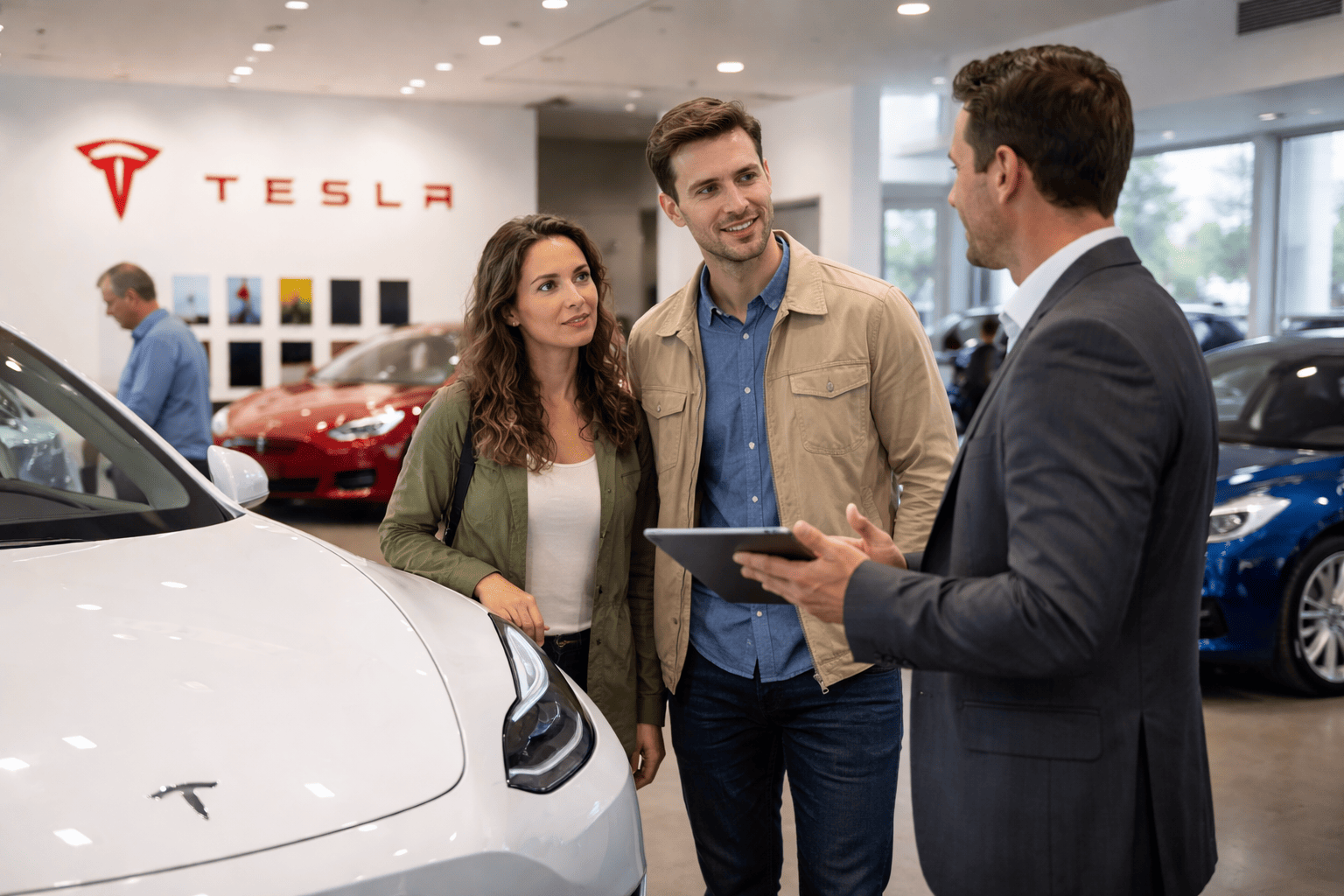
Tesla (NASDAQ: TSLA) shares fell approximately 5% on Tuesday, erasing most of the previous session's gains as a broad selloff in technology and semiconductor stocks dampened investor risk appetite. The decline came despite lower oil prices and a mixed day for major indices, with the S&P 500 down 1.3% and the Nasdaq Composite falling 2.1%.
The weakness was concentrated in the semiconductor space, with the iShares Semiconductor ETF (SOXX) dropping 5%, reversing much of Monday's 6% rebound. The sector remains under pressure after a steep selloff last week, when the ETF plunged 10% on Friday—its worst single-day decline in six years—amid concerns that enthusiasm around artificial intelligence stocks had become excessive.
Micron Technology fell more than 6% after rallying 10% on Monday, while Broadcom dropped nearly 5% as investors continued to reassess semiconductor valuations following last week's sharp swings. The broader tech rout weighed heavily on Tesla, which had surged roughly 4.5% on Monday.
SpaceX IPO Could Distract Investors
Some market participants are also turning cautious ahead of the anticipated initial public offering of Elon Musk's SpaceX, which has drawn significant interest from both institutional and retail investors. While Tesla and SpaceX are separate companies, both are closely associated with Musk, and some investors may be reassessing their exposure to Tesla as capital and attention potentially shift toward what could become one of the most closely watched public listings in recent years.
This dynamic echoes themes explored in a recent JPMorgan note on a potential Tesla-SpaceX merger, which described the idea as 'strategically coherent' but not a buy signal for Tesla shares.
Wolfe Research Updates Tesla Outlook
Amid the market volatility, Wolfe Research reiterated its Peerperform rating on Tesla while updating its financial forecasts. The firm raised its 2026 earnings-per-share estimate to $1.89 from $1.62, though that remains slightly below the consensus estimate of $1.93. At the same time, Wolfe lowered its 2027 EPS forecast to $2.04 from $2.17, citing higher depreciation, amortization, and operating expenses. The revised 2027 estimate is below the consensus of $2.46.
On the delivery front, Wolfe increased its 2026 vehicle delivery forecast by approximately 15,000 units to 1.69 million vehicles, representing projected growth of about 3% year over year. The firm highlighted continued expansion in Tesla's software business, noting that Full Self-Driving (FSD) subscriptions increased 16% quarter over quarter and 51% year over year during the first quarter. Its forecast assumes Tesla will reach approximately 1.7 million FSD subscriptions in 2026, representing roughly 50% year-over-year growth.
Denmark Approves FSD Rollout
Tesla also received a regulatory boost in Europe after Denmark's Road Traffic Authority, Færdselsstyrelsen, granted provisional approval for the company's Full Self-Driving (Supervised) driver-assistance system. The approval allows Tesla to begin rolling out the software to eligible customers via over-the-air updates starting June 10.
Danish regulators emphasized that FSD (Supervised) remains a Level 2 driver-assistance system and does not make vehicles autonomous. Drivers must remain attentive, monitor the vehicle at all times, and be prepared to take control when necessary. The authority said the authorization is subject to specific regulatory conditions and ongoing oversight.
While the regulatory development represents progress for Tesla's autonomous driving ambitions, it did little to offset the broader risk-off mood in markets on Tuesday. Investor attention remains focused on Tesla's long-term AI strategy, including FSD software, robotaxi services, and humanoid robotics initiatives, all of which continue to play an increasingly important role in the company's valuation narrative.
For context, Tesla shares have been volatile in recent weeks, with the stock dropping 3% last week amid geopolitical jitters and anticipation of AI milestones. The stock also slipped 2% earlier this month as AI ambitions and SpaceX merger hurdles overshadowed strong delivery numbers.
This article is for informational purposes only and does not constitute financial advice.