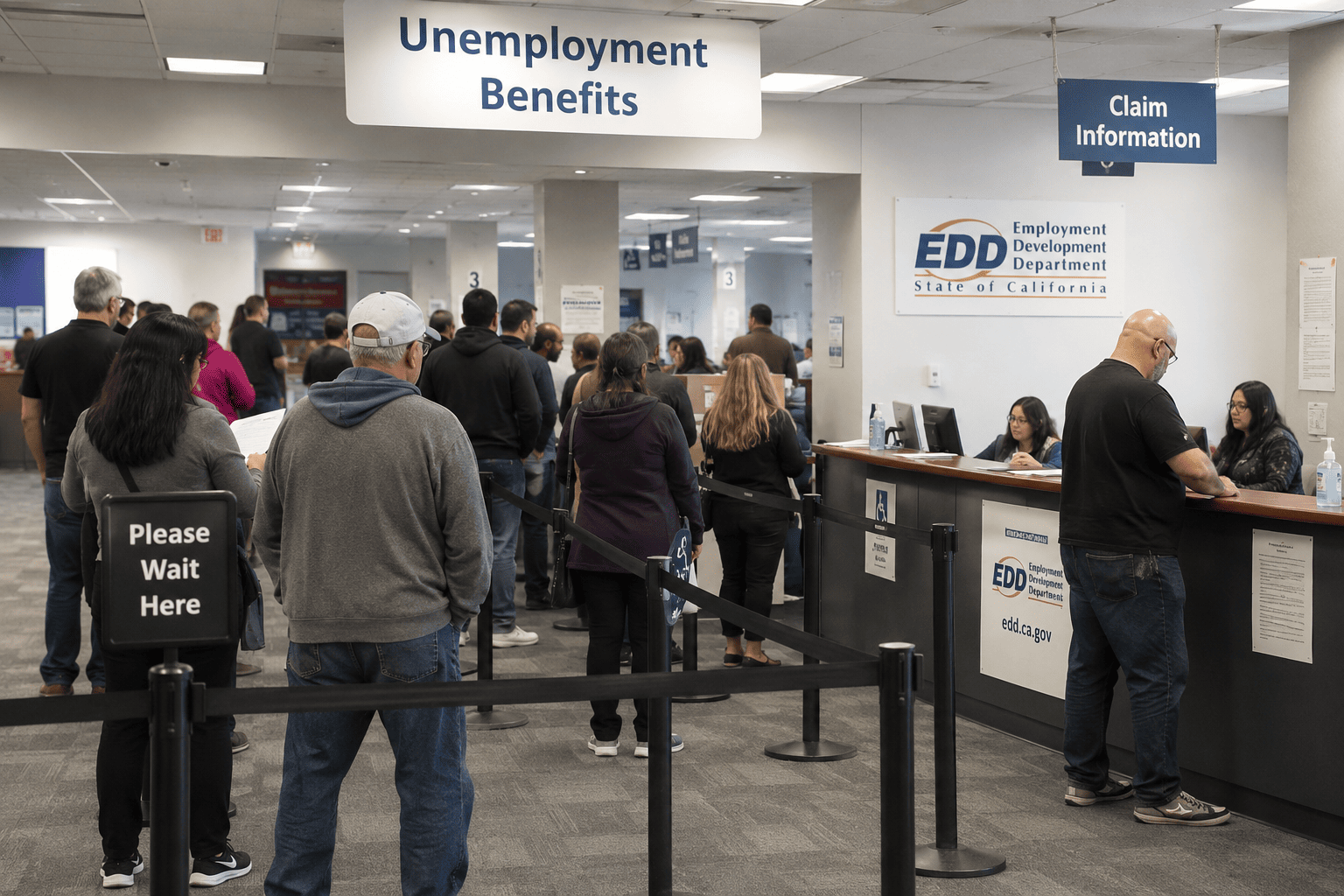
The number of Americans filing new claims for unemployment benefits ticked up last week, reinforcing the view that the labor market remains in a holding pattern as summer draws to a close.
Initial claims for state unemployment benefits increased by 2,000 to a seasonally adjusted 206,000 for the week ended August 29, the Labor Department reported Thursday. Economists polled by Reuters had anticipated a rise to 205,000.

Claims have stayed near the lower end of their 189,000–230,000 range throughout the year, underscoring an unusual stability in the U.S. labor market. Rather than a sharp uptick in layoffs or a surge in hiring, employers appear to be taking a measured approach to workforce decisions, a dynamic economists increasingly describe as a “slow hire, slow fire” environment.
Job openings rise, but hiring loses momentum
Data from outplacement firm Challenger, Gray & Christmas offered further evidence of the cautious hiring climate. Announced hiring plans during the first eight months of the year were up 37% compared with the same period in 2025, yet the firm noted that “it doesn't appear those positions are being filled quickly.”
That pattern aligns with the Labor Department’s Job Openings and Labor Turnover Survey (JOLTS) released Tuesday. Job openings, a measure of labor demand, increased by 89,000 to 7.271 million at the end of July, suggesting demand for workers remains relatively healthy. However, employers did not convert those openings into actual hires: the number of hires fell by 278,000 to 5.054 million, and the hiring rate slipped to 3.2% from 3.4%.
This divergence points to an economy where companies still need workers but are taking longer to fill positions—a dynamic that could become increasingly consequential for those who lose their jobs. Continuing claims, which track individuals receiving benefits after their initial week of aid and serve as a proxy for hiring conditions, rose by 8,000 to a seasonally adjusted 1.779 million in the week ended August 22. The increase suggests that finding new employment may be taking longer for some, even though layoffs remain relatively contained.
Employers remain cautious on hiring
The Federal Reserve’s Beige Book, released Wednesday, also described limited movement in employment during August. It noted that employment rose “very slightly” during the month, with healthy labor demand most visible in manufacturing, construction, and some service sectors, while retail and hospitality saw falling demand. The picture is not one of broad-based weakness but rather of diverging trends across industries, with companies wary of adding workers amid ongoing uncertainty.
Challenger’s data showed announced job cuts jumped 58% in August to 52,881, though layoffs announced during the first eight months of the year were still down 41% from the same period in 2025. The combination of relatively low layoffs and subdued hiring has kept the labor market stable, but it has also reduced opportunities for workers seeking to move into new roles.
Friday’s payrolls report will test the outlook
Investors now turn to Friday’s nonfarm payrolls report for a broader assessment of labor market conditions. Economists surveyed by Reuters expect employers to have added 56,000 jobs in August, following an unexpected decline of 23,000 in July. The unemployment rate is forecast to hold steady at 4.1%.
The anticipated rebound could partly reflect a recovery in local government education payrolls. However, economists caution that another month of job losses cannot be ruled out, particularly after the recent expiration of Temporary Protected Status for hundreds of thousands of Haitians, which affects their work authorization. August payroll figures have also historically been prone to undershooting expectations, making the report particularly difficult to interpret.
For the Federal Reserve, the combination of subdued hiring and limited layoffs presents a complicated policy picture. A labor market that is cooling without deteriorating sharply could give policymakers room to focus on inflation, especially as tariffs continue to raise import costs. Fed Chairman Kevin Warsh said last week that the central bank will “have work to do” if policymakers do not gain sufficient confidence that inflation is moving toward its 2% target.
For now, the latest claims figures suggest the labor market remains more frozen than broken: employers are reluctant to hire aggressively, but they are also not cutting workers at a pace that would signal a broad economic downturn. Investors tracking these trends may find it useful to monitor key labor market indicators to gauge the trajectory of the economy.
This article is for informational purposes only and does not constitute financial advice.