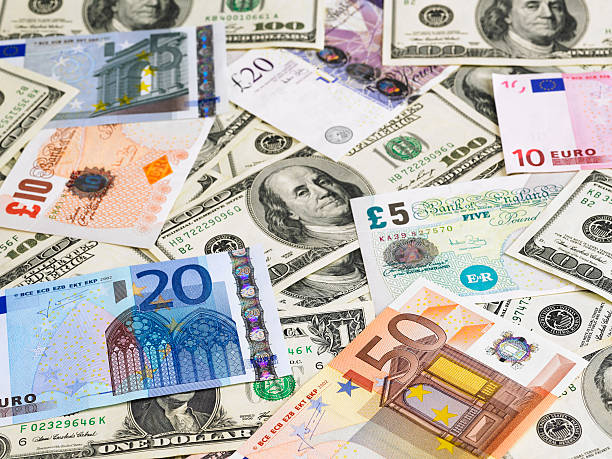
The British pound experienced a significant rally in Friday trading, climbing to its strongest position in three weeks. This surge followed the announcement of a two-week ceasefire agreement between the United States and Iran, a development that prompted immediate recalibrations across global financial markets.
Geopolitical Calm Fuels Currency and Commodity Shifts
Sterling advanced by approximately 1% against the US dollar, reaching a level not seen since late March. The currency's recovery has been swift, now trading less than half a percent below its value prior to the escalation of Middle Eastern tensions in February. The primary catalyst was a dramatic shift in energy markets, where the prospect of de-escalation led to a sharp decline in crude oil prices.

Brent crude futures plummeted as much as 16% in early trading. Investors interpreted the ceasefire as potentially paving the way for the resumption of normal marine traffic through the Strait of Hormuz, a critical global chokepoint for oil shipments that had been effectively blockaded. The steep drop in energy costs directly alleviated concerns about persistent inflationary pressures, which had been a dominant theme for central banks worldwide.
Central Bank Expectations Recalibrated
The altered inflation outlook had a pronounced effect on interest rate expectations. Money markets swiftly adjusted their projections for monetary policy tightening by major central banks. Prior to the ceasefire, traders had been pricing in at least two additional interest rate increases from the Bank of England within the year. Following the news, these expectations were scaled back significantly.
This shift underscores how swiftly geopolitical events can reshape the monetary policy landscape by impacting fundamental economic drivers like energy prices. The development highlights the interconnectedness of foreign policy, commodity markets, and central bank decision-making. For more on how central bank signals interact with market movements, see our analysis on shifts in currency trust premiums.
Cross-Currency Dynamics Show Nuance
While sterling gained ground against the dollar, its movement against the euro was more measured. The euro declined modestly against the pound, a movement that some analysts found notable given the shifting expectations for the Bank of England relative to the European Central Bank (ECB).
Market strategists observed that the euro displayed relative resilience. This suggests that while expectations for UK rate hikes were pared back, the market's outlook for ECB policy tightening was not adjusted as aggressively. This divergence in perceived monetary policy paths between the two central banks provided underlying support for the euro, preventing a more pronounced decline against sterling. The stability in this currency pair indicates a complex assessment of regional economic pressures beyond just the immediate oil price shock.
Broader Market Implications
The pound's rally is symptomatic of a broader improvement in global market sentiment driven by reduced geopolitical risk. Lower energy prices act as a deflationary force, boosting real incomes and corporate margins while reducing the pressure on central banks to maintain restrictive policy. This environment typically supports risk assets and can lead to capital flows into growth-sensitive currencies.
The ceasefire news contributed to a wider sense of calm, as seen in other asset classes. For instance, the easing of geopolitical fears has been a factor in recent equity market strength, detailed in our coverage of global equities reaching record highs. Similarly, the drop in oil and related inflationary concerns can influence commodity markets broadly, as seen when safe-haven assets like gold retreat in such an environment.
Investor focus now turns to whether the temporary ceasefire can evolve into a more durable diplomatic solution. Markets will also closely monitor upcoming economic data and central bank communications to gauge if the shift in rate expectations is sustained. Any resurgence of tensions or unexpected inflation data could quickly reverse the recent market moves. Furthermore, the situation remains a reminder of the sensitivity of currencies like sterling to global risk sentiment and commodity price swings.
This article is for informational purposes only and does not constitute financial advice.