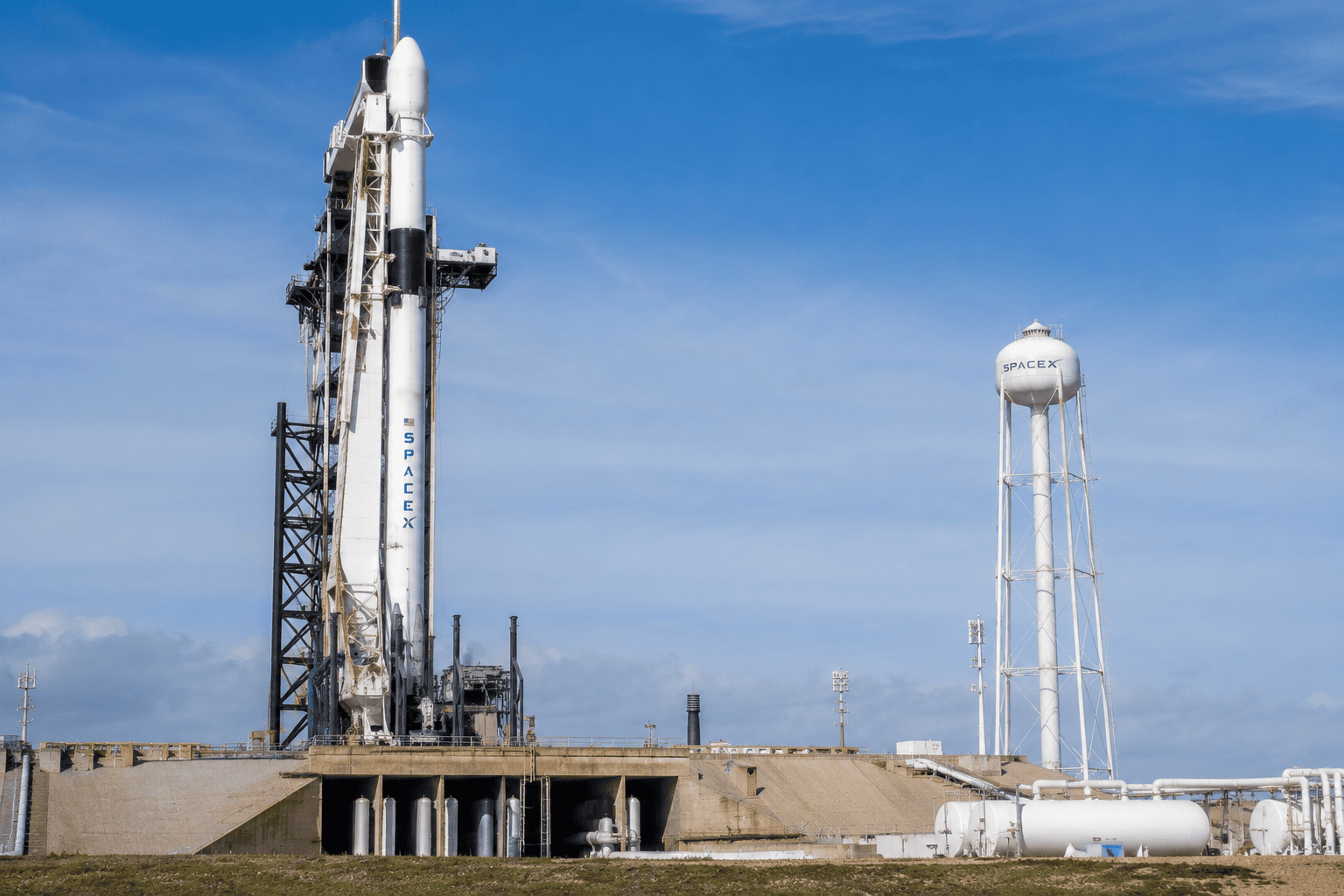
SpaceX (NASDAQ: SPCX) shares have retreated to their opening price of $150, wiping out all gains from the company's blockbuster stock market debut and subsequent inclusion in the Nasdaq-100 index. The stock touched an intraday low of $149 on Wednesday before recovering to around $150.72, still roughly 50% below its post-listing peak of $226.
The pullback comes as investors shift focus from the initial excitement of the IPO to concerns over lofty valuations, broader market weakness, and elevated expectations. The stock's decline accelerated after its addition to the Nasdaq-100, which was expected to drive fresh buying demand from index-tracking funds. Instead, shares fell more than 6% on Tuesday alone.
Broader Market Headwinds Weigh on Tech
Wednesday's weakness was not isolated to SpaceX. Growing concerns over heavy AI spending, rising U.S. Treasury yields, elevated oil prices, and escalating geopolitical tensions in the Middle East weighed on the broader technology sector. Semiconductor stocks, including Micron Technology and Advanced Micro Devices, also posted sharp declines.
"There's nervousness about expectations being too high," said Mark Hackett, chief market strategist for Nationwide, in a Reuters report. "I expect that to continue until we get some earnings out."
Some market watchers argue the decline is a natural reassessment after the initial IPO frenzy. After an early rush of buying, investors often question whether a company's valuation is justified by its financial performance and long-term prospects. The simultaneous drop in both price and trading volume suggests investors are becoming more selective.
Wall Street Remains Overwhelmingly Bullish
Despite the recent weakness, SpaceX enjoys broad support from Wall Street. Eighteen of the nineteen firms covering the company assign Buy ratings, with most price targets well above $200. JPMorgan Chase initiated coverage with an Overweight rating and a $225 target, calling SpaceX's ambitions "bigger than any company's we've ever seen." Morgan Stanley is even more optimistic, with a $300 target, citing SpaceX's near-monopoly launch economics and fast-scaling AI infrastructure business.
Goldman Sachs also initiated coverage with a Buy rating and a $205 target, highlighting the company's differentiated advantages across launch, connectivity, and AI. Other firms including Bernstein, RBC Capital Markets, Macquarie, and UBS issued bullish recommendations.
For more on SpaceX's strategic moves, see our coverage of SpaceX's first bond offering to refinance debt and the post-IPO strategy questions raised by the $400B rout.
One Firm Breaks the Consensus
The lone exception is MoffettNathanson, where analyst Julie Zhu assigned a Neutral rating and a 12-month target of $131. The firm questioned SpaceX's valuation, citing overly ambitious estimates of its addressable market, optimistic assumptions about Starlink's satellite-to-phone business, and doubts over Elon Musk's plans for massive computing infrastructure in space. However, the report acknowledged SpaceX's near-monopoly in commercial launch services and its cost advantage.
Is SpaceX a Buy at Current Levels?
The sharp pullback has investors wondering if now is the right time to buy. David Jagielski of The Motley Fool advises caution, noting that SpaceX is unprofitable despite its grand vision. "SpaceX is the only stock that has a $2 trillion valuation or more and doesn't have a highly profitable and successful business," he wrote. "The stock's decline may just be getting started."
Research firm Zacks echoed similar concerns, saying much of the company's long-term growth story already appears priced in. For a contrasting view on SpaceX's potential, see Cathie Wood's bet on SpaceX over AI hype.
While Wall Street remains overwhelmingly bullish, the combination of unprofitability, lofty valuations, and broader market headwinds suggests investors should weigh the risks carefully before jumping in.
This article is for informational purposes only and does not constitute financial advice.