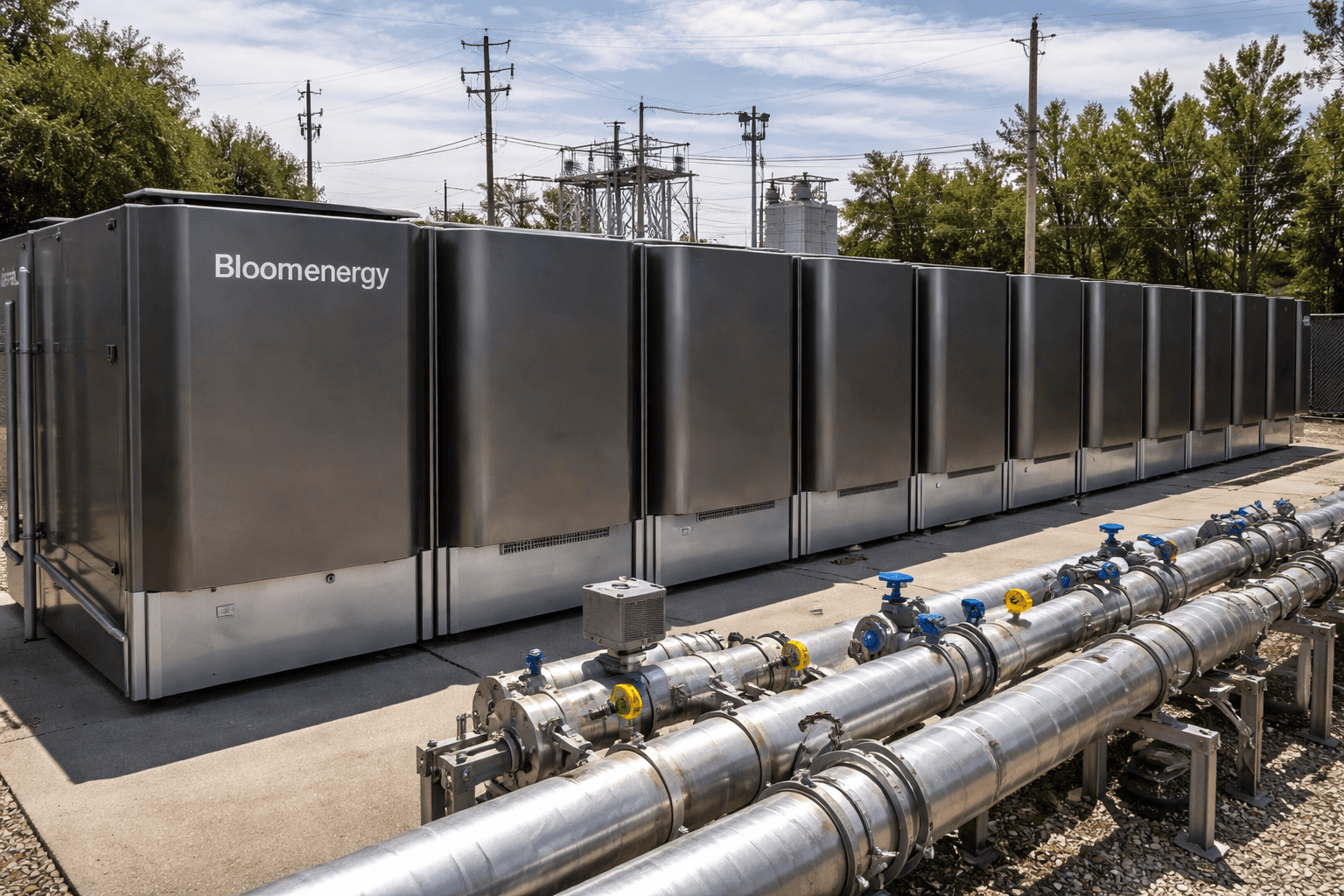
Shares of FuelCell Energy (FCEL) and Bloom Energy (BE) are both under pressure Wednesday, but the catalysts behind their declines are markedly different. While FCEL is reeling from a dilutive public offering, BE's slide appears tied to broader market sentiment rather than any deterioration in its business outlook.
FuelCell Energy: Dilution Weighs on Shares
FuelCell Energy announced an upsized public offering of 10.71 million common shares at $21 each, raising $225 million. The offering price represents a significant discount to the stock's previous close near $26, triggering a sharp repricing as investors account for dilution. The company plans to use the proceeds for capital expenditures to expand manufacturing capacity, working capital, and general corporate purposes.

This capital raise, while necessary for growth, has temporarily soured investor sentiment. The stock's relative strength index (RSI) has fallen into the mid-40s, approaching oversold territory, but the fundamental overhang of dilution may persist until the offering is fully absorbed.
Bloom Energy: Macro Headwinds and Profit-Taking
Bloom Energy's decline stems from a combination of profit-taking and macro pressures. Earlier Wednesday, the company announced a massive expansion of its AI infrastructure partnership with Brookfield, increasing the financing commitment to $25 billion—a fivefold increase from the original deal. This partnership is designed to build and finance power solutions for AI data centers, positioning BE as a key enabler of the AI buildout.
However, the stock's meteoric rise over the past year—up more than 100% year-to-date—has made it sensitive to Nasdaq volatility. Today's sell-off reflects a classic "sell-the-news" reaction, compounded by rising oil prices after geopolitical tensions escalated. Former President Trump's comments about ending the Iran ceasefire and threatening strikes on Tehran triggered a risk-off shift, hitting high-growth names like BE.
Why Bloom Energy Is the Better Buy-the-Dip Candidate
Despite both stocks trading lower, analysts argue that Bloom Energy's dip is sentiment-driven rather than fundamental. The company's core thesis as a "picks-and-shovels" provider for AI infrastructure remains intact, and the expanded Brookfield partnership provides a substantial financing runway to accelerate fuel cell deployments for hyperscale data centers.
Backed by a multi-gigawatt pipeline and analyst price targets as high as $350, BE offers long-term investors an entry point at a discount. Options pricing also suggests potential upside to $372 by the fourth quarter of 2026. For context, both stocks remain strong performers in 2026, each up over 100% year-to-date.
For investors seeking exposure to the AI infrastructure theme, the current pullback in Bloom Energy may represent a more attractive opportunity than FuelCell Energy, which faces near-term dilution headwinds. As always, individual risk tolerance and portfolio diversification should guide investment decisions.
Related reading: TSMC, SK Hynix, Tencent: 3 Asian Stocks Analysts Tip to Lead July 2026 Rally and Evening Digest: Samsung Drags Chip Stocks; Oil Surges on Hormuz Attacks.
This article is for informational purposes only and does not constitute financial advice.