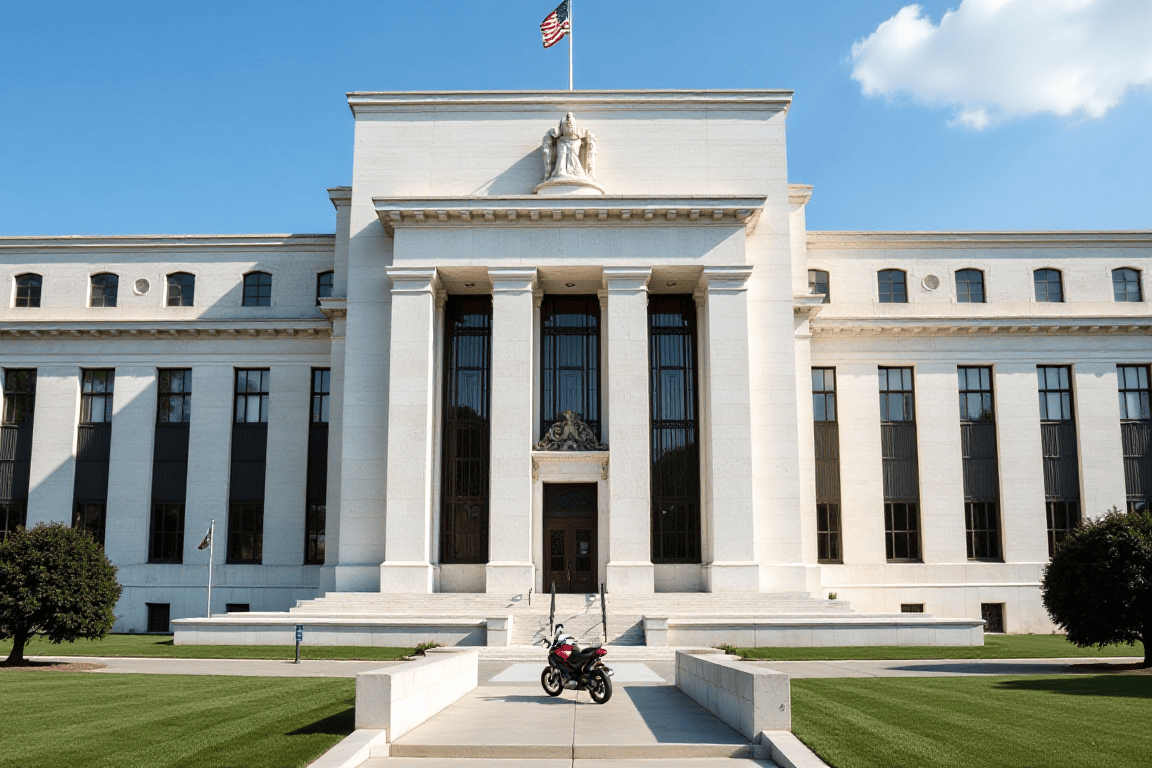
The Federal Reserve's June policy meeting minutes, released Wednesday, exposed a sharp divide among officials over the future direction of interest rates, with some policymakers seeing room for cuts while others warned that persistent inflation could necessitate further tightening.
The Federal Open Market Committee (FOMC) voted unanimously to hold the benchmark federal funds rate at a range of 3.5% to 3.75% during the June 16-17 meeting, the first under Chairman Kevin Warsh. However, the minutes revealed that the consensus masked significant disagreement about the outlook.
Split on Rate Path
According to the minutes, "many participants indicated that the appropriate level of the federal funds rate would be within or slightly below the current target range at the end of this year." Conversely, "many other participants assessed that the appropriate level of the federal funds rate would be above the current target range."
The Fed's latest projections showed a narrow split: nine officials expected at least one quarter-point rate hike this year, with six forecasting two or more increases. Another nine officials anticipated no change or a rate cut. Warsh did not submit an individual projection.
Inflation Risks Dominate Debate
Policymakers weighed competing scenarios. Some saw inflation moderating enough to allow rate cuts, while others highlighted risks from AI-driven demand, higher energy prices, and tariffs. In the latter scenario, most participants said "some policy firming would likely be warranted."
The personal consumption expenditures (PCE) price index, the Fed's preferred inflation gauge, rose 4.1% in May from a year earlier, the highest annual increase since April 2023. Core PCE, excluding food and energy, climbed 3.4%. Energy prices remain a key variable, with oil markets reacting to geopolitical tensions in the Middle East, as noted in recent market moves.
The minutes stated that "participants generally assessed that upside risks to price stability remained elevated while downside risks to achieving maximum employment had moderated a bit." The Fed continues to expect "solid real GDP growth" through 2026, with the labor market remaining stable.
Communication Shift Under Warsh
The June meeting also reflected Warsh's push to reshape Fed communication. The post-meeting statement was notably shorter, removing language that previously signaled an easing bias. "A number of participants noted that it was an opportune time to consider significant changes to the FOMC's postmeeting statement," the minutes said, with a majority favoring a shorter statement.
Warsh, who has criticized forward guidance, described the policy debate as a "family fight" during his first news conference but emphasized the unanimous decision to hold rates steady. Investors are now awaiting June consumer price data due July 14, when Warsh is also scheduled to testify before the House Financial Services Committee.
The divided outlook keeps markets on edge, as geopolitical risks and Fed minutes continue to influence global markets. The Fed's next moves will depend heavily on incoming data, particularly inflation and employment figures.
This article is for informational purposes only and does not constitute financial advice.