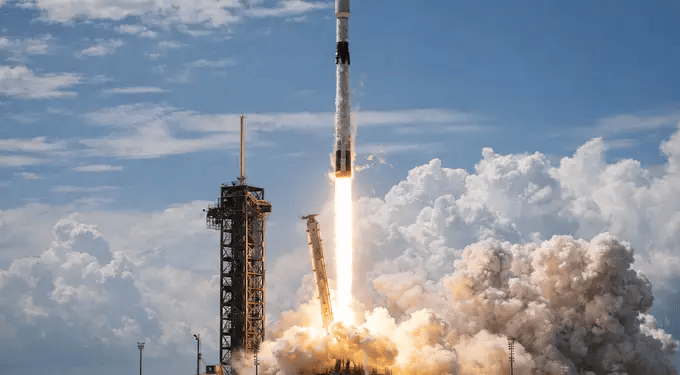
SpaceX (NASDAQ:SPCX) continued its downward trajectory in premarket trading Tuesday, falling roughly 3% to near $149, as the stock struggles to find footing after Monday's dramatic 16.4% decline erased more than $400 billion in market value. The shares, which briefly touched $225.64 on June 16, are now hovering just 10% above their $135 IPO price, raising concerns about the sustainability of the post-IPO rally.
Bond Offering Sparks Investor Skepticism
The immediate catalyst for the selloff was SpaceX's announcement of a senior unsecured notes offering, coming just days after the company completed the largest initial public offering in U.S. history, raising $85.7 billion. The company stated it would use proceeds for general corporate purposes and to repay borrowings under a bridge loan facility. While some analysts view this as prudent balance-sheet management, equity investors have reacted negatively, questioning why a company with over $100 billion in cash needs to tap debt markets so soon after its record IPO.
This move has added to existing concerns about the capital intensity of Elon Musk's ventures, which span rockets, satellite internet, and artificial intelligence. The stock, already priced for near-flawless execution, now faces heightened scrutiny from skeptics who see the bond offering as a red flag.
Dilution Concerns from Cursor Acquisition
Adding to the pressure, SpaceX's $60 billion all-stock acquisition of Cursor has raised dilution worries. Morningstar analyst Nicolas Owens cut his fair value estimate to approximately $62 per share following the deal, arguing that the market is assigning enormous value to uncertain future businesses. The acquisition, while strategic, has amplified concerns about shareholder value erosion.
Institutional vs. Retail Sentiment Diverges
The market reaction has been split. Cathie Wood's ARK Invest viewed Monday's selloff as a buying opportunity, acquiring 210,121 SpaceX shares across four ETFs, worth about $32.5 million at Monday's closing price, according to Stocktwits data. This conviction buying contrasts sharply with bearish voices like Gary Black of The Future Fund, who noted on X that SpaceX remains “hard to justify analytically,” citing valuation multiples of roughly 175 times fiscal 2026 EV/EBITDA and 62 times EV/revenue. Black emphasized that the stock has “no room for error,” a sentiment echoed by CFRA's Keith Snyder, who initiated coverage with a Sell rating and a $115 price target, describing the growth assumptions needed to justify optimistic valuations as “borderline comical.”
Retail sentiment has also weakened, with Stocktwits-linked reports showing a shift from extremely bullish to bearish levels as message volumes surged after the bond news. However, a Stocktwits poll revealed that 45% of over 5,600 respondents still named SpaceX as the space stock they are most bullish on for the next five years, indicating that long-term optimism persists despite short-term turbulence.
Market Context and Outlook
The recent volatility comes amid broader market uncertainty, with investors weighing the implications of SpaceX's capital-raising activities and the potential for further dilution from the Cursor deal. For a deeper look at the lockup expiration risks, see our analysis on SpaceX Lockup Expiration: Staggered Unlocks Could Pressure Stock After 67% IPO Rally. Additionally, the bond offering has drawn comparisons to other high-growth companies that have faced similar skepticism, as discussed in SpaceX Stock Dips 3% as Post-IPO Rally Fades on AI Spending Concerns.
As the market digests these developments, the key question remains whether the current pullback represents a buying opportunity or the beginning of a more prolonged correction. With institutional investors like ARK doubling down and retail traders turning cautious, the divergence in sentiment underscores the uncertainty surrounding SpaceX's valuation and future trajectory.
This article is for informational purposes only and does not constitute financial advice.