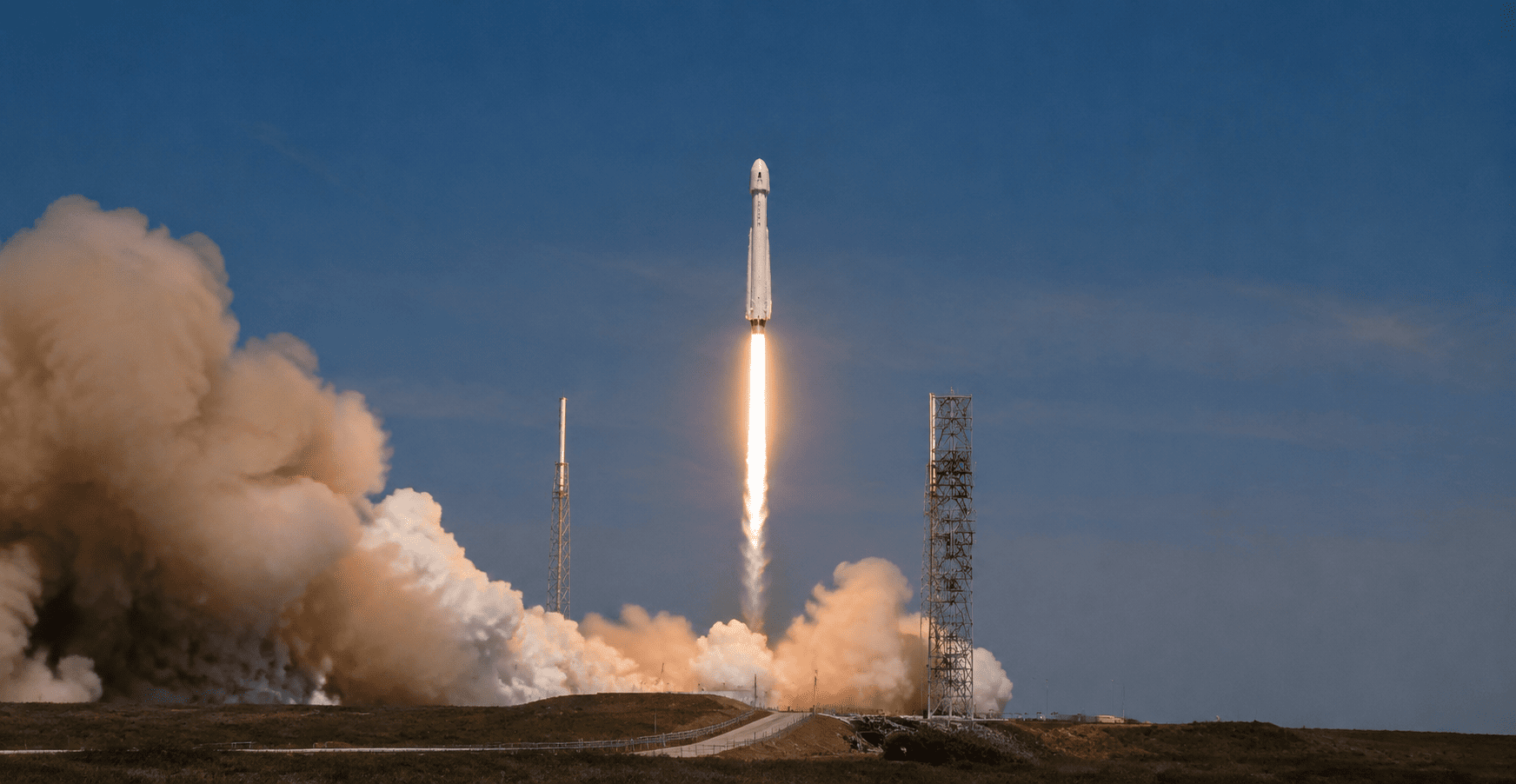
SpaceX (SPCX) began trading on the Nasdaq today, opening at $150 per share — an 11% premium above its initial public offering price of $135. The opening gives the aerospace and AI infrastructure company a market capitalization just under $2 trillion, making it the sixth-largest U.S. publicly traded company. The milestone also propelled founder Elon Musk to a net worth exceeding $1 trillion, as covered in SpaceX IPO Propels Elon Musk to Historic $1 Trillion Net Worth Milestone.
Despite the already lofty valuation, Wolfe Research initiated coverage on SPCX shares with an Outperform rating and a $175 price target, implying roughly 17% upside from the opening price. Analyst Myles Walton grounded the bullish call in what he described as SpaceX's unprecedented dominance over global launch infrastructure, effectively granting the company a near-monopoly on access to space. Walton pointed to data showing SpaceX commands five out of every six domestic launches, asking rhetorically whether there could be a more lucrative economic moat than possessing a near-monopoly on escaping Earth's gravity.
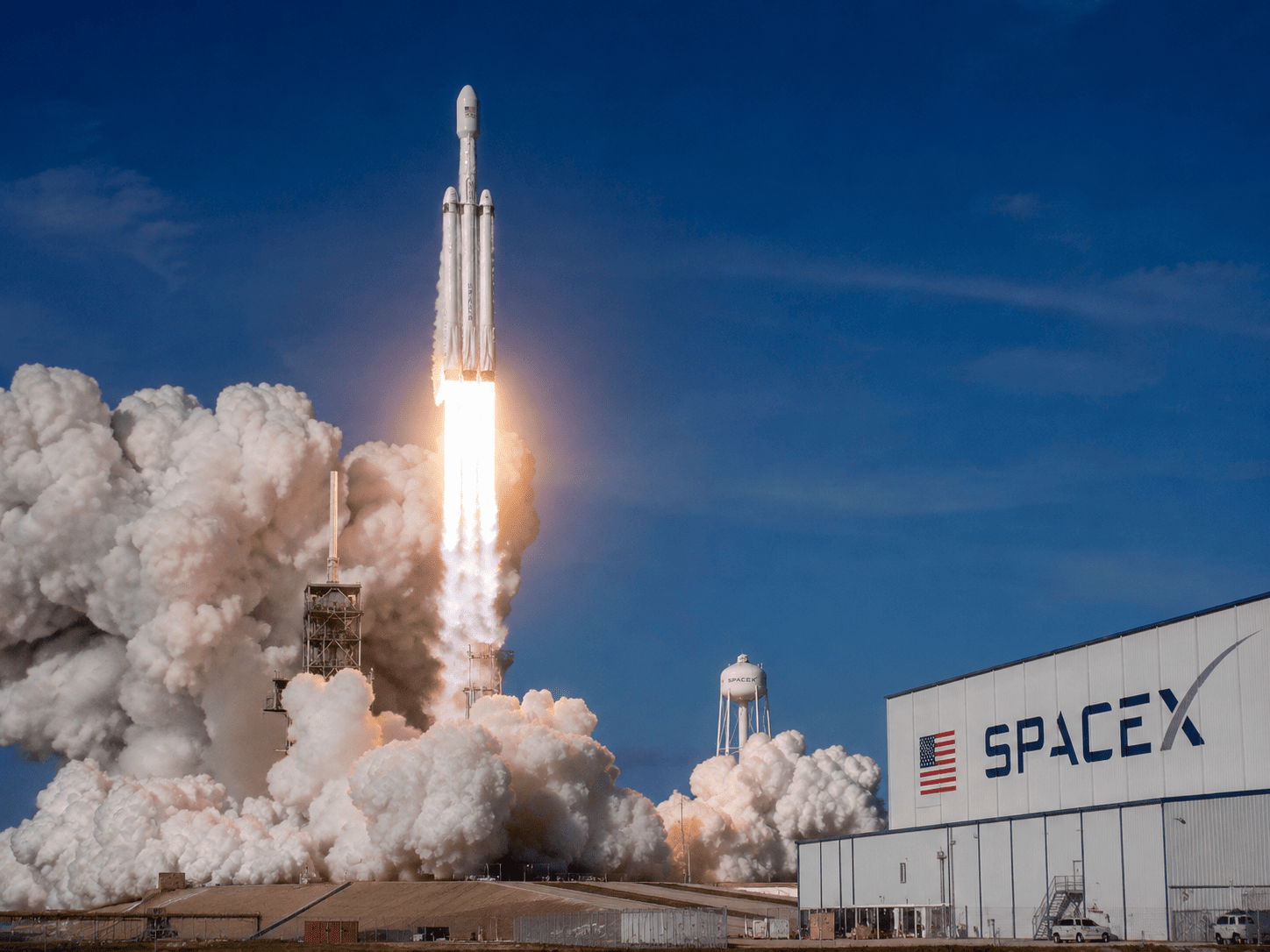
Starship Reusability as the Key Catalyst
Wolfe Research emphasized that the successful execution of Starship's full reusability is the ultimate catalyst that will unlock unparalleled cost efficiencies. By driving down unit economics, SpaceX can leave capital-intensive aerospace rivals stranded on the launchpad. The firm believes this structural cost advantage will allow SpaceX to subsidize and fuel its next-generation growth initiatives, including the hyper-profitable Starlink satellite internet division.
Musk's post-IPO roadmap includes plans to deploy over 100,000 communication satellites and construct revolutionary AI data centers directly in orbit. Following SpaceX's strategic merger with xAI in early 2026 — which integrated the Grok AI model and the X social platform — the company is building a vertically integrated architecture. Wolfe notes that while tech rivals like OpenAI and Anthropic may lead in raw algorithmic models, SpaceX holds the ultimate trump card: structural computing cost-dominance achieved through unparalleled direct access to space.
Wall Street Consensus and Capital Injection
While skeptics point to SpaceX's accumulated deficit of $41.3 billion since its 2002 inception, institutional sentiment remains fiercely optimistic. Alongside Wolfe's bullish forecast, Oppenheimer initiated coverage with a Buy rating and a $190 target, as detailed in Oppenheimer Initiates SpaceX Coverage with $190 Target, Sees 41% Upside. New Street Research set a $165 price target, cementing a consensus that SpaceX is entering an unprecedented hyper-growth phase.
The company raised $75 billion in its IPO, providing a formidable war chest for expansion. The fresh capital reinforces that Space Exploration Technologies Corp is no longer just a rocket manufacturer, but an elite, multi-planetary computing and infrastructure powerhouse. For investors comparing opportunities, the Tesla Dips 2.4% as SpaceX IPO Draws Investor Capital; SPCX vs. TSLA Analysis offers further context on capital flows between Musk-linked equities.
The broader market reacted positively to the debut, with the Dow Jones Industrial Average adding 353 points on the day, buoyed by SpaceX's listing and optimism around an Iran deal, as reported in Dow Adds 353 Points on SpaceX Debut, Iran Deal Optimism.
This article is for informational purposes only and does not constitute financial advice.