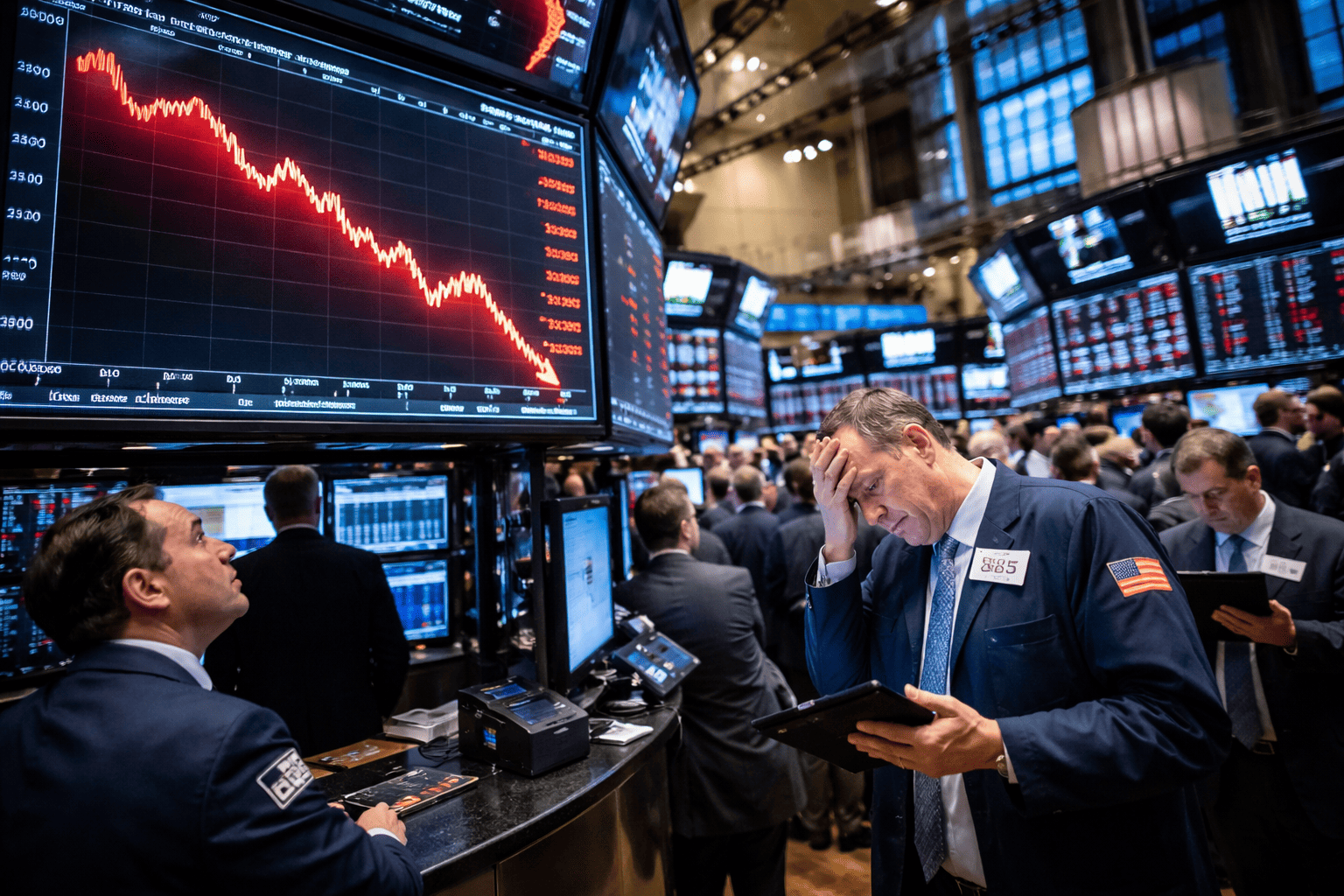
U.S. equities suffered a severe selloff Wednesday, with the Dow Jones Industrial Average plunging 1,152 points, or 2.2%, its steepest single-day decline since April 2025. The broader market also retreated sharply, as the S&P 500 fell 1.5% and the Nasdaq Composite dropped 1.7%. The rout was triggered by the Federal Reserve's decision to maintain its benchmark interest rate at 3.50%-3.75%, despite three Federal Open Market Committee members advocating for a quarter-point hike.
The Fed's hold on rates, combined with rising Treasury yields, reignited inflation fears. The benchmark 10-year Treasury yield climbed more than 6 basis points to above 4.66%, while the 30-year yield surged over 10 basis points to above 5.2%, its highest level since 2007. Markets are now pricing in a greater likelihood of a rate increase at the Fed's September meeting, as inflation remains above target and higher energy costs complicate the policy outlook.

Oil surge and chip weakness pressure broader market
Rising oil prices added to inflationary pressures after geopolitical tensions in the Middle East escalated. West Texas Intermediate crude settled more than 6% higher at $84.46 per barrel, following President Donald Trump's statement that the U.S. would respond to attacks on its troops in the region. Higher crude prices reinforced investor concerns that inflation could remain stubbornly elevated, increasing the odds of further monetary tightening.
Semiconductor stocks remained under heavy pressure, extending a broader sector selloff that has intensified in recent weeks. The iShares Semiconductor ETF (SOXX) dropped 5.5%, marking its fifth consecutive losing session. Investors continue to question whether massive spending on artificial intelligence infrastructure will generate sufficient returns, while also monitoring growing competitive pressure from China. Micron Technology and KLA each declined around 10%, and AMD lost 5.5%. The sector faced additional headwinds after South Korean chipmaker SK Hynix reported quarterly profit that, while sharply higher year-over-year, fell short of elevated investor expectations. AI infrastructure company Vertiv also fell after reporting quarterly revenue below analyst estimates.
For more on the chip sector's struggles, see our analysis on AMD and Intel extending losses amid AI spending doubts.
Earnings remain resilient despite market volatility
Despite the broad market selloff, the second-quarter earnings season has generally remained strong. According to LSEG data, analysts expect aggregate S&P 500 second-quarter earnings to grow about 40% from a year earlier, with AI-related companies contributing significantly to that growth. At approximately 20 times forward earnings, the S&P 500's valuation remains only modestly above its 10-year average of 19 times expected earnings.
Investors also continued to monitor earnings from major technology companies, with Microsoft and Meta Platforms scheduled to report results after Wednesday's closing bell. Their earnings are expected to provide further insight into AI spending trends and whether heavy investment in artificial intelligence infrastructure is translating into financial returns. For context on the broader market reaction, see our coverage of the Dow's earlier plunge amid Fed and chip concerns.
Among individual stocks, Ford Motor gained after raising its annual profit outlook for the second time this year. Visa advanced after reporting quarterly earnings that exceeded expectations, supported by stronger travel demand linked to the World Cup.
As the market digests the Fed's stance and ongoing chip weakness, attention will remain on upcoming economic data and corporate earnings to gauge the trajectory of inflation and interest rates. The interplay between rising oil prices, AI spending doubts, and monetary policy uncertainty continues to drive volatility across asset classes.
This article is for informational purposes only and does not constitute financial advice.