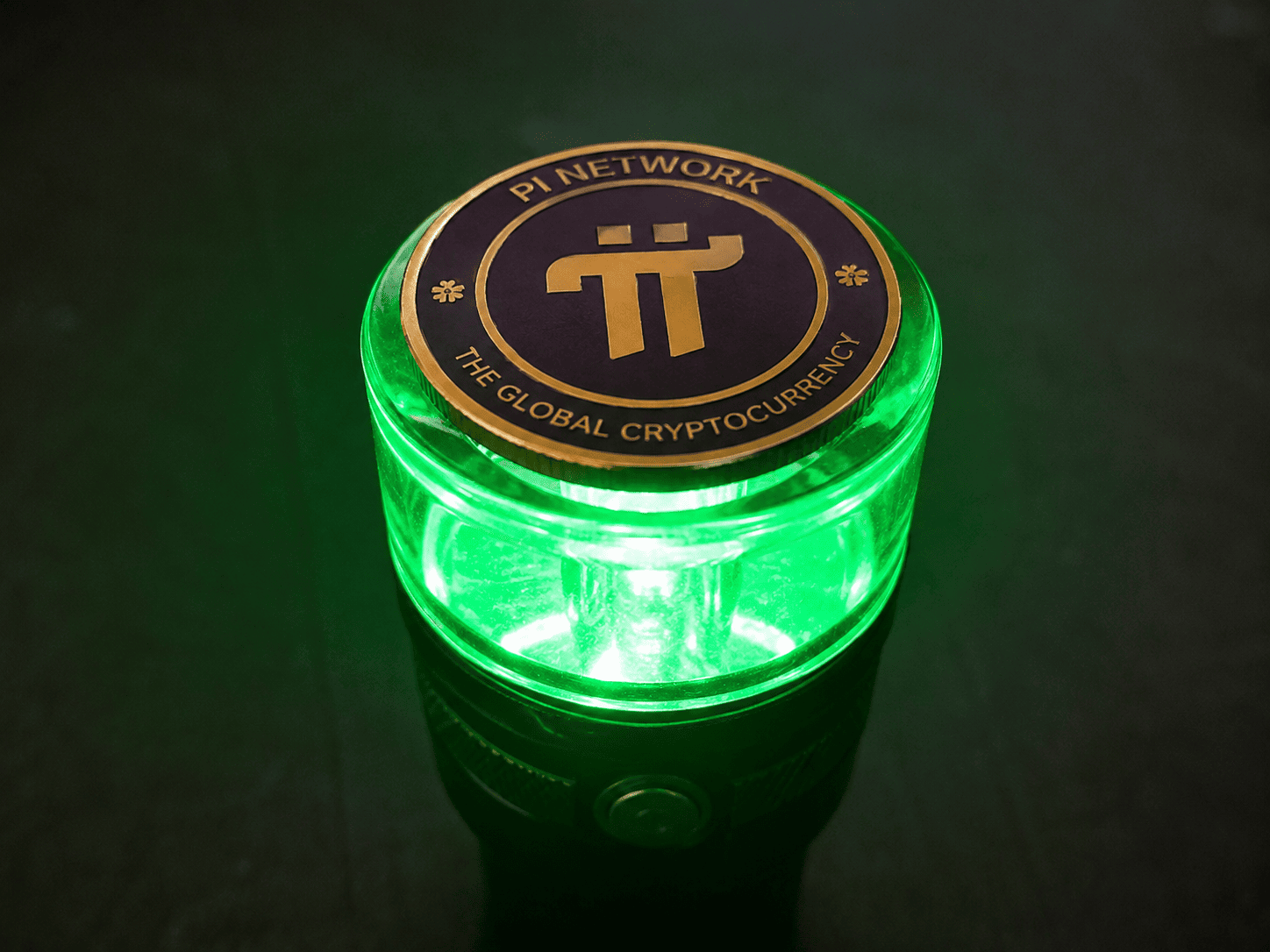
Pi Network's native token PI has surged approximately 10% from its July 28 low, sparking debate among traders about whether a sustained breakout is finally materializing. The move comes as a series of ecosystem developments and an international token registration have bolstered market sentiment.
According to data from Coingecko, PI climbed from around $0.074 on July 28 to nearly $0.082 by July 30, recovering from a week-long decline that had pushed the token to multi-week lows. The rebound follows a sharp selloff that saw PI drop nearly 19% from its weekly high before buyers stepped in near the $0.074 support level.

Institutional recognition removes key uncertainty
A major catalyst for the recovery was Pi Network's addition to the Digital Token Identifier Foundation Registry under the ISO 24165 digital asset identification standard. This registration grants PI an internationally recognized Digital Token Identifier (DTI), placing it within a standardized framework used across digital asset markets.
Market participants view this move as reducing a long-standing uncertainty surrounding the project, as standardized token identification can simplify compliance processes for exchanges, custodians, and institutional service providers. While a DTI does not guarantee exchange listings or regulatory approval, the recognition has been interpreted as a step toward institutional compatibility, encouraging fresh buying interest after weeks of price weakness.
Protocol 26 upgrade and ecosystem expansion
Attention has also turned to Pi Network's upcoming Protocol 26 (v26.1) upgrade. The Core Team has instructed node operators to upgrade before the August 11 deadline, after which older versions will no longer be supported. The upgrade is expected to reduce unnecessary historical data stored by nodes and improve network efficiency.
Community members view Protocol 26 as another milestone before the anticipated Protocol 27 upgrade, encouraging speculative positioning ahead of future infrastructure improvements. Concrete development deadlines often attract traders looking to accumulate before major network events, particularly when assets have already fallen sharply.
Pi Network's ecosystem rollout has provided another reason for renewed optimism. Developers recently distributed 10 million SLICE test tokens while expanding Automated Market Maker (AMM) price tracking on the Pi decentralized exchange testnet. The rollout demonstrates functional liquidity pools and decentralized trading infrastructure rather than simply announcing future plans.
For many participants, this strengthens the argument that Pi is progressing from a mining-focused network toward an ecosystem capable of supporting decentralized finance applications. Expectations that future mainnet assets could eventually be committed to liquidity pools or staking mechanisms have also supported sentiment, although no such mechanisms have yet launched on mainnet.
Technical analysis: momentum improving but trend remains bearish
Technical indicators show that momentum has improved, but confirmation of a sustained uptrend remains incomplete. On the daily chart, PI continues to trade below its 20-day EMA at $0.0881, 50-day EMA at $0.1048, 100-day EMA at $0.1257, and 200-day EMA at $0.1702. The alignment of those moving averages indicates the primary trend is still bearish despite the recent rebound.
The Relative Strength Index (RSI) has recovered to around 37.5 after briefly entering oversold territory during the July 28 selloff. Rising RSI while price stabilizes often indicates selling pressure is easing, though the indicator remains below the neutral 50 level.
On the 4-hour chart, PI's structure is more constructive. A bullish MACD crossover has developed, with the MACD line moving above the signal line while the histogram has turned positive, indicating improving short-term momentum. The Chaikin Money Flow (CMF) has climbed back above zero to approximately 0.06, suggesting fresh capital has started returning after several sessions of distribution. Trading volume also increased during the rebound from the $0.074 low, adding support to the recovery.
Considering these signals, the daily and intraday charts suggest PI is attempting to establish a base but has yet to confirm a full trend reversal. The first technical hurdle sits near the 20-day EMA around $0.088, where previous selling pressure has emerged. A decisive move above that level could expose the 50-day EMA near $0.105, which represents the next major resistance.
If buying momentum continues alongside positive ecosystem developments, reclaiming the $0.09-$0.105 range would strengthen the case for a medium-term recovery. However, failure to hold the recent rebound could send PI back toward the $0.074 support zone established on July 28. Losing that level would invalidate the current recovery attempt and leave the token vulnerable to another leg lower.
For broader context on how institutional recognition is impacting digital assets, see our coverage of Bloom Energy's revenue milestone and the AI boom reshaping Wall Street valuations.
This article is for informational purposes only and does not constitute financial advice.