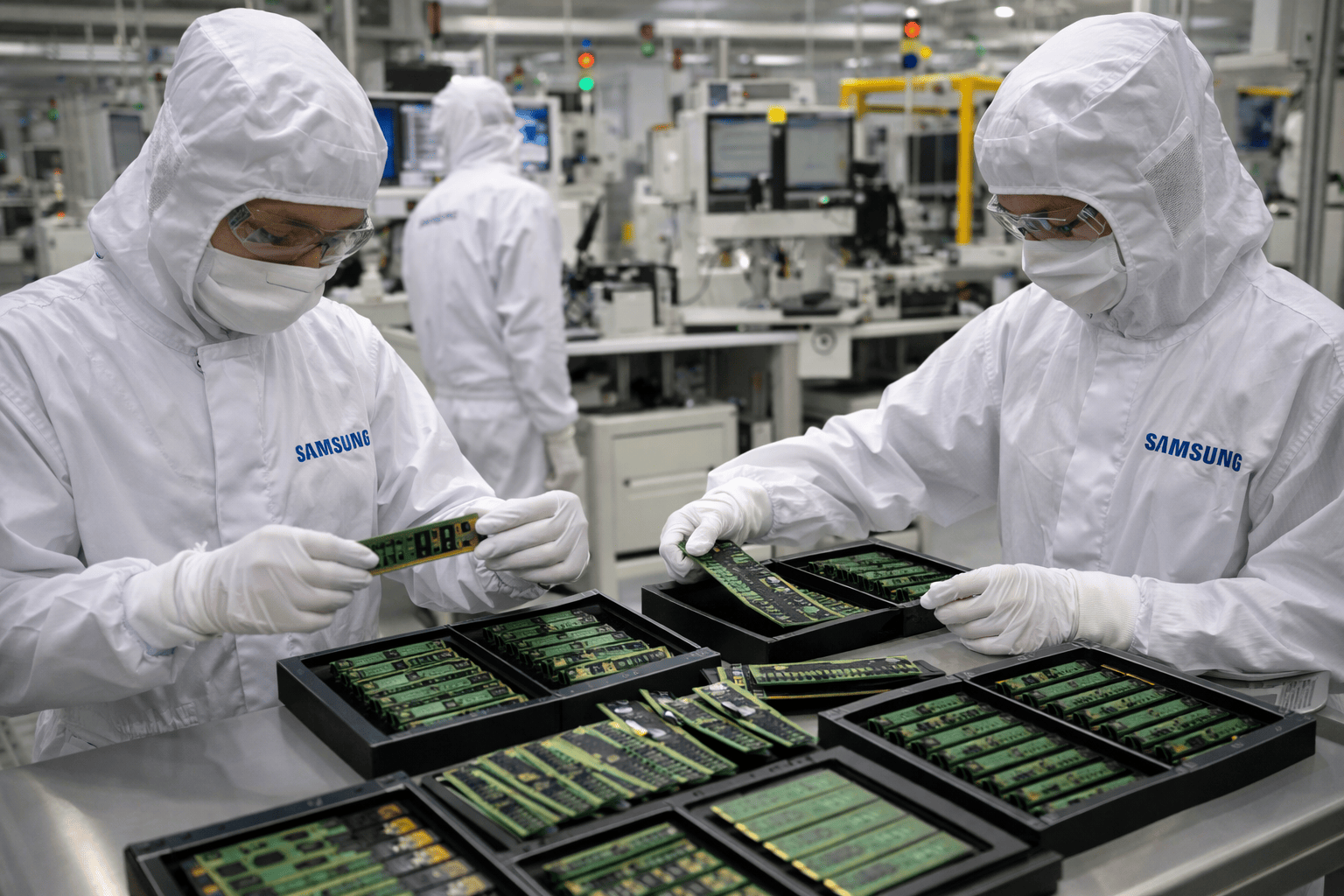
Samsung Electronics shares extended their decline on Friday, capping a turbulent week as investors continued to question whether the company's record shareholder-return program will be enough to support the stock. The shares were down roughly 2% in late morning trading in Seoul, while the broader KOSPI index fell about 0.8% as market participants adopted a cautious stance ahead of Federal Reserve Chair Kevin Warsh's speech at the Jackson Hole symposium.
The latest retreat follows Monday's sharp 8% drop, triggered by Samsung's announcement of a 90 trillion to 110 trillion won ($66 billion to $80 billion) shareholder-return plan for 2026. While the headline figure is unprecedented, investors were hoping for more aggressive buyback and cancellation commitments, which are often seen as more supportive of share prices than dividends.
Record payout, but investors wanted more
Samsung's plan includes 30 trillion won in cash dividends for the third quarter, with the remaining 60 trillion to 80 trillion won to be allocated through dividends, buybacks, or share cancellations, with a decision expected in January. The company also reaffirmed its existing policy of returning 50% of free cash flow generated from 2024 through 2026, rather than introducing a more generous framework.
Morgan Stanley analysts described the plan as "big capital returns, slightly below expectations," reflecting the market's disappointment. Expectations had been elevated after AI-driven semiconductor profits boosted Samsung's earnings and after rival SK Hynix announced a 40 trillion won buyback-and-cancellation program.
Eugene Securities analyst Sohn In-joon told Reuters that Samsung neither raised its shareholder-return policy nor committed to canceling treasury shares in a way that could meaningfully support the stock.
Why the payout may not translate into share price support
Samsung's complex ownership structure complicates the demand for large-scale buybacks and cancellations. Samsung Life and Samsung Fire, both affiliates, already hold stakes close to regulatory ownership limits. If Samsung Electronics cancels a significant number of its own shares, the affiliates' percentage ownership could rise, potentially forcing them to sell shares to stay within those limits.
That constraint may limit how much of the remaining return pool is used for buybacks and cancellations. DS Investment & Securities research head Kim Soo-hyun estimated that only 10 trillion to 20 trillion won of the remaining 60 trillion to 80 trillion won may be allocated to buybacks and cancellations, with the bulk likely going to dividends.
Dividends distribute cash, but buybacks followed by cancellation reduce the number of shares outstanding, potentially boosting earnings per share and increasing the value of remaining holdings. This explains why a program worth more than 100 trillion won can still disappoint investors.
Buybacks provide some cushion, but caution persists
Samsung is currently executing a separate 15 trillion won repurchase program between August and November for employee stock compensation. Korea Exchange data indicate that corporate entities have been significant buyers recently, helping to absorb selling from other investor groups.
While this demand can cushion declines, it does not fully address concerns about the ultimate structure of shareholder returns. Mirae Asset Securities analyst Kim Young-gun believes the market reaction has been excessive. In comments published by Seoul Economic Daily, Kim said Samsung shares were "overreacting" despite the record payout, maintaining a Buy rating with a 370,000 won target price. He argued that the semiconductor earnings uptrend remains intact and that Samsung's valuation has fallen to levels seen before the AI cycle.
The broader semiconductor sector has also been under pressure, with recent concerns over Apple-China supply chain issues and ahead of Nvidia's earnings. For more on the sector's recent moves, see memory chip stocks tumble and chip stocks slide.
As investors weigh Samsung's payout plan against its structural limitations, the stock's near-term direction may depend on broader market sentiment and the upcoming Fed speech. For context on how other assets are reacting, see gold retreats from peak.
This article is for informational purposes only and does not constitute financial advice.