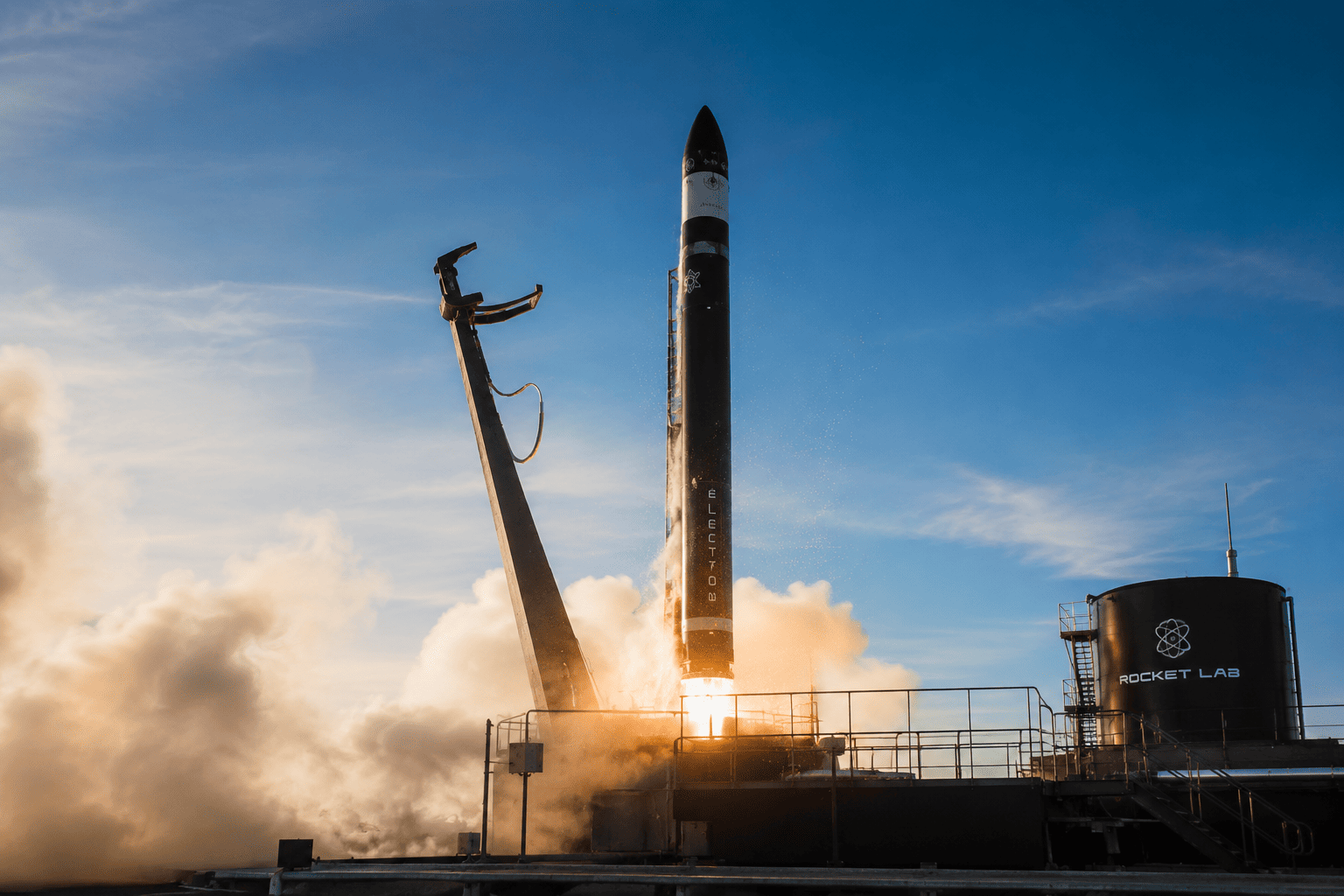
Shares of Rocket Lab (NASDAQ: RKLB) moved higher in premarket trading after the company announced that NASA has selected its Electron launch vehicle for two Earth and solar science missions. The awards, which fall under NASA's Venture-Class Acquisition of Dedicated and Rideshare (VADR) program, underscore the agency's continued reliance on dedicated small-launch capabilities for high-priority scientific payloads.
NASA Selects Electron for PolSIR and TSIS-2
The two missions—Polarized Submillimeter Ice-cloud Radiometer Satellite (PolSIR) and Total and Spectral Solar Irradiance Sensor-2 (TSIS-2)—will lift off from Rocket Lab's Launch Complex 1 in Mahia, New Zealand. The PolSIR mission, which involves two small CubeSat satellites, aims to improve understanding of tropical and subtropical ice clouds and their interaction with sunlight and heat. Data from the project is expected to enhance climate and weather forecasting models. Rocket Lab stated that PolSIR will require two dedicated Electron launches beginning no earlier than June 2027.
The TSIS-2 mission, scheduled for early 2027, will measure total solar energy and the spectral distribution of sunlight reaching Earth. According to NASA, this information will help researchers track changes in weather patterns, ocean currents, and seasonal variations. Both missions reinforce Rocket Lab's role as a provider of dedicated launch services for scientific payloads and small satellites.
VADR Contract Provides Long-Term Revenue Visibility
The awards are part of NASA's VADR program, a contract vehicle with a potential value of up to $300 million over a 10-year period. This framework allows NASA to procure dedicated launches for science missions efficiently, and Rocket Lab's selection for these two missions adds to a growing list of government and scientific contracts. The company's ability to absorb incremental NASA payloads without major new infrastructure—given its stated production pace of approximately one Electron every 11 days—supports margin expansion and reduces execution risk compared to slower-capacity competitors.
Electron's Track Record and Production Efficiency
As of June 2026, Electron has completed nearly 90 missions and deployed more than 260 satellites into orbit. The vehicle remains Rocket Lab's primary operational launch vehicle, designed specifically for small satellite deployments and science missions. The company's manufacturing operations are capable of delivering a new rocket roughly every 11 days, enabling responsive and frequent launch services for both commercial and government customers.
Neutron Development Continues Amid Delays
While Electron remains the company's workhorse, Rocket Lab continues development of its larger Neutron launch vehicle, which is intended to expand capabilities beyond the small satellite market. However, Neutron has encountered several delays and has yet to complete its inaugural flight, originally slated for 2025. Until Neutron becomes operational, Electron will remain Rocket Lab's sole active launch vehicle and primary source of launch services revenue.
Market Context and Investor Sentiment
Investors appeared to welcome the NASA selection, with the stock gaining ground as the awards further strengthened Rocket Lab's position in the growing market for dedicated science and small satellite missions. The news also provides near-term revenue visibility, though risks remain around Electron launch cadence and potential bottlenecks at Launch Complex 1. For broader market context, see our analysis on Rocket Lab Stock: Technicals and Business Momentum Signal Potential Rebound.
In other space-related developments, Intel Shares Hit Record $141.45 on Apple Chip Deal Reports, highlighting the broader tech sector's momentum. Meanwhile, BlackBerry Shares Jump 16% on Q1 Profit Beat shows how earnings surprises can drive stock moves.
This article is for informational purposes only and does not constitute financial advice.

