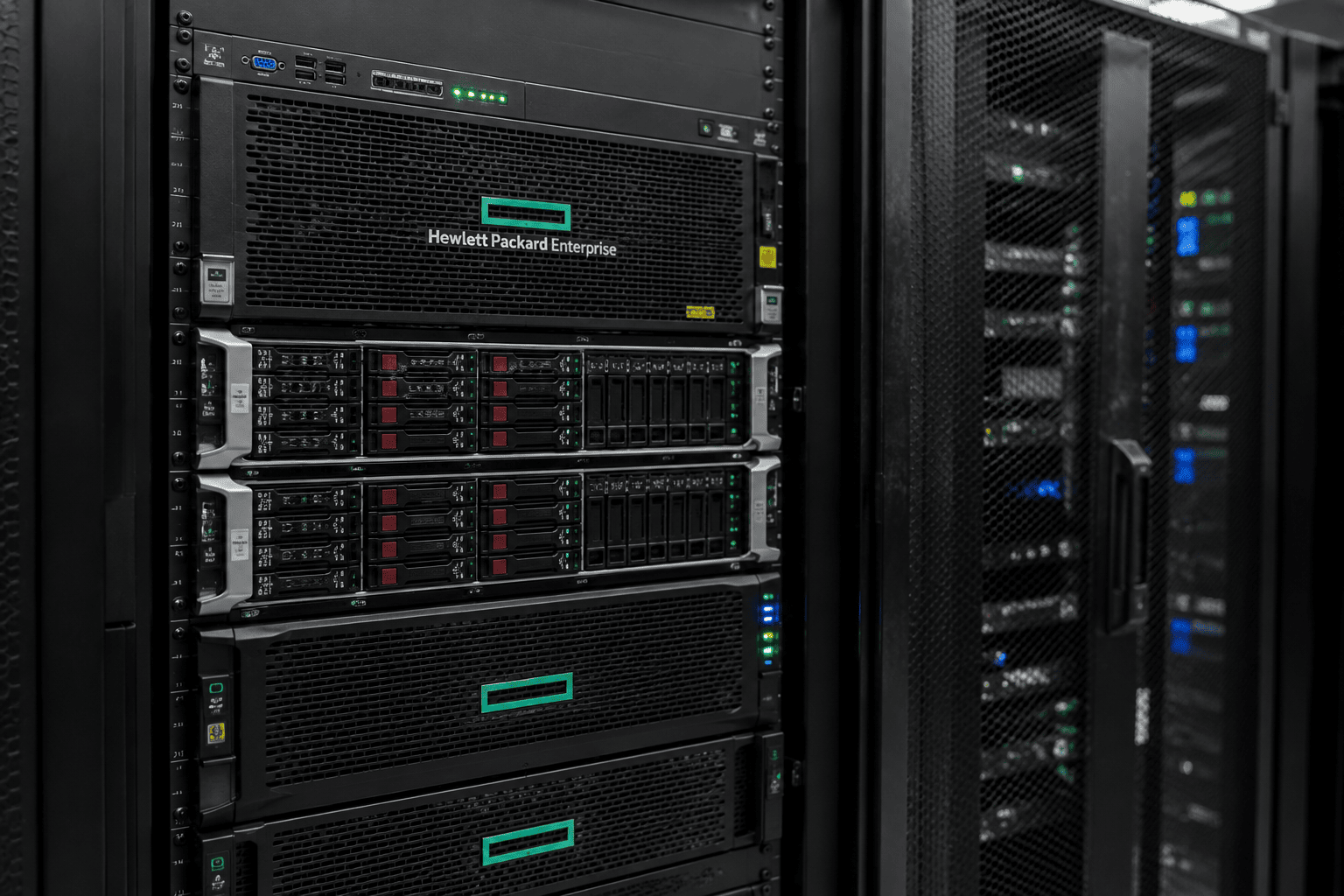
Hewlett Packard Enterprise (HPE) shares advanced more than 4% on Monday after Morgan Stanley upgraded the company, signaling confidence in the durability of enterprise AI infrastructure spending. The move comes despite broader concerns about whether the AI investment cycle can sustain its rapid pace.
Morgan Stanley's upgrade and price target
Analyst Erik Woodring raised HPE's rating to Overweight from Equal-Weight and lifted the price target to $71 from $69. The upgrade follows a remarkable run for the stock, which has surged roughly 130% this year and about 169% over the past 12 months.

Woodring noted that even after the rally, HPE trades at 14.3 times forward earnings, a discount to the S&P 500's multiple of around 20 times. He described HPE as the preferred original equipment manufacturer (OEM) for investors looking to play the enterprise infrastructure cycle, citing an attractive risk/reward profile.
AI demand and memory prices support growth
HPE produces servers and networking gear designed to handle AI workloads. As enterprises accelerate AI adoption, demand for these products has remained robust. Additionally, rising memory prices have given HPE greater pricing power, helping to offset concerns about component cost inflation.
Woodring acknowledged that Morgan Stanley had previously been cautious on the enterprise hardware trade, fearing that record component inflation would dampen spending. However, he now believes AI demand is more than compensating for those cost pressures. "Together, these dynamics are supporting stronger revenue growth, greater pricing power and further earnings upside across enterprise hardware," he wrote.
The firm's analysis suggests that higher memory prices are actually encouraging customers to commit to infrastructure investments sooner rather than later, which should continue to benefit suppliers like HPE.
Morningstar sees additional upside
Morningstar also maintains a positive long-term view on HPE, assigning a fair value estimate of $64 per share. The research firm expects AI-optimized servers and growing demand for general-purpose servers, driven by agentic AI applications, to remain key growth drivers. It also believes HPE's acquisition of Juniper could strengthen its networking business.
Morningstar forecasts HPE's AI-optimized server business will generate roughly $10 billion in revenue by 2028. It projects general-purpose server revenue to grow at a 16% compound annual growth rate over the next three years and networking revenue to expand at a 30% CAGR through 2028, with normalized margins reaching 27%.
The firm notes that additional upside could emerge if AI-driven growth accelerates further. If investors assign a higher valuation to HPE's growth prospects, Morningstar's fair value estimate could rise to $70, or even $80 or more if the AI expansion continues at an accelerated pace.
Market context
HPE's rally has made it a focal point for retail investors tracking AI infrastructure plays. The stock's performance also aligns with broader trends in the tech sector, where companies tied to AI hardware have seen significant gains. For context, Cloudflare's recent AI-driven outlook and JPMorgan's S&P 500 target both highlight the market's focus on AI earnings power.
While some investors worry about a potential slowdown in AI capital expenditures, Morgan Stanley's upgrade suggests that enterprise demand remains strong. The firm's view is that HPE is well-positioned to benefit from ongoing infrastructure investments, even as component costs rise.
As of Monday's trading, HPE shares were around $55.50, extending a rally that has seen the stock more than double since February.
This article is for informational purposes only and does not constitute financial advice.