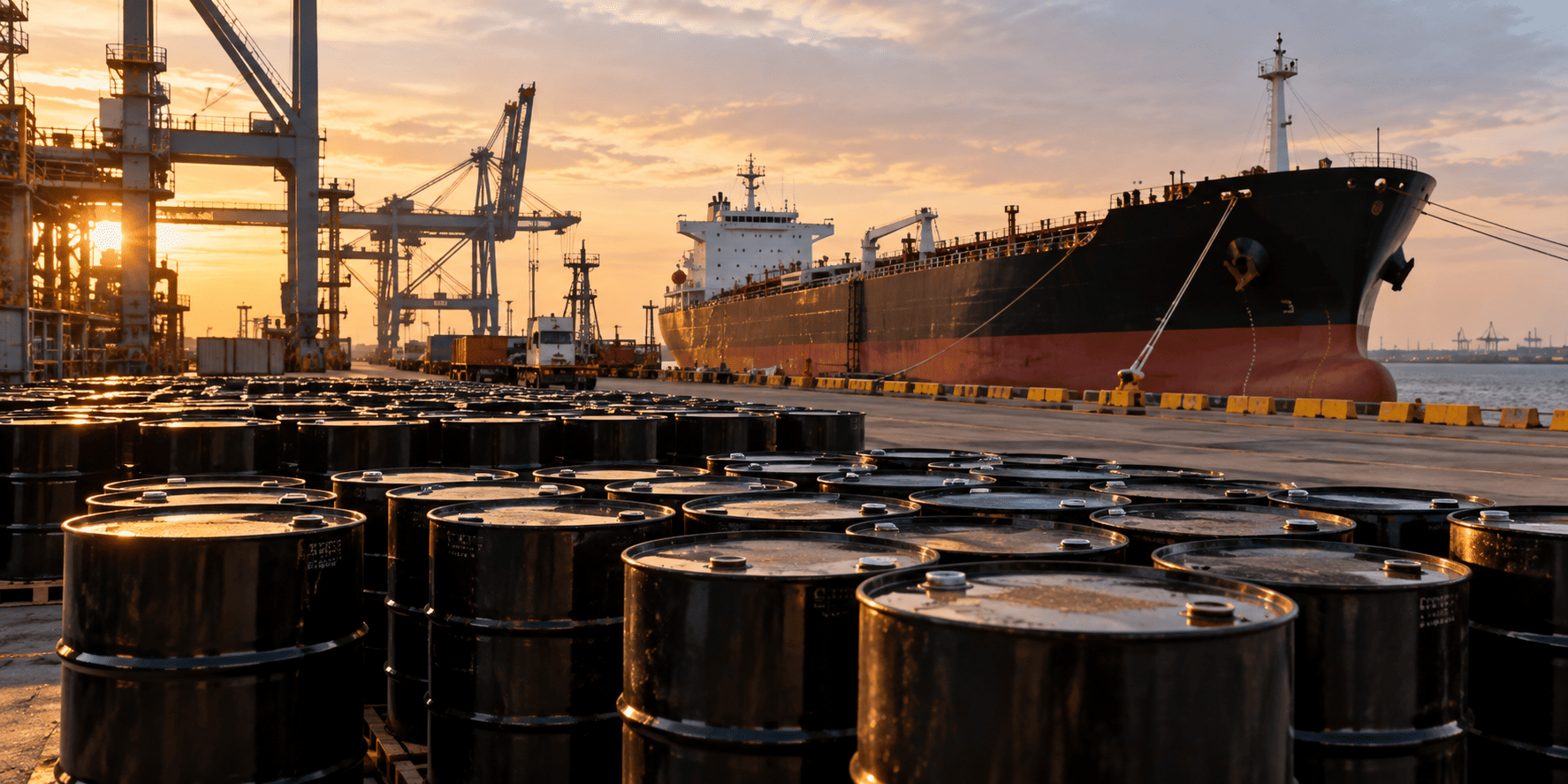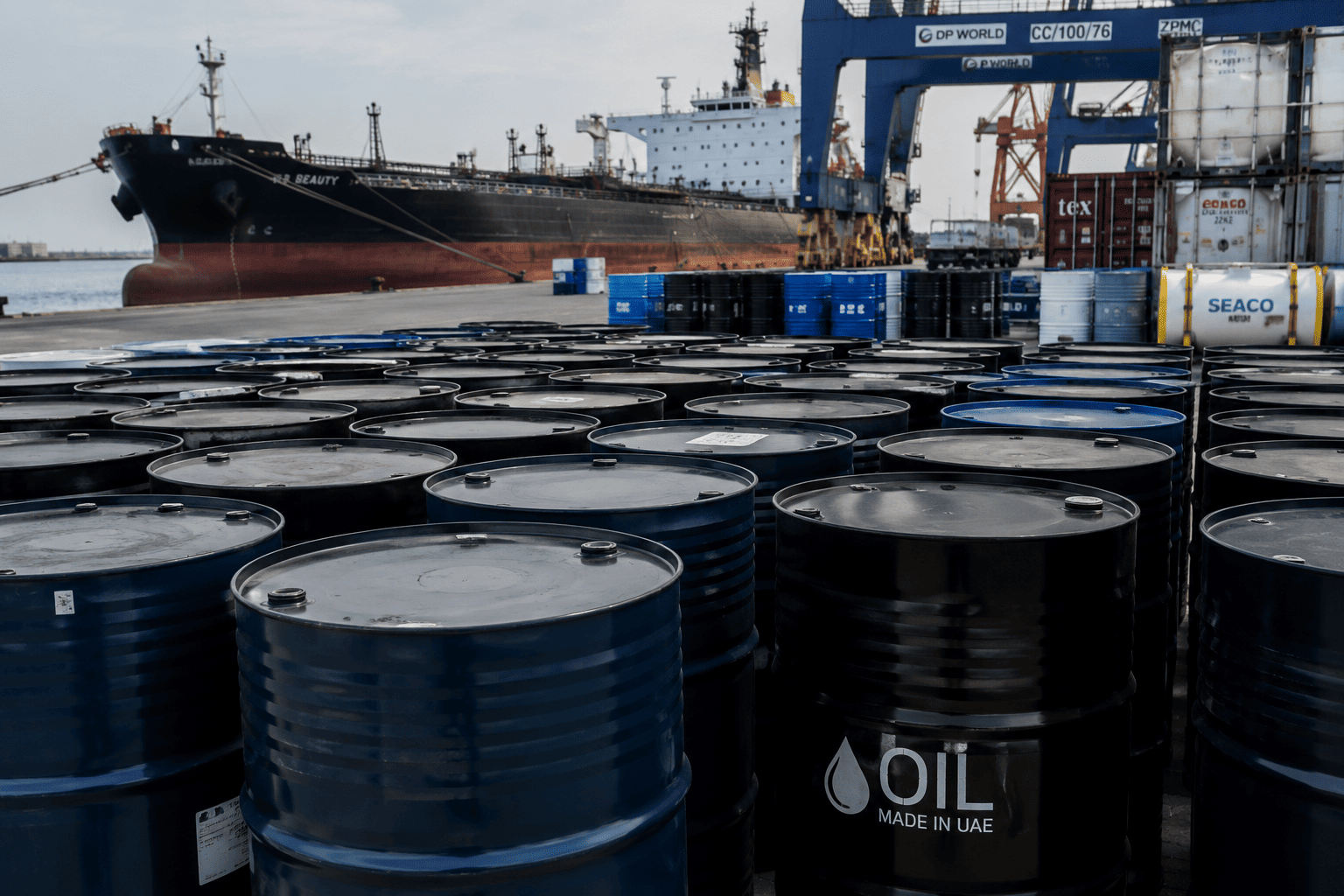
Oil prices climbed nearly 3% on Monday, reversing last week's losses, after Iran reiterated that the United States must meet several conditions before the Strait of Hormuz can reopen. The strategic waterway, which previously handled about one-fifth of global oil and liquefied natural gas shipments, remains a focal point for supply concerns.
Brent crude futures rose 3.27% to $86.30 a barrel, while US West Texas Intermediate (WTI) crude gained 3.48% to $80.84. The advance followed a sharp decline last week, when both benchmarks fell more than 7% on optimism that Iran and Oman were nearing an agreement to reopen the strait.
However, Iran's Foreign Minister Abbas Araqchi said Tehran is close to a final agreement with Oman on new shipping lanes but insisted that Washington must first provide compensation, remove sanctions, and end military threats. He also stated that Iran would not resume talks with the US while Washington continues to violate an interim agreement signed in June.
Supply concerns deepen amid regional security risks
The latest geopolitical developments added to worries about disruptions to global energy supplies. Iran-aligned Houthi forces claimed an attack on Saudi Aramco's Jazan refinery on Sunday, just two days after Saudi Arabia signed a defence agreement with Turkey and Pakistan in response to growing regional instability linked to the US-Israel conflict with Iran.
Separately, UAE oil producer ADNOC said on Friday that 15 of its vessels had been attacked while transiting the Strait of Hormuz since the conflict began. Shipping activity through the waterway has fallen sharply, with only eight to 15 vessels crossing on August 4, 5, and 6, compared with roughly 130 daily transits before the conflict, according to ship-tracking platform MarineTraffic.
Following Monday's advance, Brent crude remained about 16% above levels seen before the outbreak of the US and Israel's war with Iran. The lack of concrete movement and lingering questions about the practical details of any agreement are keeping a risk premium in the price, said Tim Waterer, chief market analyst at KCM Trade. "Each day that passes without a breakthrough is making traders a little more cautious," he added.
Analysts see geopolitical risks supporting crude
Market analysts said uncertainty surrounding the Strait of Hormuz continues to underpin oil prices despite reports that Iran and Oman are nearing a shipping agreement. According to TD Securities, trend-following investors have shifted back into crude oil. "CTAs (Commodity Trading Advisors) have turned buyers of crude oil and heating oil as a Hormuz deal remains elusive," the bank noted, adding that they are starting the week as buyers across WTI and Brent crude, along with heating oil.
TD Securities cited continued geopolitical risks, Houthi attacks on Saudi energy infrastructure, restricted shipping through Hormuz and Bab el-Mandeb, and reduced Russian exports and refining activity as supporting factors. ING also pointed to ongoing uncertainty surrounding negotiations. "Oil prices remain supported by uncertainty surrounding the Strait of Hormuz," the bank said, adding that while reports suggest Iran and Oman are nearing an agreement on shipping routes, "significant hurdles remain before any broader agreement is reached." A full reopening of the waterway is likely to depend on progress in US-Iran negotiations.
Investors are also watching broader market sentiment, with Hormuz talks and inflation data keeping investors cautious in equities. Meanwhile, Iran's sweeping conditions for reopening have been a recurring theme in recent sessions, and oil's reaction to those conditions has been volatile.
This article is for informational purposes only and does not constitute financial advice.