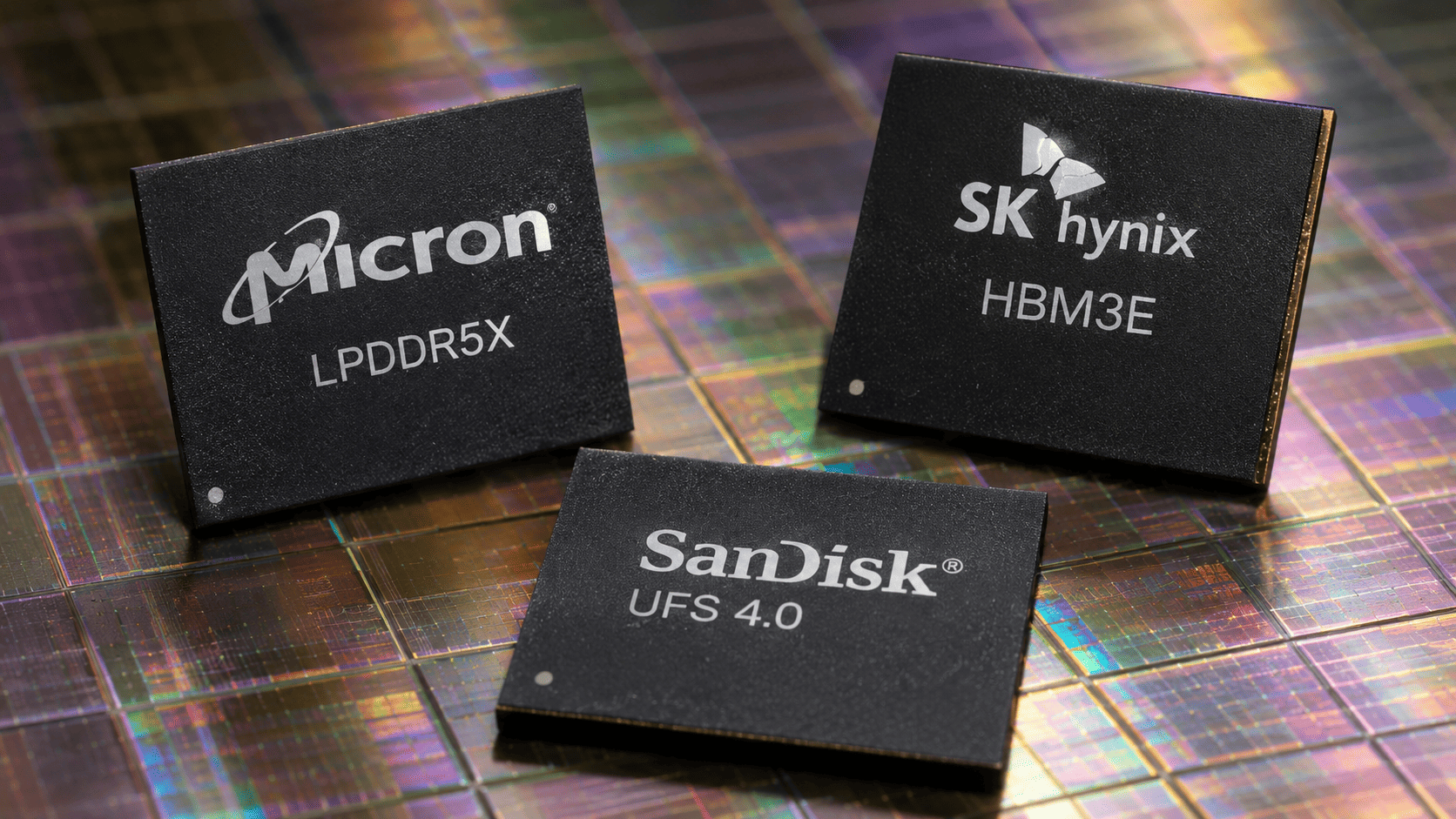
Memory chip stocks extended their slide on Thursday, with major players like Micron, SanDisk, and SK Hynix suffering double-digit percentage losses as investors continued to pull back from AI-linked semiconductor names following the US midterm elections.
Micron Technology shares fell nearly 16%, while SanDisk plunged 20% and SK Hynix dropped 13%. The declines are part of a broader rotation away from semiconductor and AI supply-chain stocks, driven by concerns that Democratic victories could lead to tighter oversight of data center construction and energy consumption, potentially slowing AI infrastructure expansion.
DRAM Market Share Shifts Amid Price Surge
Micron faces additional scrutiny after its share of the global dynamic random-access memory (DRAM) market fell to 21% in the third quarter, down from 26% a year earlier, according to Counterpoint Research. DRAM is short-term working memory used by computers and AI hardware to manage active data and running processes, and it accounts for roughly three-quarters of Micron's revenue.
However, the decline in market share does not necessarily indicate falling revenue. Industry-wide DRAM revenue increased 369% year on year in the third quarter, driven largely by higher average selling prices. This suggests Micron's DRAM revenue is still growing, though its growth has lagged competitors Samsung and SK Hynix.
"This is a pricing supercycle, not yet a volume cycle," said Jeongku Choi, senior analyst at Counterpoint Research. Choi noted that bit shipments rose only about 4% during the quarter, while DRAM revenue reached nearly $200 billion, close to five times its level a year earlier. He added that AI has turned memory into a scarce resource, with buyers competing for supply rather than negotiating on price.
There was a potentially positive development for Micron in China: CXMT's market share slipped to 9% in the third quarter from 10% in the previous quarter, easing some concerns about growing competition from Chinese memory manufacturers. Micron also suspended construction plans for a $4.5 billion memory-chip manufacturing facility in Taiwan after disputes with employees, a plant that was expected to be an important production center for DRAM and HBM components.
Election Concerns and Export Restrictions Weigh on Sentiment
Investors have also reassessed the outlook for AI infrastructure following the US election results. Concerns that a Democrat-controlled Congress could restrict or delay data center projects have added pressure to semiconductor stocks. The uncertainty comes alongside mixed signals from recent results by Qualcomm and Arm Holdings, which have drawn attention to capacity constraints and the sustainability of growth across the chip industry.
SK Hynix faces another potential challenge. A Reuters report published Wednesday said US officials had delayed approval of chip equipment export licenses needed by the company to expand production in China. The development also complicates its proposed $45 billion NAND chip factory investment in New York.
Analysts Divided Over Semiconductor Selloff
Market analysts remain divided over how much further semiconductor stocks could fall. Tech analyst Dan Ives said semiconductor stocks could decline another 10% to 12% during the current pullback. Fundstrat's Tom Lee, however, described the AI selloff as an "overreaction," saying technology stocks could rally approximately 20% if hedge funds rotate back into the sector before the end of the year.
Despite the sharp share-price declines, the underlying demand picture for memory remains strong. The surge in industry-wide DRAM revenue highlights the scale of demand, even as investors reassess valuations, market-share trends, and the pace of AI infrastructure investment.
This article is for informational purposes only and does not constitute financial advice.