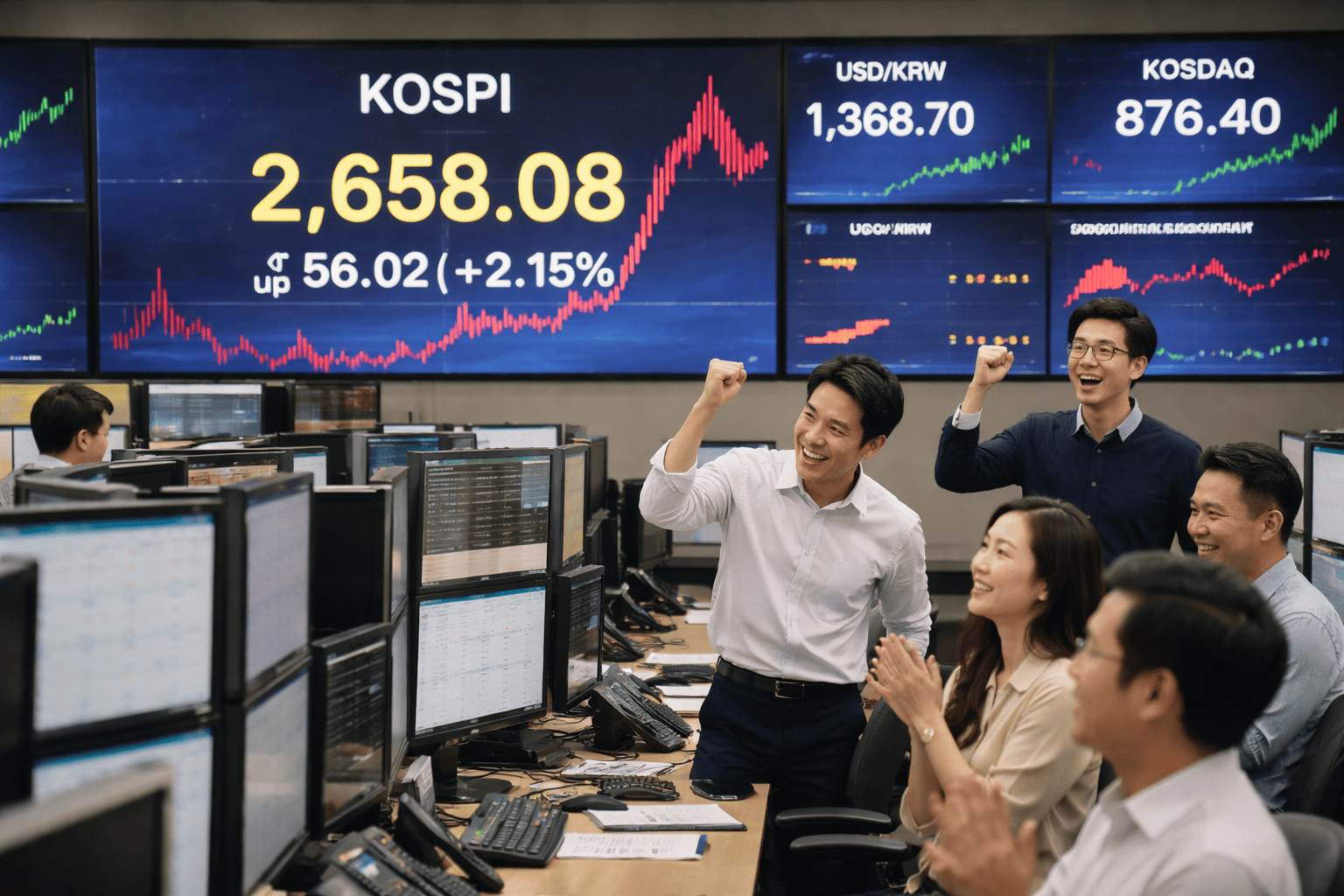
The Kospi Composite Index suffered a sharp decline of over 9% on June 26, falling to 8,275 and wiping out most of the gains accumulated earlier in the week. The drop, driven by profit-taking in technology stocks, has raised questions about the sustainability of South Korea's prolonged bull market, which had pushed the index to a year-to-date high of 9,387.
Profit-Taking Hits Tech Giants
The sell-off was concentrated in the semiconductor and technology sectors, with Samsung Electronics, SK Hynix, and SK Square leading the losses. SK Square dropped 14%, while Samsung and SK Hynix each fell nearly 10%. These stocks had surged on Thursday following strong earnings from Micron Technology, which reported a 300% revenue increase and record profits, surpassing Nvidia in margins due to rising memory chip prices.

However, the rally proved short-lived as investors locked in gains. The broader tech rout extended across Asia, with Japan's SoftBank also declining sharply. The volatility reflects growing unease that the memory chip price upcycle may trigger demand destruction, as higher costs could dampen consumer electronics sales.
Demand Destruction Fears Mount
Concerns about demand destruction have intensified. Apple has indicated it will raise prices on MacBooks and iPhones due to higher memory costs, a move that could weaken sales over time. Similarly, Xiaomi's stock has declined in recent months amid similar pressures. These developments suggest that the memory price increases, while boosting chipmaker profits, may eventually curb demand from key customers.
The Kospi's rally has been heavily dependent on Samsung and SK Hynix, which now have market capitalizations exceeding $1 trillion each. This concentration poses a significant risk: any downturn in these two stocks could disproportionately impact the entire index. Additionally, many South Korean retail investors have entered the market with substantial leverage, raising the potential for panic selling if conditions deteriorate.
Technical Indicators Suggest Reversal
Technical analysis points to a possible end to the bull run. According to the Wyckoff Theory, the Kospi appears to be entering a distribution phase after a prolonged markup period that drove it to record highs. Bearish divergence is also evident, with the MACD and Relative Strength Index (RSI) forming lower highs even as the index climbed. This pattern often precedes a trend reversal.
If the sell-off continues, the next key support level is around 7,000. However, a rebound above the 9,387 resistance would invalidate the bearish outlook. The index's recent behavior mirrors broader trends in Asian markets, as noted in our coverage of the AI stock rout and the Hang Seng death cross.
Broader Market Risks
Beyond technical factors, the Kospi faces structural risks. The index's rally has been fueled by AI-related demand for high-bandwidth memory, but any slowdown in AI spending could hit chipmakers hard. Meanwhile, the South Korean won has weakened to 17-year lows, adding pressure on foreign investors. For more context, see our analysis of how the Kospi's AI rally masks structural weaknesses.
Historically, bull markets do not last indefinitely, and the current cycle may be nearing its peak. If the reversal is not immediate, it could occur later this year or in 2027. Investors should monitor key levels and sector concentration closely.
This article is for informational purposes only and does not constitute financial advice.