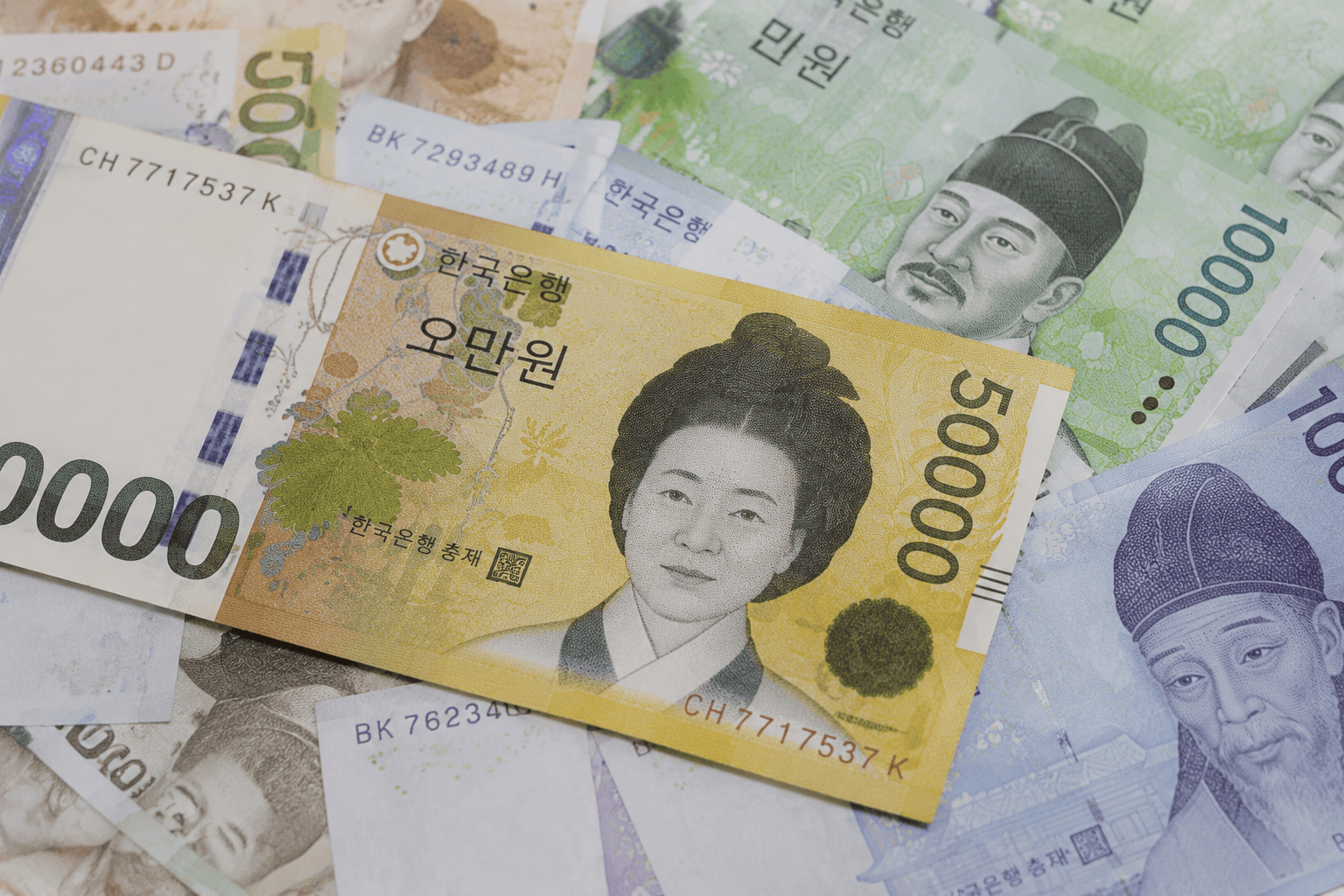
South Korea's benchmark Kospi index has become one of the world's top performers, climbing more than 200% over the past year as investors pour into semiconductor giants like SK Hynix and Samsung Electronics. These companies are key suppliers for the global artificial intelligence boom, powering demand for high-bandwidth memory and advanced chips. Yet the South Korean won remains under severe pressure, trading near 1,500 per dollar—a level not seen since the Asian financial crisis and the 2008 global financial crisis.
The disconnect between the stock market's AI-fueled rally and the currency's persistent weakness is raising concerns among economists. According to the Bank for International Settlements, the won's real effective exchange rate index fell to 85.06 last month, its lowest since March 2009. This measure of purchasing power against trading partners has now remained below China's yuan for six consecutive months since October 2025.
Why the Won Is Weakening Despite Record Exports
Conventional economic theory suggests that strong export growth and current-account surpluses should support a currency. South Korea's semiconductor exports have hit record levels, yet the won has weakened about 4% against the dollar since the start of 2026. Analysts point to a mix of geopolitical tensions, structural capital outflows, and shifting investment behavior.
Foreign investors have sold a net 110 trillion won worth of Korean equities in the first half of this year, according to the Seoul Economic Daily. The Ministry of Finance and Economy noted that such rebalancing sales boost demand for dollar conversion, pushing up the exchange rate in the short term. Additionally, South Korea's commitment to invest $350 billion in the United States as part of a trade agreement is expected to generate further dollar demand.
Geopolitical risks have also weighed on the won. Escalating US-Iran tensions in late March and Middle East conflicts driving oil prices above $100 per barrel in mid-May increased demand for safe-haven assets. South Korea imports nearly all its energy, so higher crude prices require more dollars for imports, further pressuring the currency.
Structural Shifts Reshape Currency Dynamics
The Bank of Korea highlights a fundamental change in the composition of South Korea's overseas assets since the mid-2010s. Historically, current-account surpluses flowed into central bank reserves, supporting the won. Now, pension funds, institutions, and retail investors are increasingly recycling those surpluses into overseas investments seeking higher returns. This structural shift reduces traditional support for the currency.
Weak foreign bond inflows have compounded the problem. Despite South Korea's inclusion in the World Government Bond Index (WGBI), foreign capital has not returned in sufficient volume to offset equity outflows. For more on foreign capital trends, see Foreign Capital Returns to South Korea on AI Chip Rally and WGBI Inclusion.
AI Rally vs. Currency Reality
The Kospi's market capitalization has expanded to 6,300 trillion won from 2,300 trillion won since President Lee Jae-myung took office, according to the Seoul Economic Daily. However, the won's real value has fallen to levels associated with past crises. The divergence highlights that traditional relationships between economic growth, equity performance, and currency strength may be breaking down in Asia's fourth-largest economy.
For context on broader market movements, see S&P 500, Nasdaq Close at New Records as Ceasefire Hopes Fuel Rally and Equities Rally on Iran Ceasefire Hopes as Fed Nominee Hearing Looms.
Investors are now watching whether policy shifts or a reversal in foreign inflows could restore won strength. Without credible fiscal and structural reforms, the currency may remain under pressure even as the AI-driven stock rally continues.
This article is for informational purposes only and does not constitute financial advice.