IREN shares climbed more than 17% in premarket trading on Friday, rebounding from a brutal month that saw the stock lose over half its value. The surge followed the company's fiscal first-quarter earnings report, which showed a narrower net loss and a dramatic increase in revenue from its artificial intelligence cloud business, offering a measure of reassurance to investors rattled by the recent selloff in AI infrastructure stocks.
The company, which began as a Bitcoin miner and is now pivoting toward AI computing, reported a net loss of $263 million for the quarter ended September 30, an improvement from the $684 million loss in the prior quarter and better than the $322.98 million consensus estimate. Total revenue rose to $228 million from $137 million in the previous quarter, surpassing analyst expectations of around $222 million.
AI Cloud Revenue Nearly Triples
The standout figure was AI cloud revenue, which nearly tripled to $200 million from $71 million in the prior quarter, beating the consensus estimate of $185.02 million. In contrast, Bitcoin mining revenue fell to $28 million from $67 million, missing the analyst forecast of $32.95 million. This divergence underscores the shifting composition of IREN's business as it increasingly dedicates its computing infrastructure to AI workloads.
Co-CEO Daniel Roberts highlighted the quarter's achievements: "This quarter Horizon 1 went into service for Microsoft with NVIDIA Exemplar status, AI cloud revenue nearly tripled to $200M, and operating ARR doubled to a billion."
Microsoft Infrastructure Delays Push Back Revenue Target
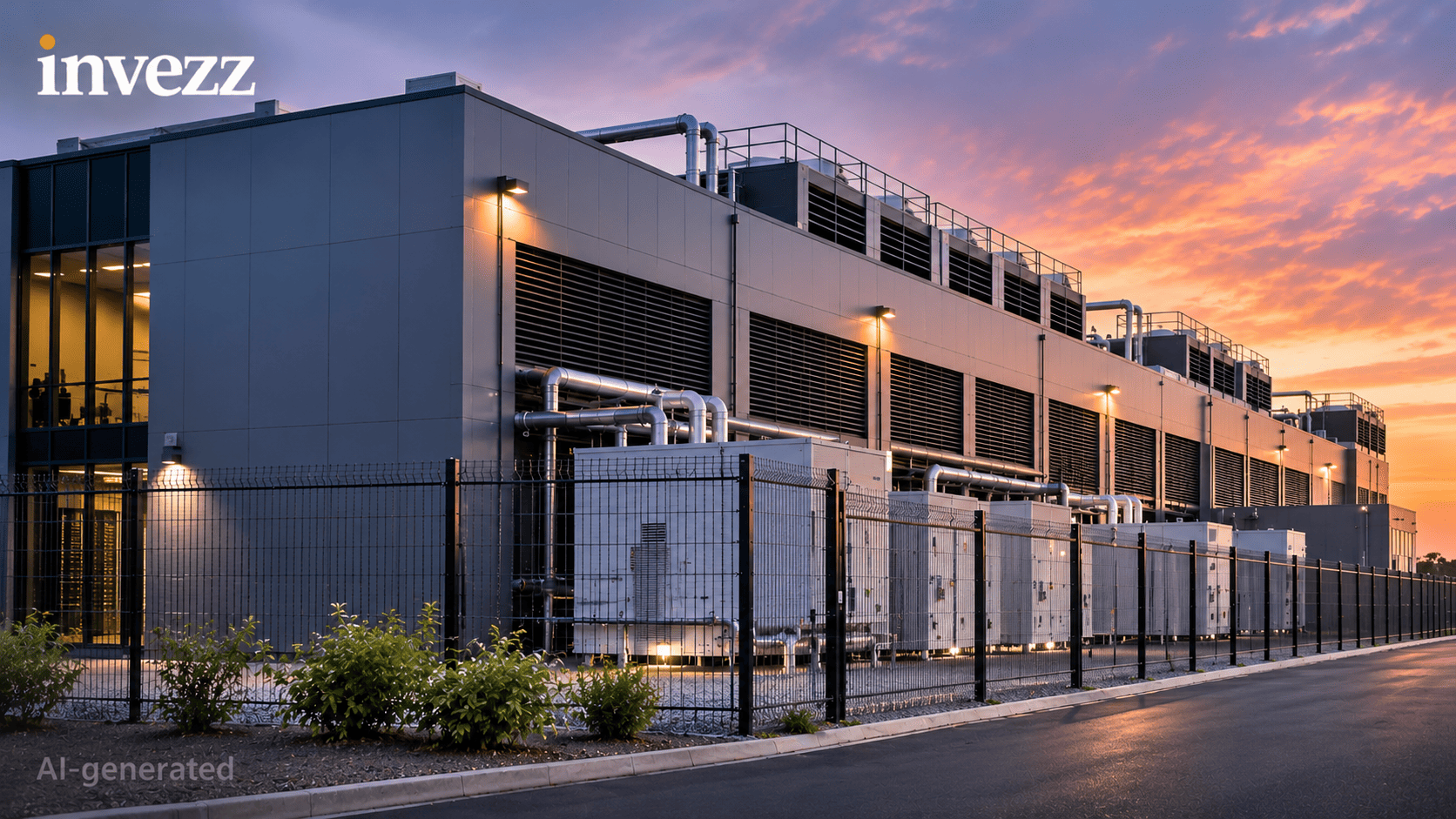
Despite the strong AI cloud growth, IREN acknowledged delays in delivering some infrastructure for Microsoft. The company is building 200 megawatts of data-center capacity for the software giant in Texas. The delay was attributed to a customer-requested network-design change and supplier timing, not a commercial dispute, and IREN said it would not incur financial penalties.
As a result, the company pushed back the timeline for bringing more than $4 billion in contracted annualized run-rate revenue into operation from the end of the year to January, with a possible extension to the end of February. Roberts explained, "The more than $4B of contracted ARR is funded and now targeted for January; after a customer-requested design change and supplier timing moved it from year-end, it may extend to the end of February."
On the post-earnings call, executives said the company exited September with $1 billion in annualized run-rate revenue and expected roughly one-quarter of that amount to be recognized in the December quarter.
New GPU Contracts and Rising Capital Spending
IREN also announced additional commercial agreements signed after the quarter ended, including a five-year contract valued at approximately $22 million per megawatt of computing capacity. The unnamed customer prepaid 90% of the capital expenditure required for the GPUs associated with the agreement. The company also signed a short-term contract worth $40 million per megawatt.
Roberts emphasized the company's asset base: "We own the land, the power, and the data centers under all of it, which gives us more ways to fund growth and lets us set its pace." IREN pointed to assets worth $20.6 billion, saying its revenue and assets were "underpinned by customer contracts with Nvidia, Microsoft and 13 other customers." Two-thirds of its revenue backlog is tied to "investment-grade counterparties."
However, expansion plans require substantial investment. IREN expects to spend approximately $15 billion on capital expenditure over the remainder of its fiscal year. Its quarterly filing showed capital commitments of $18.95 billion at the end of September, up from $13.81 billion three months earlier. GPU hardware on its balance sheet nearly tripled to $5.82 billion from $2.04 billion, while construction in progress stood at approximately $4.61 billion.
Analyst Views and Market Context
IREN has been particularly vulnerable to the recent technology sector selloff because its business depends on investor confidence in the long-term demand for AI computing infrastructure. Like fellow neocloud provider CoreWeave, the company rents out access to computing capacity, making it sensitive to concerns about data-center spending, financing requirements, and the returns on AI investments.
Analysts at Bernstein identified several factors that could support IREN's longer-term prospects. They noted that Texas' approved data-center capacity "may end up commanding a scarcity premium," despite concerns surrounding the election of a Democratic governor who has promised a tougher approach to data-center development. The analysts also pointed to IREN's diversified customer base and "well calibrated" financial management as potential strengths. Goldman Sachs reiterated its Neutral rating on the stock.
This article is for informational purposes only and does not constitute financial advice.