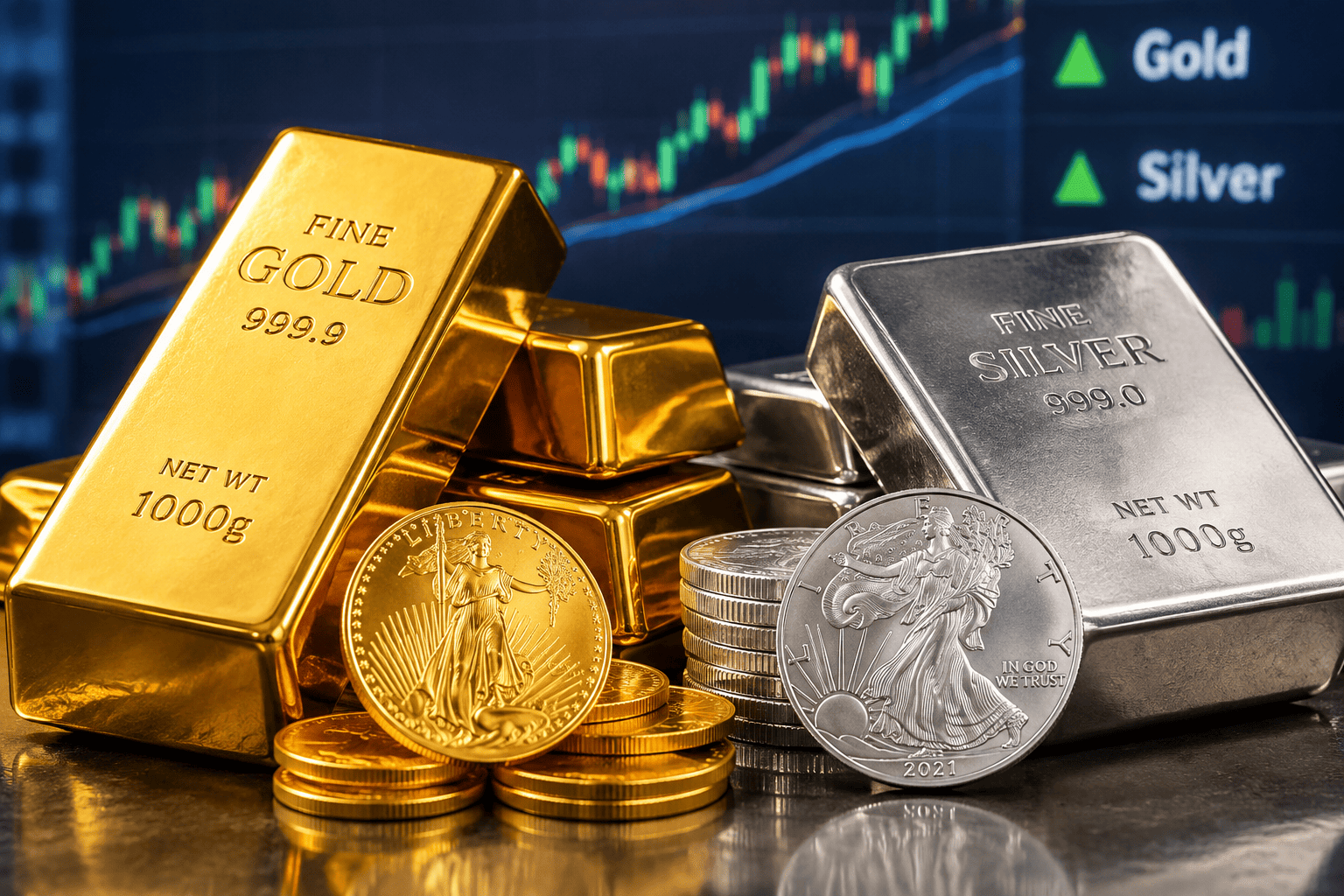
Gold prices surged on Friday, reaching their highest level since late June, as a disappointing US jobs report prompted traders to scale back expectations for further Federal Reserve rate increases. The rally, which saw spot gold climb 1.4% to $4,179.94 per ounce, marks a shift from a defensive trade to a rate-relief move, analysts said.
The trigger was Thursday's payrolls report, which showed nonfarm payrolls increased by only 57,000 in June, well below consensus estimates. Revisions to the previous two months were also lower, while the unemployment rate edged down to 4.2%, partly due to a drop in labor-force participation. For gold investors, the message was clear: the labor market is cooling, reducing the urgency for the Fed to raise rates further.

The dollar's weekly decline added fuel to the rally, making bullion cheaper for overseas buyers. Traders also reduced the implied probability of a September rate hike to about 54%, down from roughly 66% before the payrolls release. This shift matters because gold, which pays no yield, becomes more attractive when rate expectations fall, lowering the opportunity cost of holding the metal.
August gold futures rose 1.6% to $4,193.20, with the metal heading for a 2.3% weekly gain, its first in five weeks. The broader precious metals complex joined the rebound, with silver climbing 2.3% to $62.43 per ounce, platinum gaining 2.7% to $1,660.05, and palladium adding 1.3% to $1,284.40.
Central bank buying provided an additional pillar of support. The World Gold Council reported that central banks returned to net purchases in May, adding 41 tonnes to official reserves. Poland and China were among the largest buyers, while Uzbekistan and Kazakhstan also increased their holdings. This official-sector demand helps cushion gold when speculative flows turn volatile, underscoring the metal's resilience despite recent pressure from the dollar and rates.
However, the rally is not without risks. Rate-hike expectations have eased but not vanished, leaving gold exposed if inflation data turns sticky again. Analysts warn that if inflation remains firm, gold could face another leg lower later in the year, with some downside scenarios pointing toward the $3,500 area. The repricing of rate expectations has not gone far enough to remove downside risks entirely.
Market participants are now eyeing upcoming economic data, including the Consumer Price Index (CPI) report, which could influence the Fed's next move. For context, gold recently steadied near $4,332 as traders eyed CPI data amid a fragile Iran-Israel truce, as covered in Gold Steadies Near $4,332 as Traders Eye CPI Data Amid Fragile Iran-Israel Truce. Meanwhile, silver's rebound is also being closely watched, with traders eyeing US jobs data for the next move, as detailed in Silver Rebound Tests $73.60 as Traders Eye US Jobs Data for Next Move.
The current environment highlights the delicate balance between labor market weakness and inflation risks. While the jobs miss has revived the gold trade, the path ahead remains uncertain, with the Fed's next steps hinging on incoming data. For now, gold investors are enjoying a reprieve, but the rally's sustainability will depend on whether inflation cooperates.
This article is for informational purposes only and does not constitute financial advice.