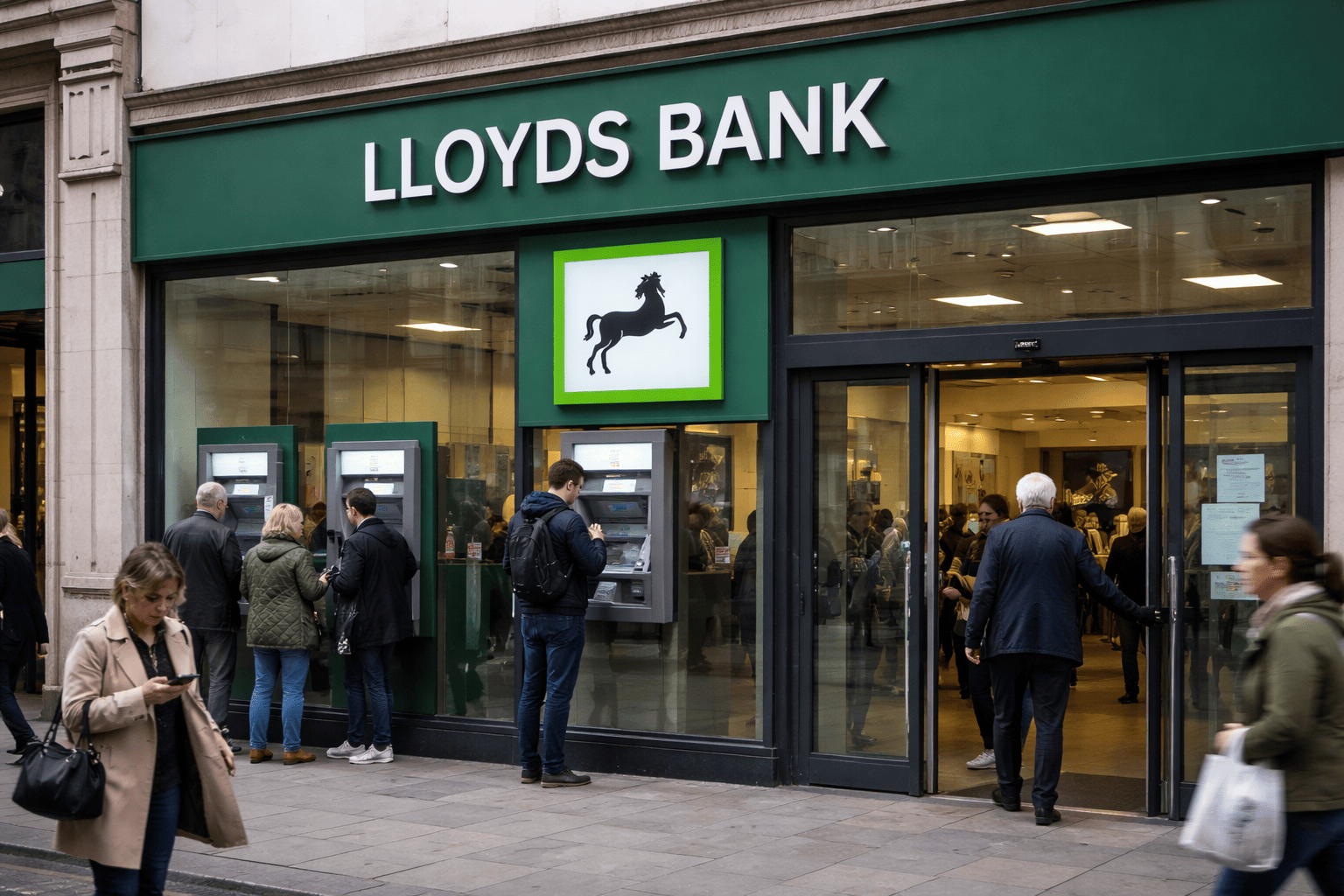
Lloyds Banking Group shares have been trading sideways in recent weeks, hovering near their highest level of the year. The stock was last seen at 114.70p, just a few pence below its 2024 peak of 118p. Despite the recent consolidation, the shares remain up 16.75% year-to-date and have gained 153% over the past five years. The current dividend yield stands at 3.48%, slightly above the FTSE 100 average of 3%.
The bank's business fundamentals have been solid, with second-quarter results showing continued revenue growth. Retail customers surpassed 28 million, and commercial relationships reached 1 million. The mobile app has become the UK's largest digital banking platform, and the bank has reduced its cost base by over £2 billion in recent years.

Net interest income rose 9% in the first half to £7.27 billion, with a 4% increase in the second quarter to £3.7 billion. Net income reached £9.74 billion in the first half and £4.9 billion in Q2. Statutory profit after tax exceeded £3.12 billion in the period. Impairment charges have declined even as the UK economy faces stagflation—characterized by elevated inflation and sluggish growth.
Lloyds has also navigated a challenging housing market, where prices have retreated. As the UK's largest mortgage lender and a significant real estate investor through its Cintra Living brand, the bank's resilience is notable.
Analysts maintain a bullish outlook. The average estimate projects third-quarter revenue growth of 11.9% to £5.6 billion, with full-year revenue expected to rise 10.4% to £21.8 billion, followed by £23 billion next year. This growth supports the stock's valuation, which trades at a forward price-to-earnings ratio of 11.5, slightly above the banking sector median of 10. Its price-to-book ratio of 1.5 is also marginally higher than the sector median.
Technical analysis signals caution
On the daily chart, Lloyds shares have pulled back from their year-to-date high of 118p to the current 114.70p. The price action has formed a diamond reversal pattern, a classic bearish reversal signal in technical analysis. Additionally, the Relative Strength Index (RSI) is approaching the neutral 50 level, suggesting weakening momentum.
These technical indicators point to a potential retracement, with the key support level at 100p. However, the fundamental backdrop remains supportive, and the bank's earnings trajectory could limit downside.
Investors should note that Lloyds shares recently hit a 2008 high as H1 profit jumped 23%, and FTSE 100 earnings week includes updates from major UK banks. The broader market context, including bitcoin's bearish signals, may also influence sentiment.
While technical patterns suggest a possible pullback, the bank's strong fundamentals and analyst expectations for continued growth could provide support. Investors will watch whether the stock can hold above the 100p level or if it breaks lower.
This article is for informational purposes only and does not constitute financial advice.