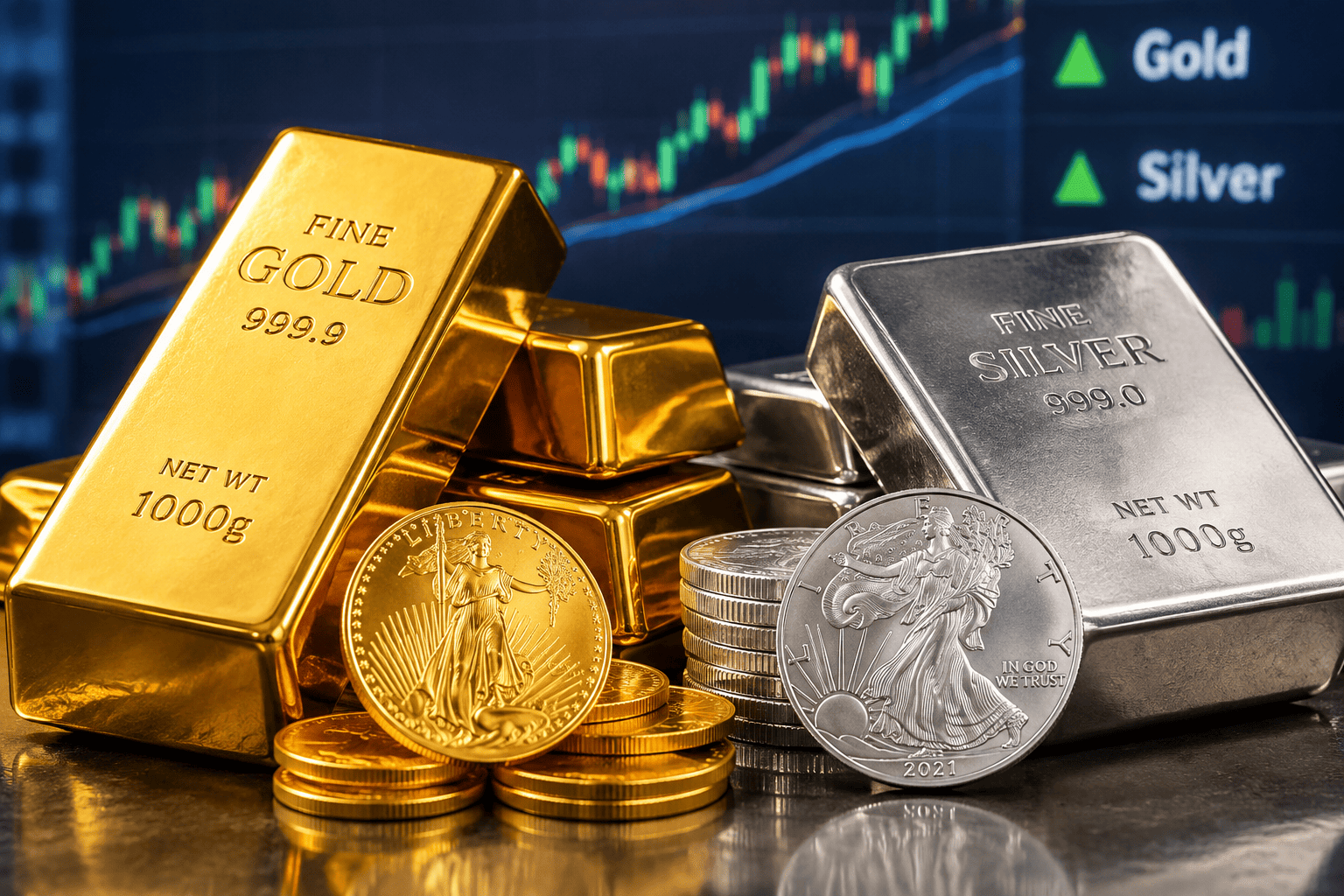
Gold continued its upward momentum for a third consecutive session on Tuesday, trading above $4,420 an ounce even as long-term Treasury yields reached levels not seen in over a decade. The precious metal's resilience suggests that factors beyond interest rate expectations are underpinning demand.
Spot gold edged up 0.2% to $4,424.28 per ounce in early trading, while December futures rose 0.2% to $4,480.90. This keeps bullion near last week's two-month high, with investors now turning their attention to Wednesday's Federal Reserve minutes for clues on the central bank's policy trajectory.

Fed pause expectations bolster gold
The macro environment has shifted in gold's favor. US nonfarm payrolls fell by 23,000 in July, and retail sales dropped 0.6%—the first monthly decline since October. Additionally, July consumer inflation eased to 3.4% from 3.5% in June, leading markets to price in roughly a 65% chance that the Fed will leave rates unchanged in September.
The central bank maintained its target range at 3.5%-3.75% in July, though three policymakers dissented in favor of a quarter-point increase. IG market analyst Tony Sycamore noted that last week's softer data strengthens the case for a prolonged pause, giving gold room to extend gains. Lower expected rates reduce the opportunity cost of holding non-yielding assets like gold.
Dollar weakness adds support
The US dollar remains near multi-month lows against several major peers, providing additional support for gold. A weaker dollar makes gold cheaper for holders of other currencies, boosting demand.
Bond yields at multi-year highs
What makes Tuesday's move particularly notable is that gold is advancing despite significant pressure from the bond market. The US 10-year Treasury yield climbed to about 4.72%, while the 30-year yield touched 5.32%—its highest level since 2007. Typically, rising long-term yields make non-yielding bullion less attractive, but gold has absorbed this headwind.
This resilience suggests that rate expectations are not the only force at play. Investment demand has improved: global physically backed gold ETFs attracted $3 billion in July, with holdings increasing by 23 tonnes to 4,068 tonnes, according to the World Gold Council. This provides a firmer foundation than a rally driven purely by short-term Fed positioning.
Geopolitical risks revive safe-haven appeal
Geopolitical tensions are also contributing to gold's strength. Iran has warned it could adopt a more offensive military posture after efforts to secure a permanent settlement with Washington stalled. Brent crude has climbed back above $91 a barrel, reviving inflation concerns but also reinforcing demand for defensive assets.
Sycamore believes gold is beginning to regain its traditional safe-haven role even as yields rise. The next test is Wednesday's Fed minutes, due at 2 pm ET. A cautious tone would strengthen the case for another challenge of $4,500, while hawkish language could trigger fresh profit-taking after gold's strong August rebound.
For context, gold's recent performance contrasts with earlier declines when yields surged. As noted in our coverage of gold's drop below $4,050, rising yields and dollar strength had previously capped gains. Now, the dynamic appears to have shifted, with gold showing resilience despite similar pressures.
Investors are also watching the broader bond market, as highlighted in our analysis of TLT ETF sliding to multi-year lows. The sustained rise in yields could pose challenges for risk assets, but gold's current strength suggests it may be decoupling from traditional correlations.
As the Fed minutes approach, market participants will be looking for any signals about the future path of rates. If policymakers indicate a willingness to hold rates steady for an extended period, gold could see further upside. Conversely, any hint of tightening could prompt a pullback.
This article is for informational purposes only and does not constitute financial advice.