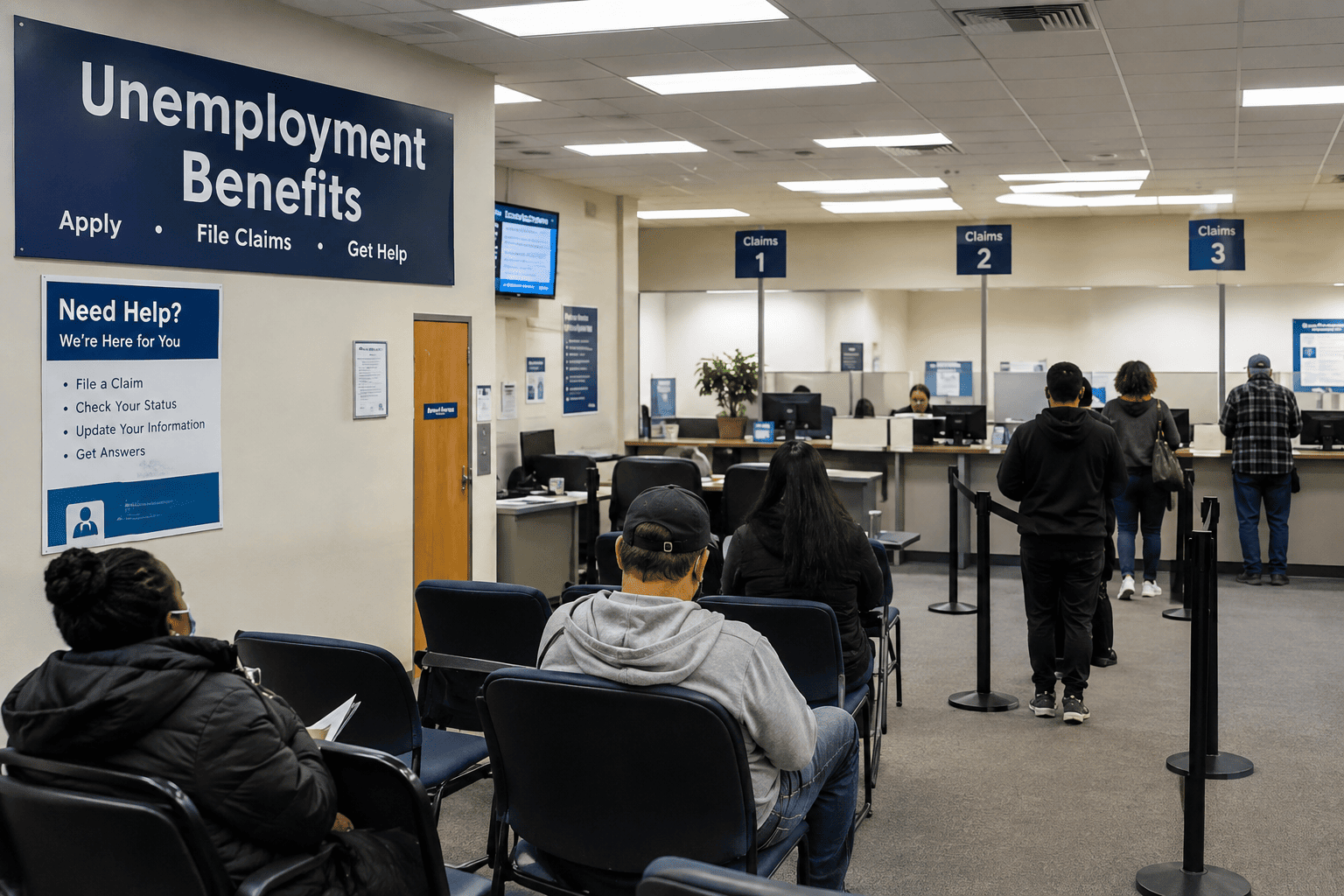
The U.S. labor market delivered a significant disappointment in June, with nonfarm payrolls expanding by only 57,000—less than half the 115,000 gain economists had anticipated, according to a Dow Jones survey. The miss, reported Thursday by the Labor Department, marks a sharp deceleration from the previous months and has prompted investors to reassess the timing of the Federal Reserve's next interest rate move.
The unemployment rate edged down to 4.2% from 4.3%, contrary to expectations that it would hold steady. However, the decline was largely driven by a drop in labor force participation, which fell 0.3 percentage point to 61.5%—the lowest since March 2021. The number of employed individuals, as measured by the household survey, fell by 507,000, underscoring underlying softness in the labor market.
Downward Revisions Paint a Softer Picture
Compounding the weak headline number, the government revised down its estimates for prior months. April's payroll gain was cut by 31,000 to 148,000, and May's figure was slashed by 43,000 to 129,000. These adjustments reinforce the view that hiring momentum has been cooling more steadily than earlier reports suggested.
The broader U-6 unemployment rate, which includes discouraged workers and those employed part-time for economic reasons, eased 0.2 percentage point to 7.9%.
Sector Divergence: Hiring in Some Areas, Losses in Others
Job gains were concentrated in a few sectors. Professional and business services added 36,000 positions, continuing a recovery that has seen the sector gain 172,000 jobs since a low in October 2025. Social assistance employment rose by 25,000, driven largely by individual and family services, which contributed 17,000 of those jobs. Healthcare added 22,000 positions, though that was below its average monthly gain of 38,000 over the prior year.
In contrast, leisure and hospitality lost 61,000 jobs, reflecting weaker-than-normal seasonal hiring despite the U.S. co-hosting the FIFA World Cup. The sector has shown little net growth in 2026, pointing to softer consumer-facing demand.
Wage Growth Steady, Inflation Risks Shift
Average hourly earnings for private-sector workers rose 13 cents, or 0.3%, to $37.64, keeping annual wage growth at 3.5%. Production and nonsupervisory workers saw a 7-cent, or 0.2%, increase to $32.38. While wage gains remain above inflation, Federal Reserve officials have indicated that labor costs are no longer a primary inflationary concern. Instead, they are focusing on higher energy prices linked to the conflict involving Iran and massive infrastructure spending tied to the artificial intelligence boom as emerging risks.
Fed Chairman Kevin Warsh, speaking at a central banking forum in Portugal on Wednesday, described the labor market as "steady" and dismissed fears that artificial intelligence would cause widespread job losses, arguing that technological advances historically create more jobs and boost prosperity.
Market Reaction: Rate Hike Expectations Tumble
Following the jobs report, traders sharply reduced expectations for a rate hike at the Fed's July meeting, assigning less than a 20% probability. Analysts noted that the pattern of a June slowdown mirrors 2024 and 2025, when job growth averaged about 124,000 per month from March to May before slumping to an average of just 34,000 in June. That pattern was a factor in the Fed's 50-basis-point insurance rate cut in September 2024.
"This report alone is not enough to take a rate hike off the table, but it may be enough to push the timing out," one analyst said. Markets now see September as the more likely window for additional tightening, with futures implying roughly a 60% chance of a rate hike, down from about 75% before the data.
Separately, initial jobless claims for the week ended June 27 totaled 215,000, slightly below the prior week's 216,000 and better than the 220,000 forecast. Continuing claims held steady at 1.81 million, indicating that while hiring has slowed, employers are not resorting to broad layoffs.
For broader market context, see our coverage of Accenture's recent slump and the Jio IPO valuation. Additionally, the Commerzbank outlook on oil and gas highlights ongoing energy price pressures that the Fed is monitoring.
This article is for informational purposes only and does not constitute financial advice.