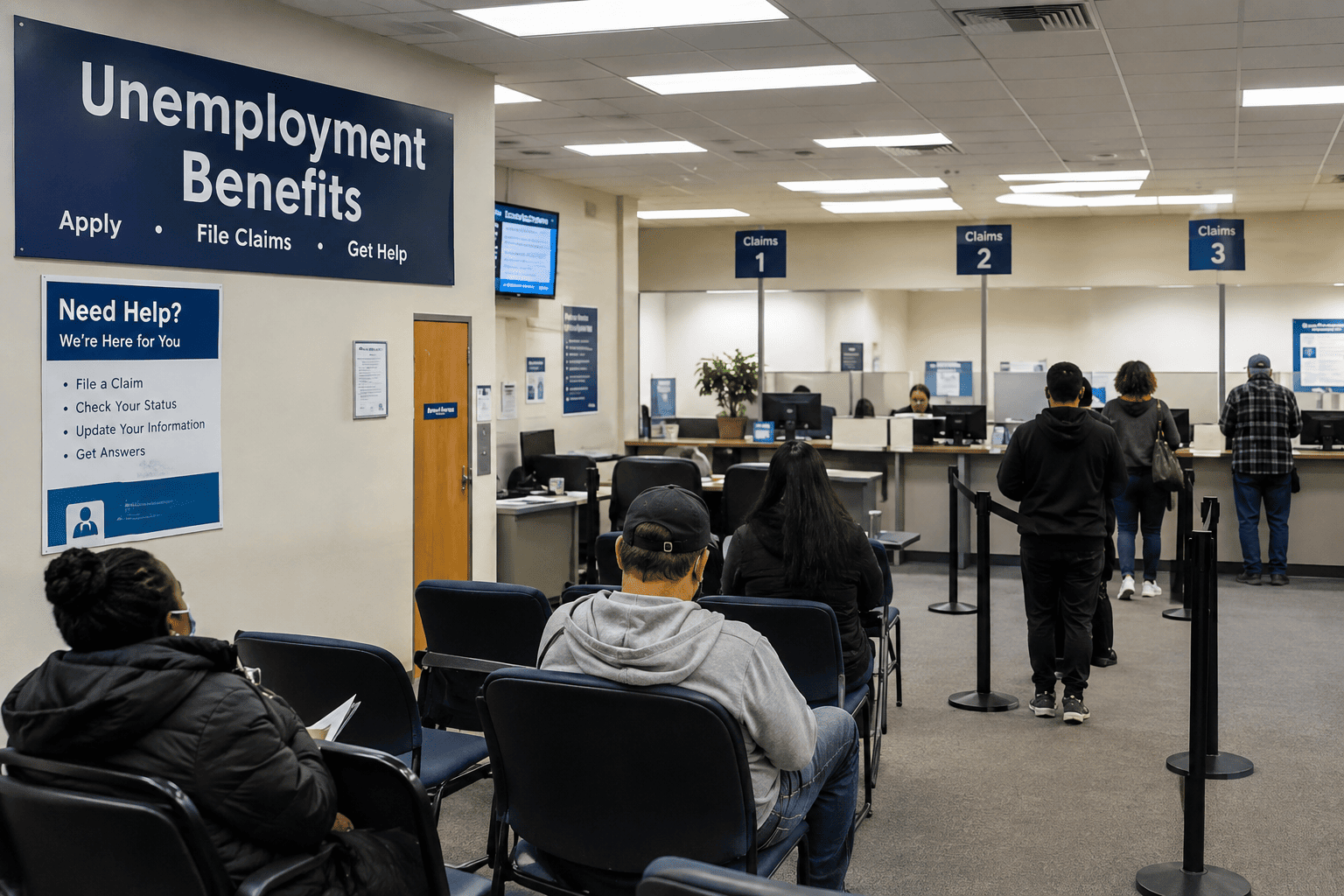
A senior economist at Goldman Sachs has projected that artificial intelligence could displace more than 15 million workers in the United States over the next ten years, but contends that the labor market is likely to adjust through the creation of new occupations, as it has during previous technological shifts.
In a research report titled "An AI Job Apocalypse?", Joseph Briggs, the firm's senior global economist, estimated that over 9% of the U.S. workforce could be displaced during what he expects to be a decade-long AI transition. However, he emphasized that historical patterns suggest technological innovation ultimately generates more employment than it eliminates.
"Despite our expectation that AI-related job losses will lead to a meaningful amount of labor displacement, we continue to expect that labor market headwinds will be temporary," Briggs wrote. "Key to this view is our expectation that over the long run AI will create many new jobs even as it destroys existing ones."
Briggs pointed to historical evidence, noting that about 60% of today's workers are employed in occupations that did not exist in 1940, and those roles account for 85% of job growth since then. He argued that a decade-long transition would give workers, employers, and policymakers time to adapt, allowing the economy to generate new opportunities alongside the disappearance of existing roles.
The report outlined several ways AI could spur employment. Technology has historically created entirely new categories of work, with nearly 15 million jobs linked to the emergence of the digital economy. It also enables greater specialization, as seen in healthcare, which expanded from roughly 2 million workers to over 18 million over the past six decades. Additionally, productivity gains can boost incomes, stimulating demand for discretionary services like pet care, nail salons, and athletic coaching.
Despite this optimistic long-term outlook, AI is increasingly cited as a driver of corporate layoffs. According to Challenger, Gray & Christmas, AI was the leading reason for workforce reductions for a fourth consecutive month in June, accounting for about 31% of the 45,849 announced job cuts. So far in 2025, AI has been cited in 101,743 job-cut announcements, representing roughly 23% of all announced reductions. Major tech companies like Meta, Coinbase, and Block have each reduced their workforces by at least 10% in recent months, pointing to AI adoption as part of broader restructuring.
Briggs acknowledged two key risks to his outlook. First, AI-related job losses could become concentrated over a shorter period, leading to a sharper rise in unemployment. He noted that declines in routine occupations have historically accelerated during recessions, when weaker economic conditions limit replacement job creation. Second, he raised the possibility that "this time is different," with AI being a fundamentally more labor-replacing technology than previous innovations. "The answer to 'is this time different?' will be hard to prove or disprove until the labor market holds up or doesn't in the coming years," he wrote.
For investors, the debate underscores the dual nature of AI's impact on the economy. While companies like Intel and AMD have seen stock gains on AI demand, the technology's potential to disrupt labor markets remains a key risk. As Nvidia signals robotics as AI's next frontier, and AI-driven earnings surge sparks debate over US stock valuations, the long-term employment effects will remain a critical factor for market participants.
This article is for informational purposes only and does not constitute financial advice.