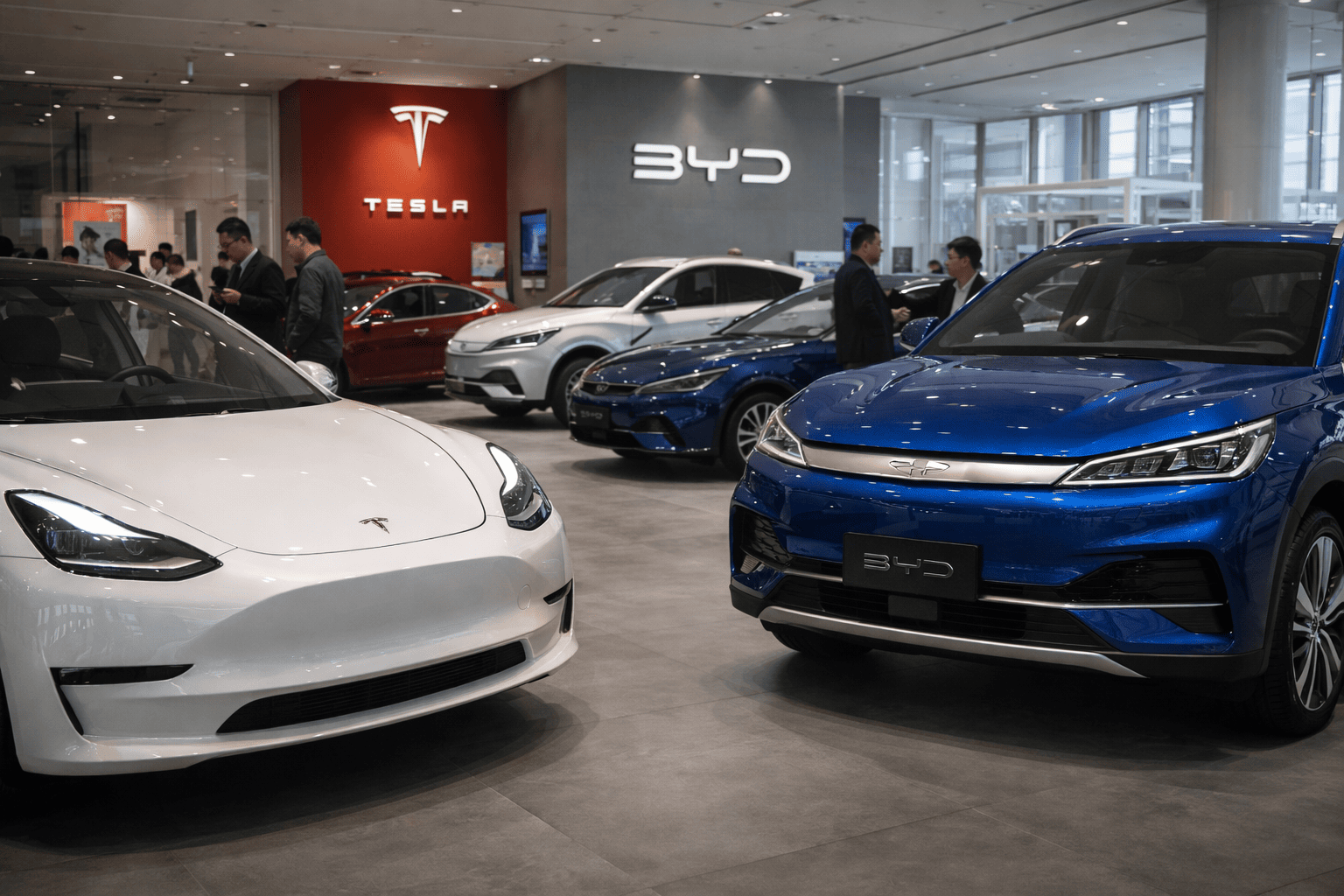
China has significantly raised its electric vehicle ambitions with a new action plan targeting new energy vehicles (NEVs) to represent 30% of the country's total vehicle fleet by 2030. The State Council's '15th Five-Year Plan' Carbon Peaking Action Plan, released Thursday, outlines a comprehensive roadmap to peak carbon emissions before the end of the decade, with transportation electrification as a central pillar.
According to data from the Ministry of Public Security, China's NEV fleet reached 43.97 million units by the end of 2025, accounting for 12.01% of total vehicles. Battery electric vehicles (BEVs) made up 30.22 million units, or 68.74% of the NEV fleet. To hit the 30% target, the existing NEV fleet will need to more than double over the next five years, underscoring the scale of the challenge and opportunity.

Broader Electrification Targets
The plan also sets a target for new energy commercial transport vehicles to reach 25% of that fleet by 2030. It calls for faster electrification across the public sector, including construction sites, mines, ports, and airports, and supports large-scale adoption of new energy heavy trucks. This aligns with broader trends in the automotive and energy sectors, as seen in recent market moves like Tesla Slips 2% as AI Ambitions, SpaceX Merger Hurdles Overshadow Strong Deliveries.
Infrastructure Expansion
To support wider NEV deployment, the plan proposes expanding refueling and charging infrastructure nationwide. This includes improvements to charging stations, battery-swapping facilities, and refueling infrastructure for green hydrogen, ammonia, and methanol. The roadmap also focuses on developing zero-carbon road transport corridors along national expressways and major highways with heavy freight traffic, as well as zero-carbon waterway corridors promoting vessels powered by electricity, LNG, biodiesel, and green methanol.
Clean Energy and Industrial Goals
Beyond transportation, the action plan sets ambitious energy transition targets for 2030. It aims for a 17% reduction in carbon dioxide emissions per unit of GDP compared with 2025 levels, and for non-fossil energy to account for 25% of total energy consumption, up from 21.7% in 2025. Installed wind and solar capacity is targeted to exceed 2.8 billion kilowatts, while operating nuclear power capacity should reach approximately 110 million kilowatts. Energy storage is also a focus, with targets of 300 million kilowatts for new energy storage and 160 million kilowatts for pumped-storage hydropower. These developments could have ripple effects across markets, including for companies like Nocera Acquires Stake in INERGX to Target AI Energy Infrastructure Growth.
The plan also outlines industrial decarbonization measures, including building around 100 national-level zero-carbon parks and 500 zero-carbon factories during the 15th Five-Year Plan period. It calls for strengthening competitiveness in new energy, NEVs, and power batteries, while cultivating emerging sectors such as hydrogen energy and green fuels. To finance the transition, the plan proposes establishing a national low-carbon transition fund to guide private capital toward carbon peaking and carbon neutrality projects.
These ambitious targets signal a major acceleration in China's energy transition, with significant implications for global markets in EVs, clean energy, and related infrastructure. Investors should monitor policy implementation and sector developments closely, as they could reshape competitive dynamics across multiple industries, including those highlighted in Envirotech Vehicles (EVTV) Completes Azio AI Merger Early, Targets $487B AI Infrastructure Market.
This article is for informational purposes only and does not constitute financial advice.